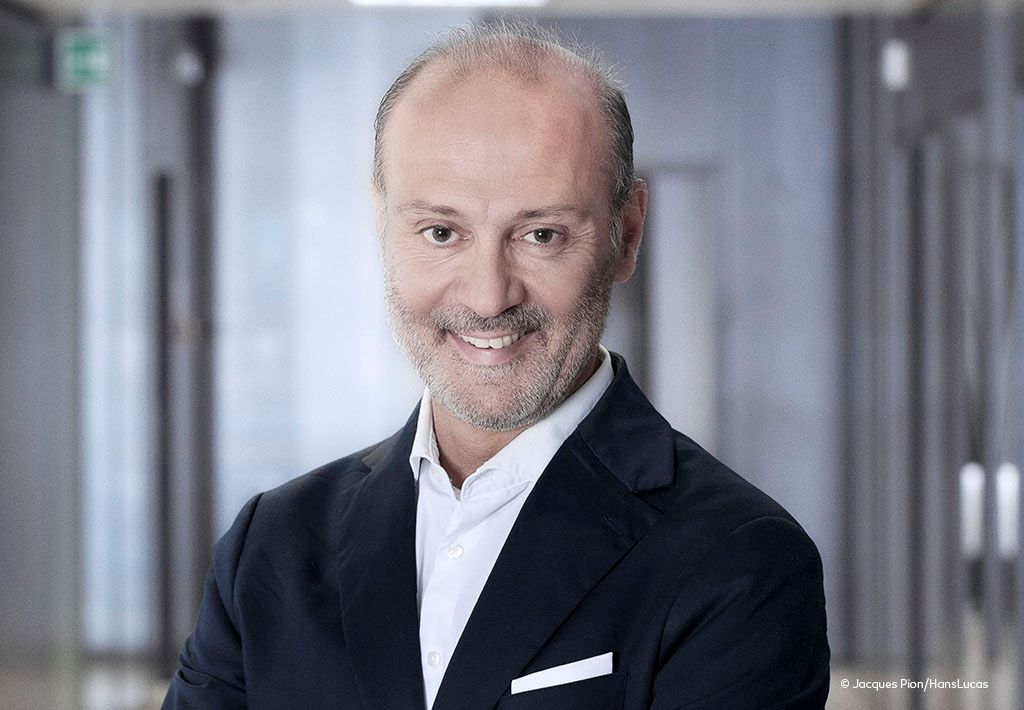
A bill has a peculiar social life. Nobody invites it in, yet it arrives with remarkable regularity. It carries a company’s name, a customer’s details and a demand for attention. For most of us, the encounter ends at the amount due. Sergio Muratori Casali has built much of his working life around what else that encounter might become.
The Doxee co-founder and co-CEO came to digital communications through industrial printing. That starting point matters. Before the cloud platform, before interactive documents and personalized video, there were businesses that needed to tell very large numbers of people something specific. The delivery machinery has changed. The obligation to make the message useful has survived every upgrade.
His story begins in Modena, where he was born and where he remains professionally based. It moves through economics, sales, Italy’s changing telecommunications market and a company founded with Paolo Cavicchioli in 2001. There is no need to borrow excitement from a more fashionable industry. Consider how much of ordinary life passes through a bill, a statement or a notice. Then consider how little affection those documents usually receive.
An economics graduate at the printing press
Muratori Casali graduated in Economics and Commerce from the University of Modena and Reggio Emilia in 1993. He began his career in sales and marketing at Venturini Group, an industrial printing business. By 1996, his responsibilities had moved into the services division, working on business development and the outsourcing of corporate communications.
Telecommunications and utilities were central to that work. He worked with Omnitel, Infostrada, Wind and Fastweb as Italy’s telecommunications market opened to competition. These were companies acquiring customers, establishing relationships and sending the practical paperwork that followed. A new customer is also a new account, a new set of instructions and another person who may telephone when a document makes no sense.
That experience places his later business in a useful context. Selling communications services gives someone a view of the gap between a company’s internal processes and the experience of the person at the other end. A perfectly generated document can still be an awkward conversation. It may contain everything the sender intended and very little the recipient can readily use.
Cavicchioli brought an engineering background and experience in industrial printing operations. Muratori Casali brought economics and commercial experience. In 2001 they founded Ebilling in Modena. The name was admirably direct: a prospective customer did not need a branding workshop to work out the neighborhood in which it operated.
- 1996Communications services
Telecoms & utilities - 2001Ebilling founded
Modena, Italy - 2019Milan listing
A new public audience
Ebilling outgrows its envelope
The company became Doxee in 2012. Its development had already extended beyond replacing a paper bill with an electronic one. Early software-as-a-service offerings, cloud migration and legal electronic archiving formed part of the preceding years. The business was moving into the infrastructure that creates, manages and delivers customer communications.
By 2015, its work included personalized multimedia and interactive documents, with examples involving A2A Energia, Engie and Fastweb. An energy communication could present consumption and costs in a more approachable way. A video could be assembled around information relevant to a particular recipient. The humble account notice was acquiring a few new social skills.
This is a business with a demanding audience on both sides. The enterprise needs scale, consistent information and reliable processes. The customer wants to understand what has happened and what to do next. A change that pleases only one side leaves the other side with work. The commercial appeal of clearer communication lies in bringing those interests closer together.
For Muratori Casali, the progression also preserves a connection to his earlier career. Telecommunications and utilities remain important markets, joined by banking, insurance and public administration. The setting is familiar even as the tools evolve. These organizations have long relationships with their customers, repeated obligations to communicate and plenty of opportunities to make a small task unnecessarily complicated.
The day the audience acquired shareholders
Doxee listed in Milan in 2019. Public markets added another group of readers to the company’s communications: investors. In a 2020 interview, Muratori Casali described learning to deal with new stakeholders after the listing and using the money raised to invest in growth. The company that helped other organizations communicate now had a more formal conversation of its own to maintain.
In November 2023, he took on the investor relations manager role alongside his co-CEO responsibilities. It is a fitting additional assignment for someone whose early career centered on sales and business development. Explaining a software business involves translating between product capabilities, customer needs and the figures by which shareholders judge progress.
There is a useful restraint in that task. A company can describe where it wants to go; published results show where it has arrived. Revenue, investment and cash generation ask less forgiving questions than a product presentation. For a founder who remains involved decades after incorporation, those questions arrive repeatedly, with dates attached.
The work also makes the partnership with Cavicchioli a continuing part of the story. Doxee’s beginnings belong to two founders with different professional training. Its later development involves product specialists, operations executives, commercial teams and colleagues across borders. A founder’s biography can give the opening chapter a single face. Running the business requires a much larger cast.
Vienna changes the map
The acquisition of Austria’s Infinica in 2022 added a concrete European dimension. It brought document technology and access to the German-speaking market. In 2024, the first integration of Infinica technology into Doxee’s platform reached a release. The acquired business became Doxee AT, connecting the transaction to the product customers actually used.
Asked in 2025 about the value of the acquisition, Muratori Casali began with people: “abbiamo trovato persone molto in gamba.” In English: “we found very capable people.” He then discussed the technology and the opening into the DACH market. The order is revealing within that answer. Buying software also means learning to work with the people who understand it.
The practical ambition was to serve familiar industries across more countries, supported by local commercial and technical teams. That is a different undertaking from merely translating a sales brochure. Enterprise customers need implementation, support and connections to the systems they already operate. Expansion creates work well beyond the announcement of an acquisition.
His emphasis on partners follows from that challenge. Doxee had grown largely through direct sales; a wider network offered another route to customers. In May 2026, the company announced its Partner-First strategy. In July, Doxee CEE completed the purchase of the remaining five percent of Doxee AT, taking ownership to 100 percent. The Austrian chapter had become part of the group’s continuing operating structure.
“abbiamo trovato persone molto in gamba”
Sergio Muratori Casali, 2025
“We found very capable people.”
A document should earn its reader
Muratori Casali’s public arguments return to the recipient. Writing about energy bills in 2025, he called for simpler, more transparent and personalized communication. The underlying question is refreshingly ordinary: can the person receiving this explain what it means? An invoice has rather missed the point if understanding it requires a second career.
The technology offers different ways to address that problem: interactive documents, personalized video and communication tied to customer information. A delivery channel is only part of the decision. The content still has to fit the situation. Sending an opaque explanation more quickly gives the recipient an earlier start on being confused.
His 2026 leadership interview continues that interest in insurance and utilities, presenting customer communication as part of business growth and customer experience. These are sectors in which the relationship often becomes visible at an administrative moment. A renewal, a charge or an account change may be the occasion on which a customer pays closest attention.
There is an environmental dimension, too. Doxee adopted Italian benefit-company status in 2021. In February 2026, it introduced Hyperion, a tool intended to quantify the effects of digital communications in paper use, carbon emissions and operating costs. The useful move here is from a broad promise about less paper toward quantities customers can examine. The existence of the tool does not make every digital decision automatically virtuous; it makes the comparison more concrete.
An editorial illustration of the task behind customer communications.
The next chapter has a balance sheet
The plan approved in June 2026 put Italy, the DACH region and France at the center of Doxee’s European ambitions. France was identified as a market to enter through a direct commercial presence. The plan also set 2028 revenue targets of €41.8 million to €46.1 million. Those are targets, with the uncertainty that future business necessarily carries.
The September 2026 half-year release supplies a more immediate picture. Revenue for the first six months was €15.1 million, broadly unchanged from a year earlier. Subscription revenue rose to €12.4 million and represented 82 percent of the total, against 72 percent in the comparable period. EBITDA fell from €2.9 million to €2.4 million. Net financial debt declined from €14.3 million at the end of 2025 to €10.6 million.
That combination gives the story some necessary texture. Recurring revenue increased while total sales stayed level, and profitability faced pressure as the company invested. The figures describe a business changing its revenue mix and financing its next stage. They offer a firmer ending to a founder profile than assuming every expansion announcement guarantees an easy ascent.
Muratori Casali is still working on a problem recognizable from his printing years: how a large organization gets a useful message to an individual. The route now passes through software, international teams and public-market scrutiny. After twenty-five years, the bill is still arriving. His wager is that the encounter can become worth a little more of the reader’s time.
Subscription share of total revenue · first half
Doxee H1 2026 results, published September 30, 2026. Total revenue: €15.1m in each period.