In 2007, the opening speaker at Proto.in failed to turn up. Sekar Vembu, scheduled to speak second, went first. His subject was how to bootstrap a business without venture capital. A missing speaker had created a small organisational problem; the replacement happened to have considerable experience in making do.
Afterward, he and interviewer Kiruba Shankar left the noisy auditorium for an IIT classroom to record a conversation. Sekar helped choose the room. He knew the campus from his student years. There is something pleasingly economical about the scene: an entrepreneur explaining how to build without lavish resources, borrowing a quiet corner of his old college to do it.
Nearly two decades later, Sekar remains founder and chief executive of Vembu Technologies. His company builds backup, disaster recovery and resilience software. The public conversation around startups has acquired plenty of new vocabulary since that classroom interview. His central preoccupation has proved rather durable: how to keep building a business on terms he can live with.
Before the cloud, a house in Chennai
Sekar’s route into software began with an education that ranged beyond it. He completed a mechanical engineering bachelor’s degree at IIT Madras in 1993 and a master’s in 1996, recorded by the institute under Humanities and Social Sciences. The combination offers a useful reminder that an enterprise software career need not begin with a computer science label.
By the mid-1990s, he was part of a small operation in East Tambaram, Chennai, alongside his brother Kumar and Shailesh Kumar. They worked from home, with telecom software contracts helping pay the bills. Across the Atlantic, Tony Thomas and Sreenivas Kanumuru were developing another part of the business. Those connected efforts became AdventNet, later renamed Zoho.
The home office matters because it puts the familiar corporate name back into human proportions. Before there was an international software group, there were people trying to turn technical work into enough income to continue. In the early Chennai operation, Sekar was close to the engineering. He would go on to serve as AdventNet’s chief technology officer and a business unit head.
His connection to IIT Madras has also continued through giving. The institute’s impact reports document the Vembu Technologies - Prof. G Srinivasan Research Endowment Fund. Its 2023 account describes support for research, including the development of an experimental web platform and data collection. It is a less visible connection than a degree on a biography, but a concrete one: the former student helping provide the means for someone else’s work to proceed. The campus where he once looked for a quiet interview room remains part of the story.
His career therefore contains two kinds of founding: helping establish an organisation with others, and later establishing one where he could set his own direction. Both require technical ability. The second also requires deciding which compromises you are willing to make every working day.
Three beginnings, one continuing business
- 1993 / 1996Two degrees at IIT Madras
- Mid-1990sChennai home operation; AdventNet’s beginnings
- 2002Vembu Technologies begins
- December 2003AdventNet announces SwisSQL acquisition
- 2026Enterprise expansion and a stronger India presence
A product leaves home; the founder keeps going
Vembu Technologies dates to 2002. One early product was SwisSQL, which helped customers migrate between databases. On December 23, 2003, AdventNet announced that it was acquiring Vembu’s SwisSQL and database migration product line. The announcement named EMC, HP and Ramco Systems among its customers, and said more than a dozen had signed up within six months of introduction.
That is a more revealing early milestone than a declaration of ambition. A young company had made something other businesses would pay to use, and the product was moving into an organisation able to devote more research and field support to it. Sekar, already an AdventNet co-founder, publicly welcomed its new home.
The relationships around Vembu continued to branch. In 2005, Lakshmanan Narayan joined him to help build the business, taking responsibility for marketing while Sekar concentrated on technology. Narayan later left to pursue his own venture, which became Unmetric; Sekar became an angel investor. The connection runs through friendship, complementary skills and another start at the drawing board.
It is a useful corrective to the solitary-founder portrait. A company may carry one person’s surname, but its working history includes people who join, divide the work, leave and remain connected in a different capacity. Sekar’s story has room for those overlapping careers.
The freedom to ask for a longer trial
Sekar has explained his departure from AdventNet in practical terms. With two older brothers among the founders, a growing company needed a reporting structure that family relationships made awkward. He wanted to work independently. Vembu became the place to do that, while his shareholding in Zoho remained separate from its daily management.
Independence shows up in the sales process as well. He says prospects can receive evaluation periods lasting as long as three months. His question after a sale is whether the customer really tested the product. Recognition of the family name is an unsatisfactory substitute for an administrator discovering that the software does the job.
He is candid about the other side of that preference: marketing has been difficult for an engineering-first company. For an engineer, the splendid thing about a product trial is that the product can answer questions. Unfortunately, it cannot introduce itself to every potential customer. A business still needs people willing to start the conversation.
“The hardest problem is marketing and building a brand.”
Sekar Vembu
The evaluation window Sekar says some prospects receive. Time to test the software before committing.
The least theatrical promise in software
Backup is a peculiar line of work for anyone seeking applause. When everything goes well, the customer’s reward is an ordinary day. When something goes wrong, the real examination begins. The difference between a stored copy and a workable recovery becomes painfully concrete to the people waiting for their systems.
Today, Vembu’s product family includes BDRShield for backup and recovery, XDRShield for detection and response, and ShieldPSA for service operations. Its stated direction connects protection, security and the practical work of keeping a business running. An IT team must be able to understand what happened and what to do next, rather than simply accumulate another dashboard.
At the Chennai launch of Vembu Meet in August 2026, Sekar put the emphasis on whether businesses can actually restore operations after disruption. The gathering brought business and technology leaders into the same conversation about recovery readiness. For him, the operational test comes after the planning, purchasing and paperwork.
The attraction of this subject, as a career, is its resistance to a neat finishing point. New systems arrive. Customers change how they work. The meaning of a useful recovery changes with them. Staying in the business means accepting a long succession of practical questions, many of which are unlikely to improve a dinner-party anecdote.
From keeping a copy to getting back to work
A conceptual view of the business continuity problem Vembu works on.
A faster tool still needs a responsible person
Artificial intelligence has given Sekar’s old concerns a new setting. He expects it to make software development and the acquisition of domain knowledge easier. He also expects buyers to demand more. A crowded market filled with quickly built products places extra weight on the judgement required to choose and maintain one.
His objection is to the assumption that sophisticated software can be handed over to autonomous production with little verification. Customers discover new use cases as they work. Developers have to respond, and someone has to remain responsible for the result. He sees specialised industry knowledge becoming more valuable as the act of producing code becomes cheaper.
For a founder whose products are bought in preparation for trouble, that distinction has an immediate business meaning. A persuasive demonstration is the beginning of a relationship. The customer will keep using the system after the demonstration ends, through upgrades and changing infrastructure. The work has to survive contact with those ordinary complications.
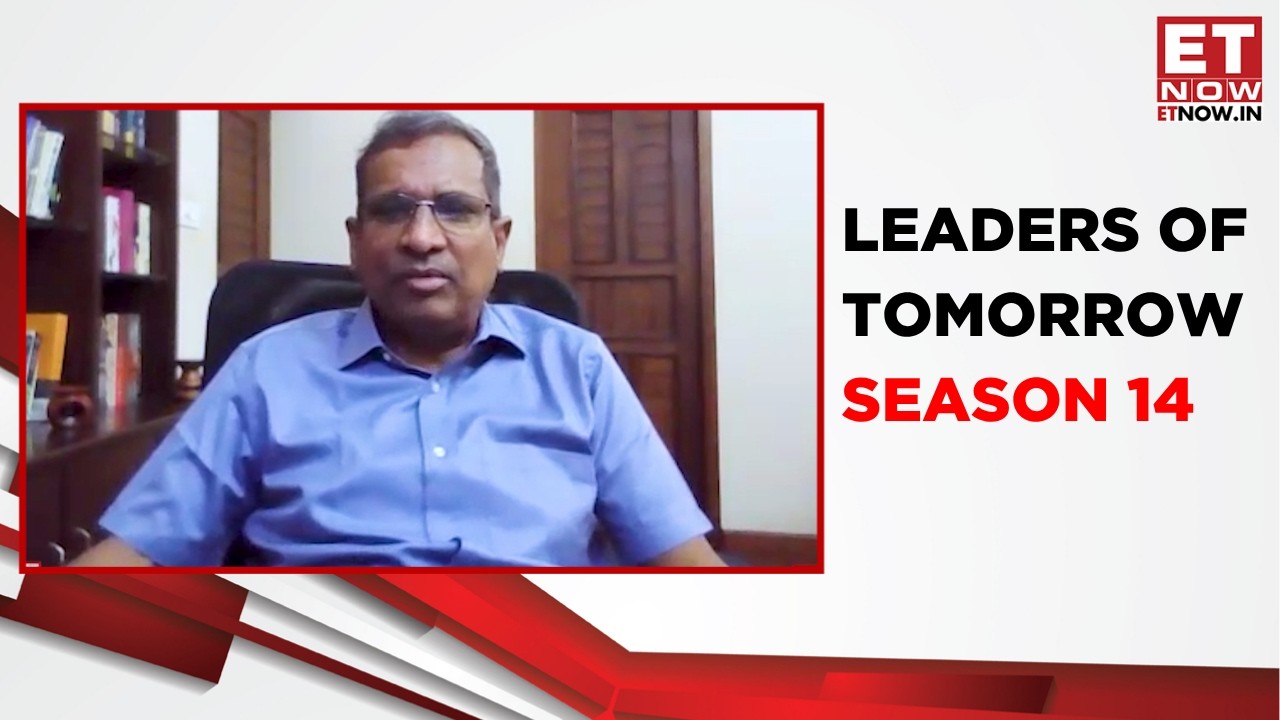
In his 2026 ET Now conversation, Sekar described engineers becoming product engineers, combining technical work with an understanding of customer needs. He also returned to three habits: ownership, simplicity and improvement. His image for ownership was the colleague who can take responsibility for a call at two in the morning. It is a demanding definition of teamwork, and a decidedly inconvenient hour for corporate slogans.
The next market is closer to home
His current ambitions require a more visible business. In August 2026, Sekar described a five-year revenue target exceeding $250 million, including $200 million internationally. He said roughly ₹200 crore in personal and family capital had been brought in to support expansion. These are plans and financing commitments, rather than a claim that the revenue has already arrived.
The route involves larger customers, more channel partnerships and direct attention to major accounts. Smaller and medium businesses still represented about 80 percent of the customer base at that point. Moving further into enterprise accounts changes the work around the software: sales relationships, support and the confidence a buyer needs before making a consequential purchase.
India is receiving more of that attention after years in which most revenue came from abroad. The company has described building local pre-sales support and strengthening distributors, resellers and managed service providers. A product can cross a border through a download; a dependable commercial relationship usually needs rather more organisation.
There is another side to Sekar’s public life. In a September 2026 Pathfinders Podcast appearance, the conversation ranged into freedom, money, decentralisation and voluntary cooperation. The interests extend beyond software, although his preference for individual agency is recognisable beside the independent business he has chosen to run.
Back in the IIT classroom, the immediate problem had been finding somewhere quiet enough to talk. The larger project has required finding enough time to work, enough customers to keep going, and enough independence to choose the next task. Sekar’s ambitions have grown. The question beneath them remains wonderfully practical: can the company keep earning the chance to continue?