Sean Murphy returned to the same recruiters when he needed a human resources director. They had already recruited him into a company’s president and CEO role. Now he was on the other side of the hiring decision, choosing who would help build the team around him. It is a small episode, almost aggressively ordinary, and a useful place to begin a story about someone whose working life has involved a great many people doing a great many ordinary things well.
In his account of that experience, Murphy described a confidential search during an important period of company growth. When the next appointment came along, he said, “there was no question who we’d call.” He valued recruiters who tested assumptions, understood the role, and pursued a lasting fit. His description gives hiring a particular emphasis: the search itself needs judgment, rather than a procession of available résumés.
That is an unglamorous detail to put beside a chief executive’s name. It also gets close to the work. A service company needs people who can carry its promises into rooms the president will never enter. Choosing those people is one of the few decisions that travels all the way from the executive office to the customer. A recruiting appointment can therefore tell us something useful about an operating career, without the assistance of a dramatic childhood scene.
“there was no question who we’d call.”
Sean Murphy · on hiring help he trusted
Coffee, contracts, and a change of scenery
Before Elite, Murphy’s career included Tim Hortons and Clintar Commercial Outdoor Services. Elite’s announcement of his arrival described his work in franchise management and operating efficiency at Tim Hortons, followed by a vice presidency in operations at Clintar. The latter business deals with the decidedly seasonal realities of commercial property: landscaping, snow and ice management, parking lots, and outdoor maintenance. A coffee order and a cleared parking lot make an unusual pair on a résumé.
The practical connection is easy to appreciate. Customers buy a service and expect it to happen reliably. The business has to organize the people, equipment, and decisions behind that expectation. Franchising adds another layer: local owners have their own investments and responsibilities, while the wider system needs a recognizable standard. Success depends on how those interests work together. A uniform may change; the need to coordinate the people wearing it persists.
Murphy’s professional background combines general management with strategic leadership. He also lists education at Cornell University in 2018 and 2019, involving scientific decision making and predictive data analysis. That adds a modest but telling detail to the career: operating experience alongside study of how decisions are made. It is a practical combination for work in which individual encounters matter, but managers must also understand what is happening across a wider business.
The lobby was part of the lesson
Elite appointed Murphy president effective May 13, 2024. Its business offered another setting for the same daily test: could the organization deliver the service it sold? Residential concierge work happens at the point where a building becomes someone’s home. Elite describes a model that combines personalized assistance with security services, supported by employee engagement, training, and development. The front desk is a conspicuous place to discover whether a company’s promises have reached its staff.
By early 2026, Elite had been acquired by Scarlet Security & Risk Group. The buyer said all 1,000 Elite team members would join the group and remain in their existing roles. It also described five years of growth at the company. Those details belong to the organization’s history, which began before Murphy’s appointment; they should not be tucked into his personal trophy cabinet. The transaction nevertheless places his presidency inside a concrete period of change.
The scale helps explain why the earlier hiring anecdote matters. A business employing people across many properties cannot be managed as an extended conversation with every employee. Training, supervisors, recruitment, and clear expectations have to do much of the carrying. In a service business, the customer experiences the person in front of them. The executive’s contribution often sits several decisions upstream, where it is less photogenic and rather more consequential.
A table waiting at Aegis
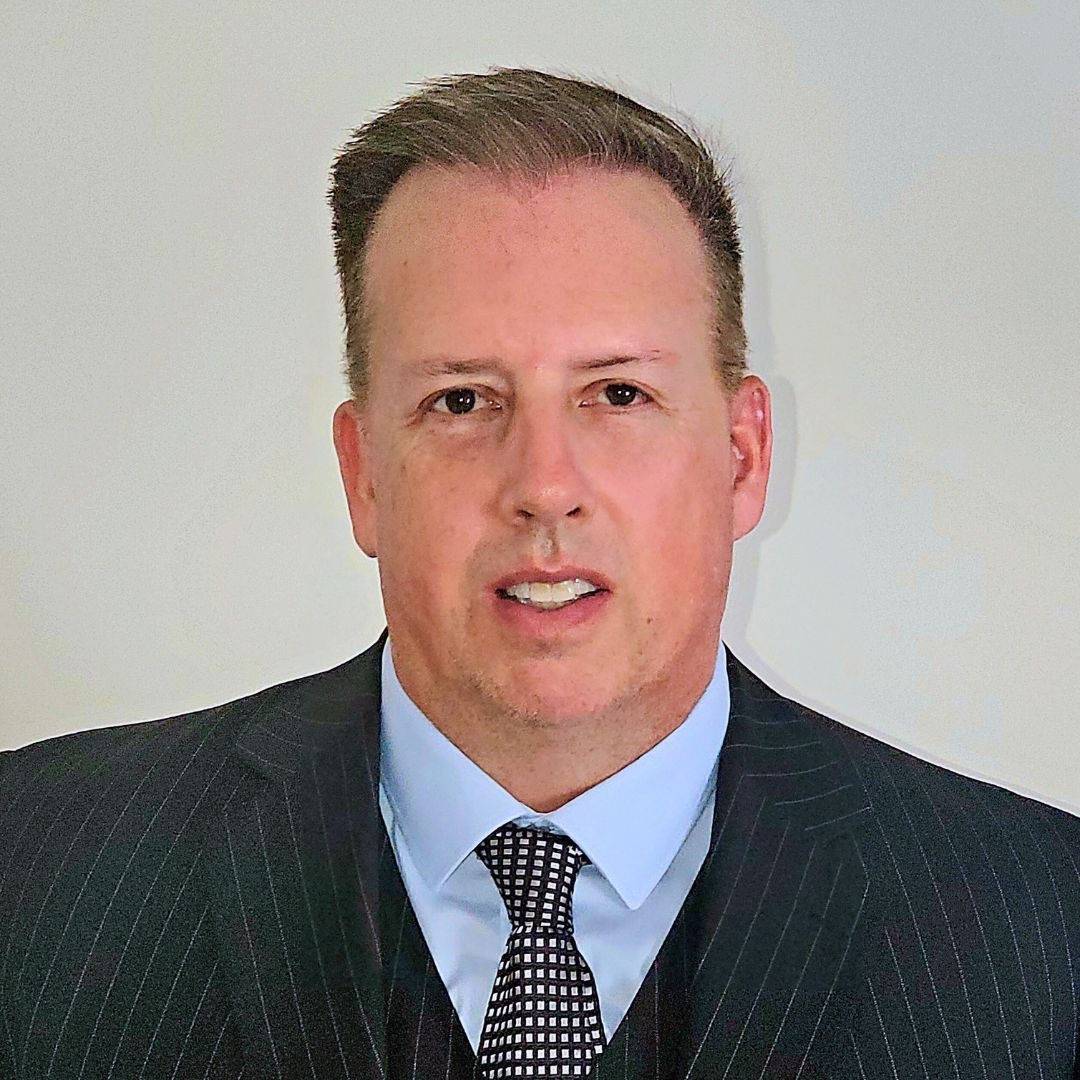
On July 15, 2026, Aegis Brands announced Murphy as its next president, chief executive officer, and director, with an August 17 start date. The appointment brought him back into food and beverage franchising. Aegis owns and operates the St. Louis Bar & Grill brand and holds the Canadian master franchise for Sweet Jesus ice cream. Wings and ice cream give the portfolio a pleasingly straightforward introduction. Running the businesses behind them is the longer conversation.
Aegis describes his restaurant experience as spanning 20 years at Restaurant Brands International, including responsibility for regional profit centres covering more than 800 units. That is the operating background he brings to the new job. The scale describes his earlier remit, rather than the size of Aegis. A restaurant count can be an impressive-looking number; its real significance lies in how many local decisions have to be made well, repeatedly, for the count to mean anything.
Aegis also credited his most recent concierge and security presidency with doubling profitability before a successful company sale. His new assignment will require its own decisions and its own evidence. The restaurants, their franchise owners, and their guests provide a different setting from residential properties, even when both businesses depend on the same unfashionable virtues of preparation and follow-through.
- Restaurant operationsTim Hortons / RBI
- Commercial propertiesClintar
- Residential conciergeElite · May 2024
- Restaurant brandsAegis · August 2026
Garlic dill sauce has a memory
St. Louis opened its first Toronto location in 1992. It now describes a network of more than 80 locations across Canada, built around wings, fries, garlic dill sauce, and a casual sports bar setting. Its stated hospitality ambition includes making regulars. That last word has more weight than it first appears to have. A regular comes back with a memory of the previous visit, and a reasonable expectation that the next one will be worth the trip.
For Murphy, this is an established brand with habits and associations already attached to it. Any chief executive arriving at such a business has to contend with the customer’s accumulated experience. A diner may care deeply about the sauce and hardly at all about the parent company’s corporate structure. There is something refreshing about that order of priorities. The parent company still has to make the economics work, preferably before the diner has finished the fries.
Aegis’s stated approach is to support its brands with expertise and capital while protecting their identity and culture. The operating question follows naturally: what should be shared across a business, and what should remain particular to a restaurant brand? Finance, people development, and growth support can help from behind the scenes. Familiarity at the table is earned at the table. Murphy’s job sits where those two kinds of work have to meet.
An existing restaurant gets a second life
The expansion Murphy inherits has already included a specific approach to opening restaurants. In December 2024, St. Louis added locations in Thornhill, midtown Toronto, and Burlington by converting existing properties. The brand described these conversions as a way to launch faster and reduce construction costs. Its 2025 growth account also recorded openings in Oakville and New Minas, Nova Scotia, and a refreshed reopening in Newmarket. These moves preceded his arrival at Aegis.
A restaurant conversion is a useful antidote to the idea that growth must always begin with an empty building site. It starts with something already there, then asks whether a different restaurant can make good use of it. The attraction is practical: a location can change hands and purpose without every part of the premises beginning again. The details still matter. A shorter route to opening does not, by itself, guarantee a busy dining room.
This is the kind of inheritance an incoming operator has to understand. Aegis comes with a restaurant brand, an expansion history, and decisions already being tested in local markets. Murphy can bring experience from larger franchise systems, but the work remains specific to the sites and people in front of him. The opportunity is to apply that experience without losing sight of what each opening is supposed to accomplish for its owner and its guests.
The numbers he walked into
Aegis’s second quarter ended on June 28, 2026, before Murphy’s scheduled start. For that quarter, the company reported system sales of C$34.6 million, down 2.1% from the year before, while net income rose 19.2% to approximately C$1.3 million. Operating expenses declined 9.7%. The company attributed part of the sales comparison to its Wingsanity promotion moving from the second quarter in 2025 to the third quarter in 2026.
The combination gives the incoming chief executive a more interesting starting point than a simple growth slogan. Sales and earnings were moving in different directions. Timing affected the comparison, and a leaner overhead structure helped profitability. These were results from before his tenure. They describe the business he was joining, and establish a useful baseline for reading whatever follows. Calendar dates deserve a seat beside financial figures; otherwise, credit has a habit of wandering.
The priorities Aegis set out for the second half of 2026 were equally concrete: strengthen St. Louis, support franchisee success, improve the guest experience, and keep costs disciplined while assessing growth opportunities. Each has an audience. Guests want a good visit. Franchise owners need a viable business. Shareholders want a company that can sustain its earnings. Bringing those expectations into a workable relationship is the recurring assignment in Murphy’s career.
The appointment is the beginning
Murphy arrives with experience in several settings where service has to be organized before it can be enjoyed: restaurants, commercial outdoor work, and residential properties. The journey gives his return to hospitality a particular shape. He has worked around franchise owners and around employees whose individual encounters create the customer’s opinion of an entire business. At Aegis, that experience meets a brand with a long history and an appetite for further expansion.
The recruitment story offers a suitably small closing detail. When the business needed another leader, Murphy went back to a team whose judgment he trusted. The next round of work at Aegis will likewise involve people as well as plans. A good night out seems effortless to the people having it. Someone has to make the arrangements. For Sean Murphy, the new title places that responsibility behind a menu Canadians already know.