Sean Harper’s father could not get the name right. His son had built a business called TransFS, a string of letters that customers struggled to remember, repeat or recommend. Harper and his colleagues had begun counting the confusion. Then his own dad mispronounced it. A company can survive plenty of indignities. Requiring a pronunciation guide at the family table is a particularly avoidable one.
The business became FeeFighters. The new name explained the grievance and supplied the remedy in the same breath. Years later, Harper would co-found an insurance business with an even shorter name: Kin. Across those ventures runs a recurring interest in the awkward space between a useful product and the person trying to buy it. He keeps finding things that ought to be straightforward, then discovering an entire industry employed in making them complicated.
A college application you could put in a disc drive
Harper grew up in Wisconsin, programming early and getting drawn toward business because writing software raised another question: how would he sell what he had made? For his college application, he created a program about himself and mailed it to the admissions office on a burned CD. Even his introduction arrived as a product demonstration.
His eventual route through the University of Chicago produced an undergraduate economics degree in 2003 and an MBA in 2009. The economics interest had a human origin: a high-school teacher who connected principles to things students actually cared about. Harper carried that habit into work, treating economics as a practical way to inspect a problem rather than a subject to leave behind after the examination.
His summers brought experience at the FDIC, a hedge fund and investment banks. He finished university in three and a half years, impatient to work. Boston Consulting Group followed. So did a question he would later ask himself: how had someone who thought of himself as a technology person ended up making spreadsheets for banks?
Consulting supplied access to businesses and their unglamorous machinery. A subsequent job at Longworth Venture Partners brought his interests in technology and commerce closer together. There was plenty to learn in both places. There was also the temptation of making something that belonged to him.
The friend with the paying magic-show audience
Taylor Mitchell, a childhood friend, supplied a push. Mitchell had been the sort of neighborhood child who sold things door to door and charged admission to a magic show. Harper remembered that willingness to try. Reconnecting as adults led them to TSS-Radio, an online business selling satellite-radio equipment and accessories.
They built it without outside capital. The business reached the Inc. 500. For Harper, its significance went beyond the ranking: a side project had become an actual operation with actual customers. Mitchell had helped make the jump from a comfortable professional career feel possible. The lesson was modest enough to be useful: begin, even before every uncertainty has obligingly disappeared.
FeeFighters took him into payments. Founded in 2009, it helped businesses compare credit-card processors and developed payment technology. Groupon acquired it in 2012. Harper later served in product roles at Groupon and as chief product officer at 2Checkout, adding experience inside larger financial technology operations to the experience of starting his own.
The FeeFighters naming episode reveals something useful about his method. He initially resisted a rebrand. Then the team logged instances of confusion and found the problem was larger than they had thought. Customers were being asked to remember a name that gave them little help. An engineer’s preference had collided with a buyer’s experience, and the buyer’s experience won.
He was also capable of reconsidering a more consequential decision. Looking back on the Groupon sale, he said he wished they had held on longer. At the time, the team had been afraid. An exit gives a startup story a tidy ending; living with the decision can be rather less tidy.
“I like to make useful things that make people’s lives better.”
Sean Harper
Thirteen years to return to an old problem
The insurance idea had been waiting. At BCG, Harper had worked on payments and insurance assignments. Questions about technology and distribution stayed with him. Roughly thirteen years separated those early observations from Kin’s founding in 2016. By then, he and Lucas Ward were deliberately looking for a business that suited what they knew.
They used a specific filter: a large, relatively uniform market; substantial intermediation and room to compete; and new data that could improve the product. Homeowners insurance fit. Their experience gave them reasons to investigate it, but investigation still had to answer the practical questions. Could they assemble enough information about houses? Would people buy coverage online? Could the economics work?
Harper has described industry professionals warning that the plan would fail at successive stages. He and Ward tested data sources, put an early product in front of customers and kept working. The willingness to begin with an incomplete product owed something to his earlier businesses. Insurance added a less forgiving audience: regulators and people trusting the company with protection for their homes.
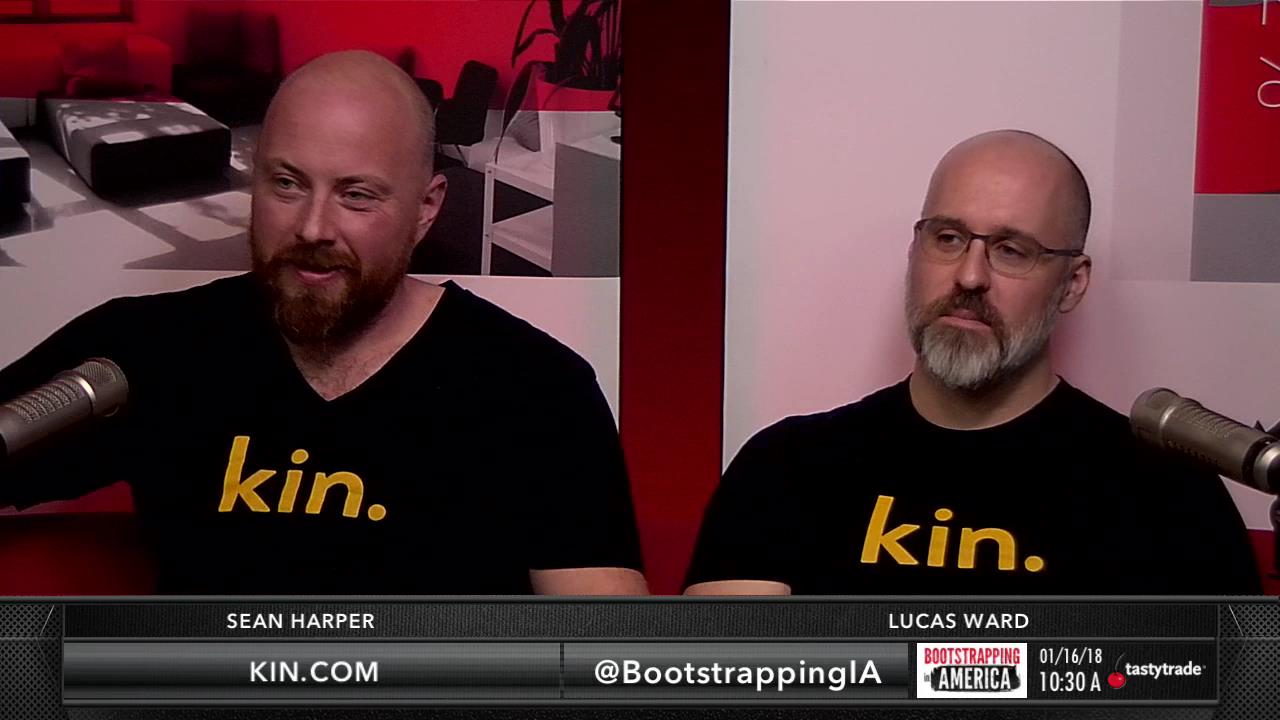
Kin’s early operation involved brokerage infrastructure. By 2019, it had raised $47 million and launched its own insurance carrier. That step required experienced insurance executives as well as software. Starting with a blank screen did not spare the founders from learning the business behind it.
The customers also corrected an assumption. In 2020, Harper recalled expecting to build for people around his age and younger, only to find the average customer was in their mid-fifties. They already banked online and managed other financial accounts there. Their willingness to use the internet was hardly exotic. Home insurance had simply been slow to follow them.
He also insisted on a human element: customers could speak to someone when they had questions. The family reference in Kin’s name mattered to him. A home is a substantial commitment, and a person buying protection for it may reasonably want more reassurance than a cheerful confirmation screen.
The boss does not have all the information
Harper’s management philosophy creates another test of his preference for directness. In one meeting, a colleague suggested that he should make an important decision. He had been briefed and had an opinion. He nevertheless recognized that someone else knew the situation better. Routing the decision upward could strip away precisely the knowledge needed to make it.
He wants responsibility to sit with the person closest to the information. That asks something of the CEO, who must relinquish the reassuring habit of having the final answer, and of colleagues, who must accept responsibility rather than merely prepare a convincing presentation. The arrangement depends on sharing enough context for people to exercise judgment.
He has spoken with particular pride about people who entered Kin through customer service or came from jobs waiting tables and worked into substantial responsibilities. Opportunity, information and materials mattered. His interest in opening up the work to capable newcomers fits his own attraction to industries whose workings are usually kept behind a professional curtain.
Outside those discussions, his tastes are less complicated. Raised in Milwaukee, he roots for the Brewers. Offered the familiar choice between Star Trek and Star Wars, he chose Star Wars; Ward, he said, stood on the other side. Some disagreements in a founding partnership can safely remain unresolved.
The numbers grew. So did the assignment.
In September 2025, Kin raised a $50 million Series E at a $2 billion pre-money valuation. That figure describes the company’s financing, rather than Harper’s personal wealth. The money supported growth and additional products, extending a business that had begun with homeowners insurance toward more of the household’s financial needs.
For the full year 2025, Kin reported $201.6 million in revenue, up 29%, and $634.4 million in gross written premium. Keeping those measures separate matters: premiums associated with insurance coverage and revenue at the operating company describe different things. A large number becomes less useful when its label goes missing.
quarterly revenue
managed reciprocal exchanges
By the second quarter of 2026, the company reported a fourteen-state footprint. Auto coverage was expanding alongside the home business. Harper emphasized that more customers could be served without a matching increase in operating costs. It was the scale question he had been approaching since his first online businesses, now attached to a considerably larger operation.
There was a customer-facing test in September: Kin announced average home insurance rate reductions of more than 20% for new and existing policyholders in Broward, Miami-Dade and Palm Beach counties. The announcement linked the changes to improving market conditions. For a homeowner, the appealing metric is often the amount due on the next bill.
Later that month, Kin announced it would allow AI shopping agents to obtain quotes through its digital experience. Harper’s argument was consistent with the earlier bet on online sales: let customers use the method they prefer. The interface may change again. The problem of reaching a buyer, answering the right questions and making a complicated purchase intelligible remains familiar territory.
There is a straight line from the young programmer mailing his work to an admissions office to the founder still testing how people find and buy things. Along the way, he has learned that customers can overturn a demographic assumption, a colleague can know more than the chief executive, and a father can provide the final vote on a rebrand. Useful feedback rarely troubles itself about rank.
Continue the conversation
Follow Harper on LinkedIn, X and Medium, or visit Kin.
- Watch: Harper on Kin’s journey from agency to carrier
- Watch: Taking Stock at the New York Stock Exchange
- The FeeFighters naming conversation
- From Chicago Booth to Kin
- Kin’s second-quarter 2026 results
- Listen: the college application and the FeeFighters exit
- Harper on Kin’s early customers and human service
- Listen: connecting technology and business
- Harper on Mitchell, persistence and starting Kin
- Harper on choosing a market and sharing decisions
- Listen: automation, baseball and the Star Wars question
- Harper on building useful things
- The September 2025 financing announcement
- Kin’s full-year 2025 results
- The September 2026 South Florida rate announcement
- Kin’s September 2026 AI shopping announcement