A software license is an oddly incomplete purchase. It gives someone permission to use a tool. It does not, by itself, give that person a working place to use it. Somewhere there must be a server, an administrator, a set of permissions, and a way of keeping the arrangement useful when the project changes. The interesting part of SDS is the attention it pays to that gap.
- The job: private cloud hosting for IBM Rational environments.
- The extra hands: consulting and custom management plug-ins.
- The buying idea: compare the whole environment, including its upkeep.
The company’s published proposition centers on IBM Rational Jazz technology and legacy Rational products. These are tools with a particular constituency: teams that already organize development around IBM’s software. SDS describes hosting them in a private SaaS environment. The cloud is the delivery mechanism. The subject is the continuing work of making a development environment available to the people who need it.
The bill behind the tool
Consider the difference between the software budget and the cost of using software. The first can appear as a tidy purchasing decision. The second includes the surrounding machinery and the time spent tending it. SDS explicitly sets its offering against three expenses: traditional licensing, administration, and supporting infrastructure. Its claim of lower cost depends on that combined comparison. Treating it as a universal savings promise would miss the point.
The company describes an approach in which a development team uses the license capacity it needs during a project’s life cycle. There is a practical intuition here. Projects do not always need the same people, in the same roles, for the same length of time. A purchasing arrangement that can reflect those changes deserves comparison with one designed around a fixed commitment. The useful number is the total over the project, including the work required to run it.
One operating environment. Three places the bill can hide.
A cloud with a specific job
SDS places its hosting story in Naperville, Illinois, where its company description locates a data center. It calls the environment isolated, secure, rapidly deployable, and scalable. Those are the company’s descriptions of the service. Its more distinctive decision is the narrowness of the assignment: hosting an established family of development tools, with consulting and custom plug-ins alongside it.
That service mix matters. Renting infrastructure leaves the application question open. Someone still needs to understand the software being installed and managed. SDS’s combination suggests a specialist relationship around the Rational environment itself. The buyer is evaluating knowledge of an existing toolchain as well as computing capacity. The relevant comparison includes running Rational internally, arranging generic hosting with separate administration, or considering IBM’s own cloud options.
“development environment you need, made simpler”
SDS’s published company description
The license is part of the machine
IBM’s documentation helps explain why this niche exists. In its Engineering Lifecycle Management suite, licenses are tied to roles and capabilities. An analyst, developer, and tester may need different access. The Jazz Team Server supplies foundational services, including user and license management. Software access is therefore an operational system, with assignments and dependencies, rather than a receipt filed after purchase.
The details get consequential quickly. IBM describes authorized licenses assigned to individuals, floating licenses shared from a pool, and token arrangements with their own mechanics. Its administration guidance also identifies a dependency between the Jazz license server and an external License Key Server when tokens are used. If that connection fails, users cannot be validated and cannot access the applications. A server can be running while the person in front of it is still unable to work.
This is an ecosystem risk described by IBM, rather than an incident reported at SDS. It explains why an application-aware hosting decision should include licensing architecture and connectivity. The first useful buyer conversation is about the path from a person’s login to the capabilities that person needs. Disk space alone cannot answer it.
The value of keeping the links
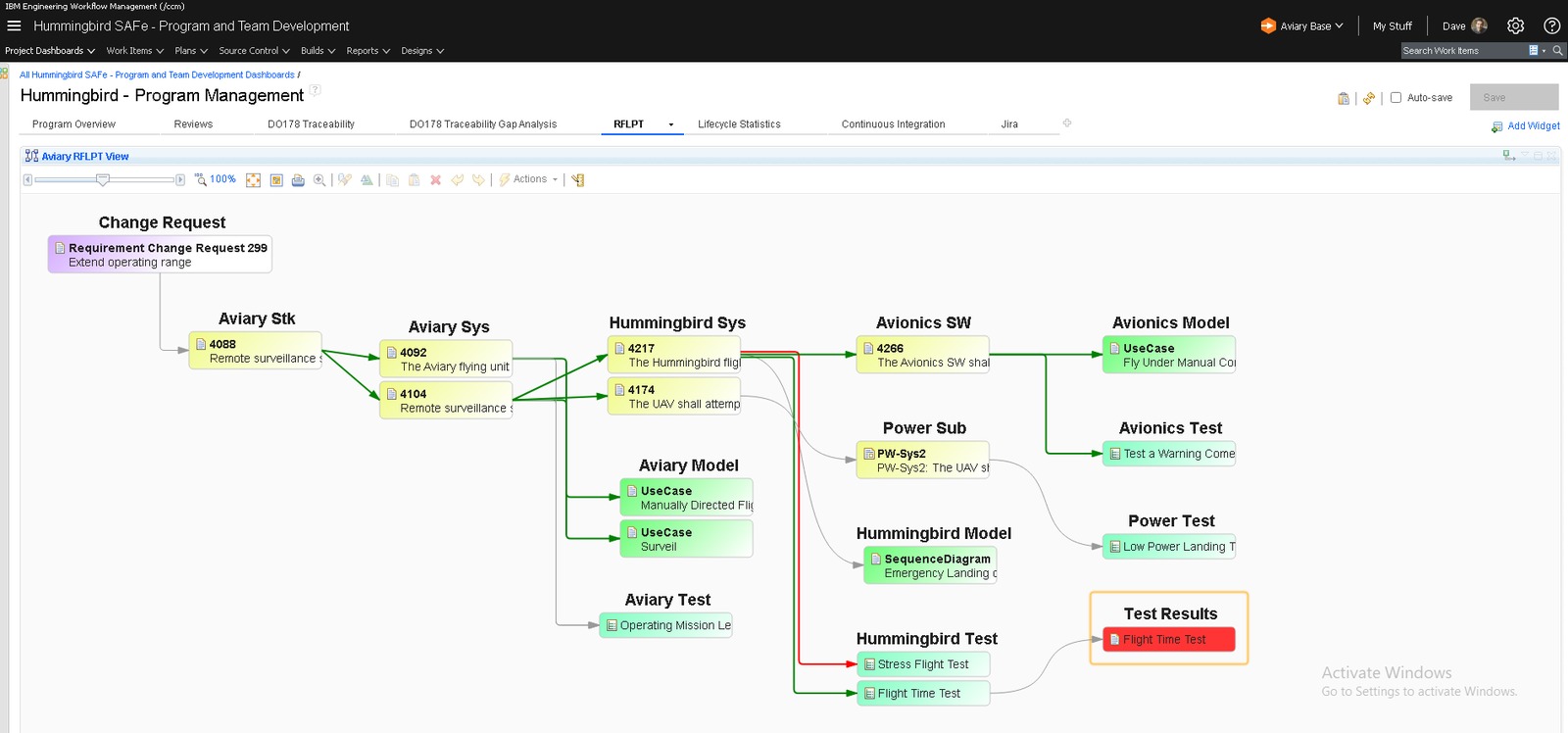
Why retain a complicated environment at all? IBM’s lifecycle tools connect work that otherwise lives in separate places. A requirement can inform a test case. A defect can connect testing to implementation. A change in one artifact can force a review of another. The value accumulates in those relationships as well as in the individual records.
IBM’s configuration documentation adds another dimension: teams can preserve baselines and return to earlier configurations when investigating a defect or preparing a fix. Its link-validity guidance describes checking whether a test still validates a changed requirement. These capabilities make an existing environment more than a collection of interchangeable screens. For a team that relies on this working history, retaining familiar tools while changing their operating arrangement can be a sensible option.
Buy the whole environment
The lesson a reader can borrow is a purchasing habit. Put the application, its license arrangements, its infrastructure, and its administration into one comparison. Ask how the calculation changes during a quiet project phase. Ask what happens when a different role joins. Evaluate the operating responsibilities alongside the price. SDS’s published offer makes that broader unit of comparison explicit.
For a buyer, that means separating the appeal of flexible capacity from the terms that make it useful. Which roles need access throughout the project? Which appear only during a testing phase? Who owns the administrative tasks after the move? These are questions for evaluating the proposition, and they turn a vague cloud discussion into a practical description of work.
The fit remains specific. A team moving away from Rational has a different problem to solve. An organization required to keep its environment on site has different constraints. A team already running its tools efficiently may see less reason to change. SDS’s place in this market rests on an intelligible proposition: for organizations keeping their IBM development tools, the work surrounding those tools is itself something worth buying.