Scott Strazik had a recruiting problem. He kept meeting young people who considered climate change their generation’s defining challenge. Then he would ask where they planned to work. Social media, they would tell him. An electricity company, apparently, needed a better invitation.
His response included a change of address. GE Vernova established its headquarters in Cambridge, Massachusetts, close to MIT and within reach of the students he wanted to attract. For a business descended from General Electric, with deep roots in Schenectady, New York, this was a deliberate choice. The next generation would have to help build the equipment. Strazik wanted the company in their neighborhood.
There is something pleasingly practical about that approach. The executive responsible for a global energy business could have answered a talent shortage with a slogan. He chose proximity. The career behind that decision offers a useful way into Strazik: a Cornell labor-relations graduate who spent years in finance, learned to sell turbines, took responsibility for a troubled power business, and eventually helped carry it out of GE.
A turbine executive, by way of labor relations
Strazik’s undergraduate subject was industrial labor relations at Cornell. He later earned a master’s degree at Columbia’s School of International and Public Affairs, concentrating on economics and public policy. Neither subject sounds like an obvious introduction to turbine blades. Both concern the world in which a turbine must actually get built: people, institutions, money, and competing interests.
He joined GE in 2000. His progression through the company involved the less photogenic parts of industrial leadership, including financial responsibilities well before he became its public face. From May 2011 to June 2013, he was chief financial officer of GE Aviation’s Commercial Engine Operations organization. In July 2013, he moved to the same financial role at Gas Power Systems.
The distinction matters. He was CFO of a commercial-engine organization, rather than the entire aviation company. His route upward was through specific operating businesses, where the numbers were attached to physical products and customers expected those products to work. Later, his responsibilities would broaden from explaining performance to changing it.
In July 2016, he moved into sales and commercial operations at Gas Power Systems. GE’s HA turbine was being brought to market, and Strazik helped launch the program. By the company’s 2020 account, it had booked more than 100 orders in its first five years. Selling equipment of that kind is a rather stern test of a promise. The buyer has to live with the consequences long after the presentation ends.
The apprenticeship was a turnaround
He became president and CEO of Power Services in 2017, then CEO of Gas Power in 2018. The new gas organization combined equipment and services into a business responsible for the plant’s life cycle. Building a machine, operating it, and keeping it productive were now more closely connected under one leader.
These were difficult years for GE’s power operations. In 2018, GE separated Gas Power and Power Portfolio internally to give their operations more transparency and accountability. By May 2021, Larry Culp was pointing to stronger operating foundations and progress with lean management as he expanded Strazik’s responsibilities to include the wider GE Power businesses.
The turnaround subsequently became part of Strazik’s case for GE Vernova. His March 2024 investor presentation showed Gas Power moving from negative free cash flow at its 2018 trough to substantial positive free cash flow in 2023. Grid Solutions and Onshore Wind had also moved out of their respective cash-flow troughs. The presentation paired those improvements with lean operating methods, more selective business, pricing, and risk management.
That is a less romantic origin story than a garage and a prototype. It is also an unusually relevant one. An energy company’s ambitions can be undone by its execution. Before Strazik could talk convincingly about expanding the electricity system, he had to help improve the business that would supply it.
A new company with old obligations
In November 2021, Strazik was appointed to lead GE’s energy portfolio as it prepared for separation. On April 2, 2024, GE Vernova became an independent public company. Its New York Stock Exchange symbol was GEV. He had spent almost a quarter-century inside GE by the time he became the chief executive of an independent company.
The separation gave a sprawling collection of energy operations a more concentrated purpose. Power, wind, and electrification now had a company organized around their needs. The independence was new; the machinery in service around the world certainly was not. GE Vernova’s technology helps generate approximately one-quarter of global electricity. A newborn company had inherited some very grown-up responsibilities.
Strazik has talked about wanting a culture that can meet immediate commitments while leaving room for longer-term experiments. The problem is familiar to anyone who has tried to pay this month’s bills while financing next year’s idea. At GE Vernova, the time horizons stretch from a customer’s next operating milestone to technologies that may take years to reach commercial scale.
The freedom of independence brings an obligation to choose. Each project consumes engineering time, cash, and management attention. A company supplying power equipment cannot pursue every interesting possibility merely because the possibility is interesting. Strazik’s insistence on focus sounds particularly credible coming from someone who has worked inside the alternative.
The student next door
The Cambridge decision acquired a more tangible expression through a partnership with MIT. Strazik and MIT Provost Anantha Chandrakasan conceived an alliance linking the company’s industrial experience with the university’s research and students. GE Vernova committed $50 million over five years through sponsored projects and philanthropic funding.
The collaboration covers research, graduate fellowships, internships, experiential learning, and development programs for company leaders. The alliance launched in September 2025; its first cohort included eight fellows. It gives the recruitment pitch something useful to stand on: opportunities to work on problems with people who can take an idea beyond a laboratory.
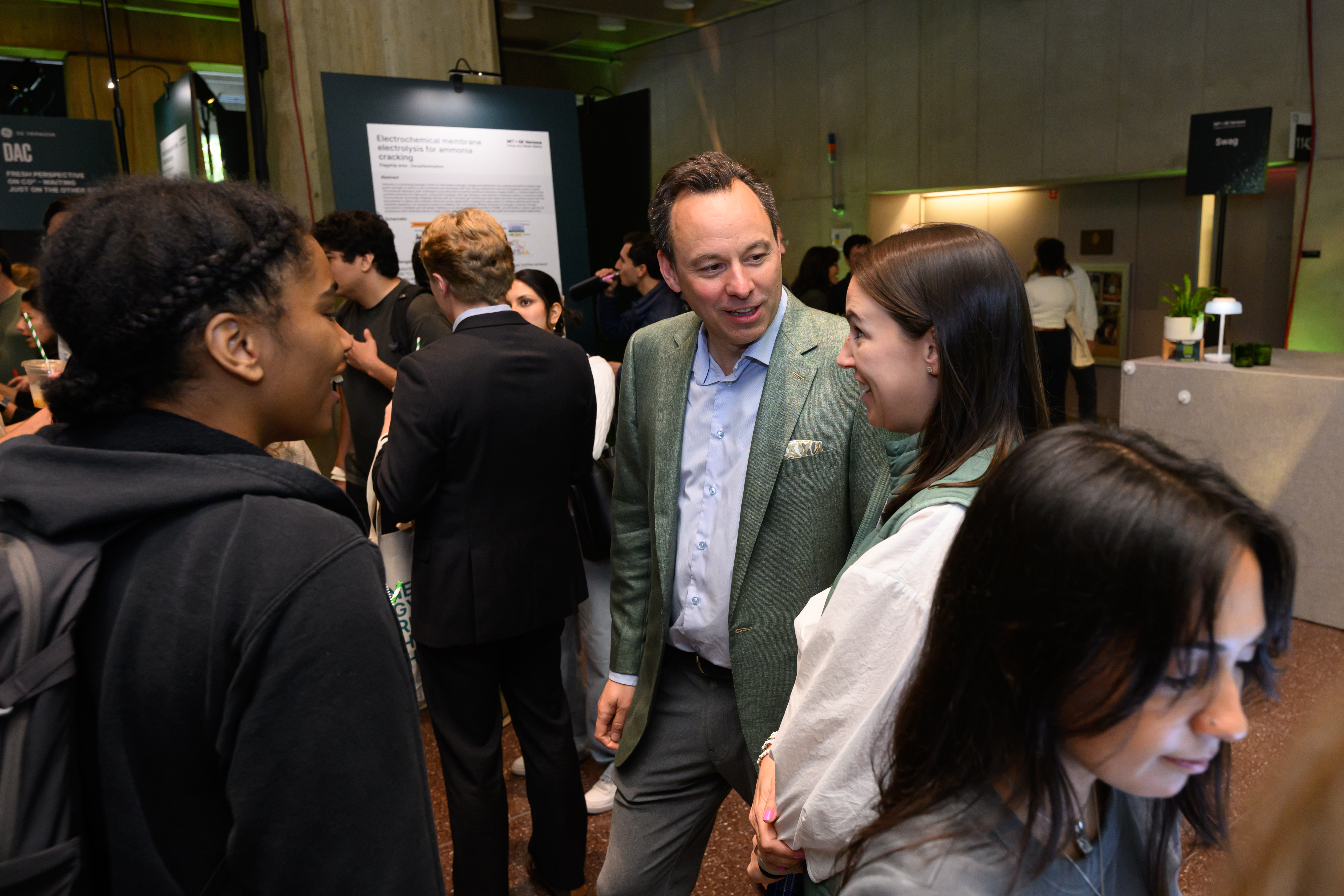
On May 7, 2026, he and other executives welcomed 50 interns from MIT, Boston University, Tufts, and other local schools to the Cambridge headquarters. His advice gave them permission to arrive with different styles of leadership and to treat the company as somewhere to experiment.
“Leaders come in all shapes and sizes.”
Scott Strazik, speaking to interns, May 2026
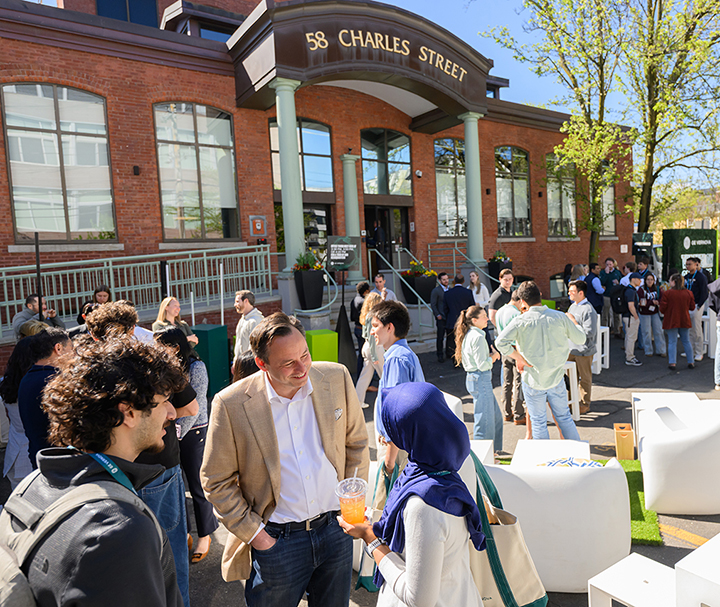
For a leader trained in industrial labor relations, this is a fitting preoccupation. A factory expansion needs people to make it useful. Recruiting them requires a persuasive account of what their work will accomplish. The photograph outside the headquarters captures a quieter part of running an energy business: explaining why a young person might want to join it.
The future already has a delivery schedule
By July 2026, the scale of the commercial opportunity was visible in the order book. GE Vernova reported second-quarter orders of $24.2 billion and revenue of $11.1 billion. Its backlog reached $176 billion. Those figures describe work promised across the business, rather than money already earned or equipment already delivered.
Gas Power’s equipment backlog and slot reservation agreements together represented 116 gigawatts. The company set out plans to expand annual gas-turbine output, with 24 gigawatts targeted for 2028 and actions intended to support 30 gigawatts in 2030. Capacity plans are promises about factories as much as forecasts about customers.
More turbines. Years of work.
In April 2026, Strazik described heavy-duty gas-turbine lead times as roughly three years. He also said he spent substantial time with the supply chain. The details give his job its actual shape. A customer’s desire for electricity has to become a production slot, a supplier commitment, a piece of equipment, and a functioning plant.
The demand behind that work extends beyond data centers. Strazik points to manufacturing investment and electrification as well as artificial intelligence. AI makes a compelling headline, but his operating argument depends on a wider collection of customers needing more power. An order book has room for several explanations at once.
Optimism, with the cranes already installed
His confidence becomes most interesting when he explains the practical limits. Discussing U.S. investment in April 2025, Strazik emphasized existing factories: concrete already poured, cranes already in place, rail connections nearby. Expanding those assets could move faster than starting from an empty site. There was considerable value in what the old company had left standing.
He applied a similar discipline to volatility. After tariff announcements, his teams evaluated sourcing alternatives and supplier terms. His account distinguished preparing options from immediately acting on them. Urgency could mean doing the analysis quickly while allowing a decision to wait for better information.
“Infrastructure doesn’t get built on style points.”
Scott Strazik, April 2025
That sentence captures the appeal, and the test, of his leadership. The future he describes needs more electricity, lower emissions, people willing to build machinery, and customers able to afford it. Those objectives have to meet in functioning equipment. A persuasive speech cannot make a transformer arrive sooner.
His career has brought him steadily closer to that point of delivery: from finance to commercial operations, from equipment and services to a whole company. The students in Cambridge are being invited into the same world. There are ideas to pursue and work to finish. Strazik’s wager is that enough of them will find the second prospect as absorbing as the first.