In January 2026, Scott Painter bought his way back to a problem he had been working on for twenty years. A group led by his Fair Holdings completed the take-private acquisition of TrueCar, and its founder returned as chief executive. Most people would regard founding a car-buying company, taking it public and leaving it as a reasonably complete itinerary. Painter had booked a return.
The car industry has given him plenty of reasons to find another hobby. His companies have tried selling vehicles online, explaining what other buyers paid and letting drivers subscribe instead of committing to ownership. Along the way have come public markets, dealer rebellions, departures and fresh companies with fresh names. The recurring subject is the expensive, awkward business of getting a set of keys.
Painter's career invites a simple reading: a persistent entrepreneur keeps chasing the same opportunity. Look closer and there is a more interesting story about the people on the other side of a transaction. A buyer wants a better deal. A dealer needs a viable business. Somewhere between those two sentences, Painter has spent much of his adult life.
A teenager with an automotive habit
Born in Seattle in 1968, Painter grew up near Sacramento. At fourteen he started an automotive business. The attraction to cars arrived before the venture capital, before the websites and before anybody needed an explanation of a subscription fleet. It gives his later career a continuity that a list of company names tends to obscure.
He served in the Army as an interrogator, attended West Point and later studied political economics at the University of California, Berkeley. He left Berkeley without graduating. His early ventures included AUTOAccess, an electronic database of used cars for sale. A database is a modest object compared with a showroom, but it addresses a useful question: who knows what is available?
He also developed interests well away from a desk. In a 2010 account of technology entrepreneurs who kiteboarded, Painter recalled taking a traction kite onto the beach in Santa Monica while wearing Army boots. He had attended the Mai Tai kite gathering in Maui for four years. The picture is enjoyable without requiring a business lesson: a future car-pricing executive being pulled down a beach in entirely unsuitable footwear.
1998: put the showroom on a screen
CarsDirect emerged from Bill Gross's Idealab in 1998, with Gross and Painter as co-founders and Painter as its founding CEO. Its national launch followed in 1999. The proposition went further than a page of classified advertisements: customers could research a vehicle, arrange financing and order a car through the service. An automobile was becoming something you could shop for at a keyboard.
That ambition had a physical ending. CarsDirect offered delivery to a home or office, including by flatbed. The internet could carry the information, but somebody still had to carry the car. This distinction would return in different forms throughout Painter's career. A cleaner screen can make a transaction inviting; behind it sits an industry of inventory, finance, paperwork and people.
By November 1999, the company had more than 400 employees. Robert Brisco took over as CEO that month, and Painter became vice chairman. His time running the company had been brief, but the connection endured: CarsDirect became the starting point for the business later known as Internet Brands. Painter belongs to its founding history, rather than its current management roster.
He kept trying variations. Direct Ventures applied internet sales to costly purchases beyond cars. Build-To-Order explored a different approach to vehicle manufacturing. His professional record also includes online advertising, energy pricing and private-company shares. Cars remained the recurring interest, but the larger preoccupation was how a market could be reorganized around better information and a different route to the customer.
- 1998CarsDirectOrder online
- 2005TrueCarUnderstand the price
- 2016FairChange the commitment
- 2022Autonomy launchSubscribe to an EV
The price was the easy part
TrueCar's corporate roots date to 2005. The business began as Zag, developing car-buying programs for partner organizations; the TrueCar pricing service arrived later, and the businesses merged in 2010. Painter's idea made a familiar anxiety measurable. Before agreeing to a price, a shopper could see what other people had paid. The person at the negotiating table could arrive with evidence.
For buyers, that could feel wonderfully clarifying. For dealers, it could sound like an invitation to surrender their margin. Between December 2011 and February 2012, roughly a third of TrueCar's 5,600 certified dealers left. The company had made the price easier to understand while making its relationship with the sellers considerably harder.
Inside TrueCar, the crisis acquired a nickname: the Swirl. It is an unusually honest piece of corporate vocabulary. Dealers objected to a model they feared would push prices downward and to the costs of acquiring a customer through the service. The episode exposed a practical limit on the original pitch: a marketplace needs enough participants willing to keep showing up.
The business survived and reached the public market in May 2014. At the end of that year, its certified dealer network exceeded 10,000. In his annual letter, Painter argued that transparency could improve the economics of doing business. It was a striking way to frame fairness: as an economic proposition. His claim would have to survive an income statement.
The 2014 results also supplied a useful distinction. TrueCar reported positive operating cash flow for the year, alongside a net loss of $48.4 million. A company can pass one financial milestone while still facing another. Read together, the numbers give a more grounded picture than an opening-day stock photograph: a substantial operation, growing quickly, with unfinished work.
“Truth and transparency is a more profitable way of doing business.”Scott Painter / 2014 annual letter
A car, for as long as you need it
Painter's first tenure at TrueCar ended in December 2015, when Chip Perry succeeded him. In 2016 he co-founded Fair with Georg Bauer, whose career included senior automotive finance roles at Mercedes-Benz, BMW and Tesla. The partnership joined a technology founder's appetite for changing the transaction with someone who knew the machinery of vehicle finance.
Fair offered flexible access to used vehicles through an app. Rather than concentrating only on the purchase price, Painter was turning to the commitment attached to it. A conventional loan or lease reaches far into a driver's future. A subscription promises a different relationship with time, and with the possibility that a person's circumstances might change.
Fair also brought a difficult departure: Painter resigned as CEO in October 2019. By October 2020 he was announcing NextCar Holding Company, another vehicle-subscription venture. Its stated task included making the model profitable at scale. There was no shortage of appetite for convenience; the challenge was building a durable business underneath it.
NextCar's announcement described bundling vehicle costs into a recurring payment. Autonomy later brought Painter and Bauer's subscription approach to electric vehicles, beginning with the Tesla Model 3 in California in 2022. A different powertrain, a different agreement and an app stood between the driver and the keys. The ambition was still recognizably Painter's: reduce the ceremony and the commitment required to get moving.
The financing remained consequential. In December 2025, Finacity announced a $25 million receivables facility for Autonomy. Painter said it would support adding about 1,250 vehicles and broadening a previously Tesla-only fleet. Those were expansion plans tied to new funding. Even a business built around flexibility needs a patient answer to the question of who pays for the cars.
Back through the same door
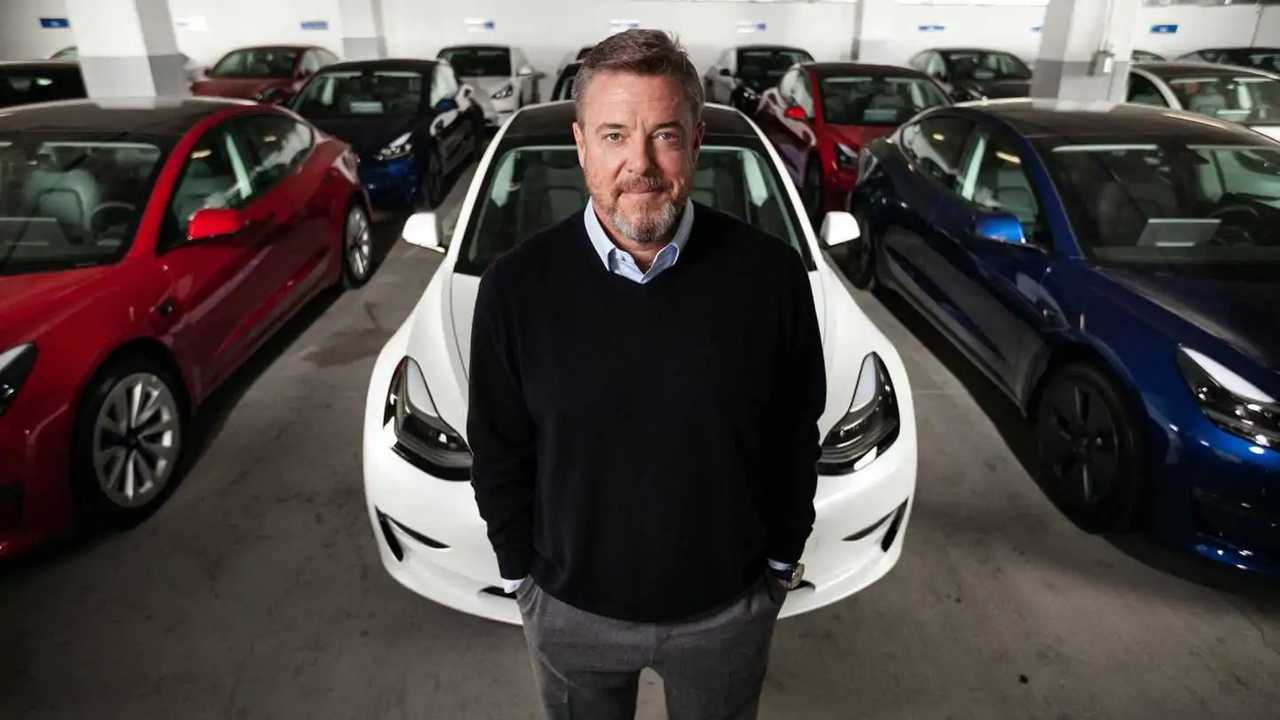
The TrueCar return in 2026 brought Painter back to an established network rather than a blank screen. His acquisition group included PenFed, Zurich North America and AutoNation. Bauer became chairman of Fair Holdings. These were relationships spanning lending, insurance and retail - the very functions a buyer encounters after deciding which vehicle looks appealing.
Painter began by narrowing the operation. In February, TrueCar curtailed TrueCar+, TrueCar Marketing Solutions and TrueCar Wholesale Solutions. Parts of their technology could feed the core platform, but the wholesale subsidiary would stop buying and holding vehicles. The returning founder was drawing boundaries around the business he intended to run.
That reset had a human cost. On February 24 the company announced a 30 percent workforce reduction. Painter said he had met every team member following the acquisition. The announcement placed profitability ahead of expansion. A founder's return makes an attractive plot; for the employees leaving, it also meant the end of a job.
March brought revised dealer standards: individualized offers below a dealer's lowest publicly advertised price, alongside stronger sales-verification requirements. The program paired a shopper's expectation of a credible offer with the dealer's interest in converting that shopper into a sale. After years arguing about transparency, Painter was again working on the rules that might make it commercially acceptable.
On April 15, TrueCar announced that it had achieved profitability. It also laid out a sequence: simplify the business, improve product and pricing, then expand through affinity partnerships. The announcement was a company-reported milestone, rather than a full set of public-company accounts. Still, it gave the return a concrete early result beyond the ceremony of reacquiring a familiar name.
- JANFounder-led acquisition closes
- FEBThree initiatives curtailed; workforce reduced 30%
- MARNew offer and sales-verification standards
- APRTrueCar announces profitability
The next car is still the question
In June 2026, Fred Weick became Autonomy's CEO, while Painter moved to lead director and continued running TrueCar. The division of responsibilities is a revealing point in a career crowded with beginnings. Staying involved can mean holding a board role while another executive takes charge of the daily operation.
Painter has also paid attention to small things that customers encounter before any technology. Discussing Autonomy's domain name, he explained the value of a name people could reach without having to remember a clever variation. CarsDirect, TrueCar, Fair, Autonomy: each name makes an argument before the product has loaded. The difficulty begins when the company must deliver on it.
His route from a teenage automotive business to a second turn at TrueCar has followed a stubbornly ordinary concern. People want to know what they are paying, what they are getting and how long they are committed. Dealers, lenders and fleet operators need the arrangement to pay for itself. Painter keeps returning to the space where those requirements meet.
That leaves his latest chapter with a better ending than a victory lap: work to do. He has another opportunity to make a familiar promise hold up in everyday transactions. The buyer will eventually leave the screen, meet the dealer and look at the final number. For all the companies and all the starting over, that is still where the story gets decided.