Scott McCafferty’s new company managed four hours of invincibility. The plan was ready. He and Mike Emich knew advertising sales, had recruited experienced people and believed they understood where publishing was going. Then their first team meeting ended, and confidence began to leave the room. The editorial recruits withdrew; the sales recruits proved less persuaded by the vision than the founders had hoped. A promising launch had acquired the inconvenient distinction of needing another plan.
“Our entrepreneurial spirit and indestructible enthusiasm lasted four hours.”
Scott McCafferty, recalling the launch
“Our entrepreneurial spirit and indestructible enthusiasm lasted four hours,” McCafferty recalled. It is a useful opening to a career often measured in acquisitions and growth lists. Before the chairman’s title and the expanding portfolio came the discovery that a business plan cannot make another person believe. Enthusiasm has its uses. It is a poor employment contract.
His response was to regroup. WTWH Media launched in 2006, and the experience became part of the story he told about building it. In his account, the lesson was practical and immediate: ideas and technology depended on the people willing to carry them out. He would return to that point long after the company had more reassuring numbers to discuss.
The first reality check.
Twenty years of building followed.
The customer had already moved
The dissatisfaction that preceded WTWH was specific. As a media salesman, McCafferty kept proposing ways to use the internet. His ideas were frequently rejected. Meanwhile, customers were shifting money toward options his employer did not provide. Selling what was available increasingly meant asking buyers to overlook what they actually wanted. There are easier ways to maintain a cheerful relationship with a customer.
Emich shared his frustration. Together they started Design World and its companion website, serving design engineers. Their wager concerned control: engineers would choose the channels that suited their work, and marketers would demand evidence that their spending achieved something. The publisher would have to accommodate both. One early example was decidedly concrete: manufacturers could put CAD drawings on the website for engineers to use in their designs.
That detail explains more than a grand declaration about digital transformation. A drawing could help someone do a job. A manufacturer gained a useful reason to be present. McCafferty was selling access through usefulness, with the reader’s working day setting the terms. In a 2015 look back, he said they had literally bet the house on the business. Their confidence had come with collateral.
A publisher with a start-up habit
By 2013, seven years into the business, McCafferty still described the company as operating with a start-up mentality. He outlined a set of working principles: adopt technology, let people participate, reduce the risk of participation for marketers and take content beyond the printed page. He also distinguished moving early from moving so early that a technology became an expensive distraction.
That year, WTWH bought edaboard.com, an electrical engineering forum. It was also investing in a dashboard called One View, intended to let marketers inspect their online activity through a secure login. A community where engineers could exchange knowledge and a reporting tool for advertisers served different needs. Together, they made his original proposition tangible.
He argued for staying flexible and intellectually curious as distribution changed. This is the less glamorous side of a media business: adapting the machinery while keeping its purpose intelligible. Readers do not owe a publisher loyalty to a format. Advertisers have their own ledgers. McCafferty’s formula asked the company to keep earning the attention of one and the expenditure of the other.
Useful content, delivered on their terms.
Measurable returns on their investment.
McCafferty’s recurring business premise, from Design World onward.
The acquisition lesson fitted on a list
McCafferty credits David H. Murdock with advice that made buying businesses sound refreshingly free of ceremony. Asked how he approached acquisitions, Murdock described choosing an industry, making a list of companies and contacting their owners. An interested owner opened a negotiation. An uninterested one meant moving down the list. The method had room for rejection without requiring a personal crisis.
McCafferty adopted the approach. By June 2015, he said WTWH had applied the principle five times. Expansion could begin with a conversation with someone who had already built a community. It was a way to add an audience and the work that sustained it, alongside launching publications of the company’s own.
The later engineering expansion shows both methods at work. In 2023, the company launched Automated Warehouse, EV Engineering and OEM Packaging. That December, it acquired Engineering.com’s digital media assets, bringing in a network described at the time as having more than two million active registered users. Technical articles, videos, forums and educational material joined an existing group that included Design World, EE World Online and The Robot Report.
Growth, with names attached
In May 2024, CFE Media joined WTWH. Its titles included Control Engineering, Plant Engineering, Consulting-Specifying Engineer and Industrial Cybersecurity Pulse. McCafferty’s announcement spent time on the people: co-founders Jim Langhenry and Steve Rourke, CEO Patrick Lynch and sales leader Matt Waddell. He connected the purchase to newer warehouse and packaging publications and to opportunities for in-person events. The expansion had an operating purpose beyond a longer list of logos.
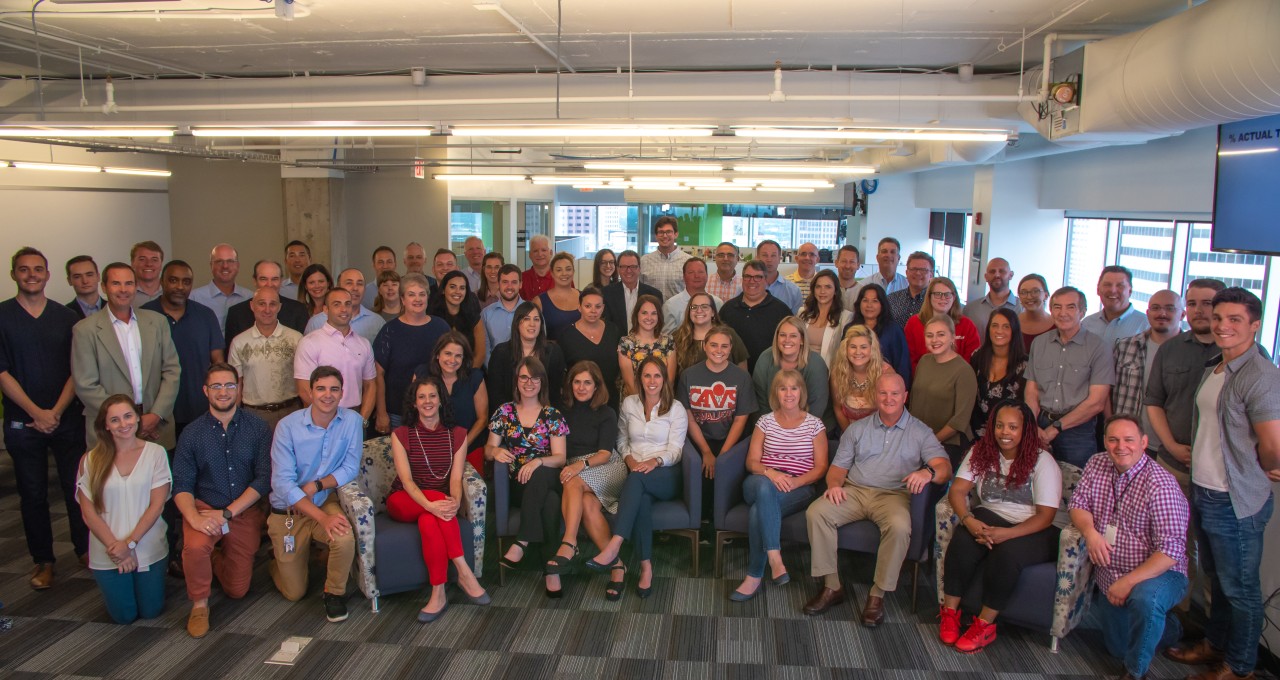
His interest in colleagues had earlier taken a more domestic form: an annual January gathering to look ahead and recognize the previous year’s work. In 2016, he described a business that had gone from six people at the beginning to nearly 60. Recognition reached across editorial, graphics, production, web development, marketing and sales. An editor and a salesperson could both matter without pretending they did the same job.
For the 2015 awards, Lee Teschler received the Willing to Work Harder honor. Lisa Eitel and Michelle Frose were recognized as editors, Jen Kolasky as rookie of the year, and Mike Caruso for sales. Naming them makes the point more effectively than a general compliment to the team. These were particular people doing particular work. “We might have had the right vision, but our team has built a great company,” he wrote.
The numbers kept moving. So did the meaning.
McCafferty had wanted to appear in Inc. long before he had a company eligible for its growth list. As a college student, he read the annual Inc. 500 issue and imagined becoming an entrepreneur. His own account of the route includes caddying, disappointment in school sports and academics, an unsuccessful first venture, and time in undergraduate and graduate education. It is a considerably less polished introduction than the title chairman suggests.
The appetite for a numerical destination remained. In July 2020, he described successive sales milestones that had each seemed capable of solving the founders’ problems: $3 million, then $5 million, $7 million, $10 million and more. The next target kept replacing the last. He also described sharing financial success with employees through rewards and recognition, and a widening interest in how work could support their development.
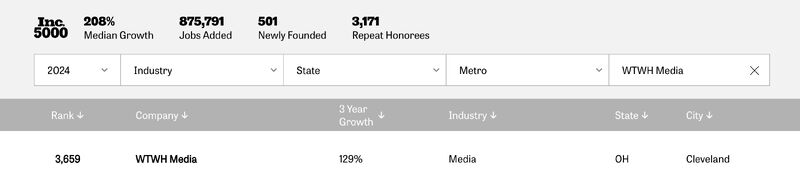
By 2024, he was celebrating WTWH’s eleventh appearance on the Inc. 5000 and a team of more than 200. His anniversary reflection included a joke about still having a profile photograph from 2006: “If I update my profile pic from 2006 maybe it will be true.” The company had acquired plenty of new properties. Its co-founder’s online portrait apparently required a separate timetable.
Inc. 5000 appearances
Celebrated by McCafferty in 2024
A chairman who intends to keep cheering
The next change involved his own job. WTWH partnered with Mountaingate Capital in December 2022; the investor announced the deal the following January. McCafferty described the attraction in terms of resources, experience in media and digital marketing, and support for expansion. The partnership gave the business another route to add capabilities and pursue acquisitions. It also helped set up a succession conversation.
In his 2025 announcement welcoming Matt Logan, McCafferty said the eventual move to chairman had been openly discussed as part of the plan. He also pointed to Clara, the company’s audience and analytics platform, which supplied client reporting and audience insights. The old insistence that marketing should be measurable had acquired another piece of software and a name.
The CEO change was publicly announced on March 6, 2025. Logan arrived with experience at Informa Markets and RELX; McCafferty became chairman of the board. The role left him involved in the company’s growth while someone else took executive responsibility. He promised to keep backing the team and helping Logan. For a founder accustomed to asking people to join his vision, the next assignment included helping another leader carry it forward.
- Investment partnerWTWH partners with Mountaingate Capital.
- New CEOMatt Logan takes over; McCafferty becomes chairman.
- Arrowfly arrivesA new corporate name; established publication names remain.
Twenty years later, a different name
On July 13, 2026, WTWH Media became Arrowfly. The company announced a portfolio of more than 40 media brands and more than 45 industry events. Its individual publications and events retained their established names. Design World’s readers did not need to learn a new name for Design World simply because the parent company had changed the sign above the door.
Clara remained part of the offer, giving marketers visibility into engagement, audience quality and conversion as campaigns ran. There is a recognizable thread from the early CAD drawings and the One View dashboard to this reporting platform. The tools have changed, and the portfolio has widened. The recurring question is whether the company can be useful enough for professionals to return and accountable enough for marketers to return with them.
McCafferty now occupies the chairman’s seat in a business whose first burst of certainty lasted half a working day. He has spent much longer explaining why other people made the rest possible. A new corporate name can be announced on a Monday. Getting people to keep reading, participating and doing the work takes rather more repetition. That is the task he helped build a company around.