Four and a half months into a new job, Samra Anees had already collected three office stamps: San Francisco, New York and Rio. She called it her Carta office bingo card. The phrase is light, almost throwaway, but it gives away her method. When the market is unfamiliar and the role sits beside a chief marketing officer, she goes where the people are. Meetings, lunches, walks, coffee runs. The official work happens in calendars and decks; the understanding arrives between them.
Anees had joined Carta after nearly six years at Cisco. She did not pretend the change felt effortless. The role involved a new company, a new market and a great deal to learn. It scared her a little. Months later, with the move beginning to make sense, she described the leap as worth it.
This is a useful opening because corporate biographies tend to sand away apprehension. Every move becomes inevitable after it works. Anees left the nerves in the picture. Discomfort was not a dramatic enemy to conquer. It was simply part of choosing a larger learning curve.
“I said yes to a role that scared me a little.”Samra Anees, reflecting on joining Carta
She began by studying how people think
The route to the CMO’s office did not begin with an advertising degree or a viral campaign. Anees earned a B.A. in cognitive science from the University of California, Berkeley. Cognitive science is interested in perception, language, memory, attention and decision-making. Marketing, when stripped of its conference vocabulary, is interested in many of the same things.
Her first visible professional chapter sharpened that connection. In early 2019, she joined Aragon Research as an associate analyst and editor in Silicon Valley. Her beat was broad: customer journeys, the digital workplace, image and video analytics, and voice analytics. She worked on research about web and video conferencing, enterprise backup, customer experience clouds, board meeting platforms, and document and contract analytics.
B.A., cognitive science
Enterprise-tech analyst
Marketing operator
The work required a particular kind of translation. A research note must understand the machinery without becoming machinery itself. It has to say what a technology does, who will use it and what could go wrong. Anees’s writing on facial recognition made that last question concrete. A face can be tracked in ways an identification card cannot. The technology may be impressive; the consent around it may be flimsy.
In another piece, she examined research showing how supposedly anonymous demographic data could be used to re-identify individuals. Her conclusion was not coy. Collectors needed to consider privacy before data could be misused, rather than discovering the problem afterward. She was writing in 2019, before the current flood of synthetic media and ambient AI made questions about data, identity and consent impossible to reserve for specialists.
The analyst’s desk, 2019
That analyst’s habit matters in her later career. The chief of staff role is often described through verbs like coordinate, align and prioritize. All are accurate and none are vivid. Underneath them is a more interesting task: see the whole system, notice where the story and the operation disagree, and help a leadership team decide what deserves attention now.
At Cisco, curiosity found a department
Anees moved to Cisco in 2019 and stayed for nearly six years. Her own farewell tells more about those years than a stack of job descriptions. She thanked Isaac Khan for seeing potential in her, pushing her hard and providing hours of training that shaped both her career and her approach to work. She thanked Saleema Syed for encouraging her curiosity and giving her the chance to find her footing in marketing.
The phrasing is revealing. She did not announce that she had always been a marketer waiting for the right business card. She found her footing. Someone opened a door, then she learned the floor plan.
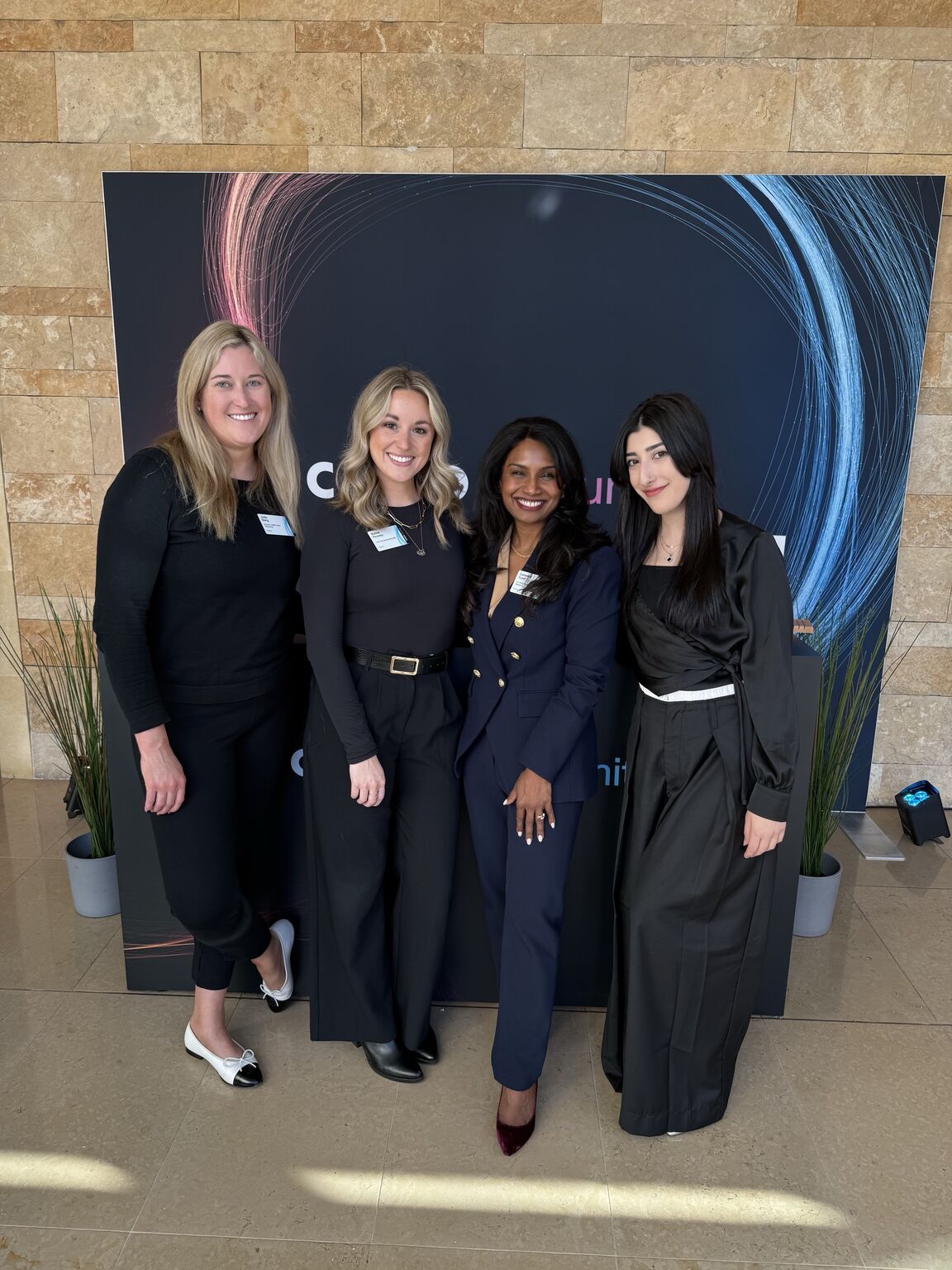
Her farewell named colleagues one after another, a long roll call of people she described as friends. The list was not ornamental gratitude added after the career update. It was her account of how growth actually happened. Training, permission, pressure, encouragement, jokes, shared work. The individual career, in this telling, was a team production.
Colleagues returned the portrait. Syed highlighted Anees’s ability to bring structure, her attention to detail and her way of approaching challenges. Those are chief-of-staff qualities before they become a chief-of-staff title. Structure is not glamour’s natural companion, which may be why marketing needs it so badly. Ideas enjoy arriving. Someone still has to arrange the chairs, make the decisions and get the idea through the door on time.
Then came the unfamiliar market
In August 2025, Anees announced that she was leaving Cisco. The goodbye was difficult, she wrote, precisely because the relationships were real. But she had accepted a new opportunity. That next chapter was Carta, the equity and fund-management software company, where she became Chief of Staff to the CMO.
The category comes with a vocabulary dense enough to make even fluent business readers reach for a pencil: cap tables, 409A valuations, fund administration, limited-partner reporting, equity plans and tender offers. Each term represents an arrangement among people who care about ownership, price, timing and trust. A clear marketing story has to respect the financial machinery while making its purpose intelligible to founders, employees, investors and fund managers. It is a translation problem wearing a finance badge.
That makes Anees’s arrival less of a departure from her earlier work than it first appears. At Aragon she examined technical markets whose jargon could obscure their human consequences. At Carta, the objects are shares, valuations and funds, but the communication challenge is familiar. A platform can automate a workflow; it cannot decide which detail an audience needs first. The marketing organization has to turn a complicated product system into a sequence of understandable promises, then make sure the experience can keep them.
She arrived while Carta’s outward story was visibly moving. The company relaunched its brand. It began a partnership with the Golden State Warriors. Its message appeared at events and conferences around the world. There was an end-of-year gala at Chase Center, which Anees cheerfully filed under perks. There was also a first sales kickoff, the less glittering but more instructive ritual where a company’s ambitions meet targets, territories and the people expected to deliver them.
A chief of staff operates between those scenes. The brand moment and the planning meeting are not separate universes. The stage depends on the spreadsheet; the message depends on the choices made weeks earlier. Anees’s background fits that junction neatly. Research taught her to interrogate systems. Cisco taught her how a large technology marketing organization moves. Cognitive science supplied an enduring interest in how people receive information. Carta gave those strands a new market in which to meet.
“Once you commit to pushing through the discomfort, it’s incredibly rewarding to see the impact of your efforts come together.”Samra Anees
The operator’s real instrument is attention
The popular picture of a chief of staff is a human switchboard: messages in, decisions out. Anees’s public account suggests something warmer. During those first months, she emphasized time in person with teammates. Meetings mattered, but so did lunches, walks and coffee. They built relationships beyond the assigned work, she said, and made the work itself more fun.
Fun is easy to dismiss as a soft benefit until one notices what it does. People volunteer context. They raise a concern sooner. They explain the history behind an odd process. They take another pass at a hard problem because the room feels worth returning to. In coordination-heavy work, affection is not a substitute for rigor. It can be one of rigor’s conditions.
Her story so far does not require a heroic makeover. The appeal lies in continuity. The cognitive science graduate kept studying how people interpret systems. The analyst carried her questions into marketing. The marketer became an operator close to executive decisions. At every stage, curiosity needed structure if it was going to become useful.
There is also a refreshing refusal to make the career look solitary. Anees names the mentor who challenged her, the leader who encouraged her, the colleagues who became friends and the new team that made a daunting transition enjoyable. Ambition appears here with a crowded table.
When she wrote about her first four and a half months at Carta in January 2026, Anees called them a preview of an exciting year ahead. A preview is not a victory lap. It is a promise to keep watching, learning and doing. For someone who began her career explaining emerging technology, that posture feels familiar. The subject has changed. The attentive reader remains.