Long before Mike Higashioka sat beside a chief marketing officer, he worked on a problem shaped like a crescent. The knee meniscus is an awkward piece of natural engineering: one region is better at bearing compression, another is better at handling tension, and both must cooperate without coming apart. In a UC Davis laboratory, Higashioka and three colleagues tried to recreate that arrangement with living cells. Their task was not merely to make tissue. It was to make differences coexist.
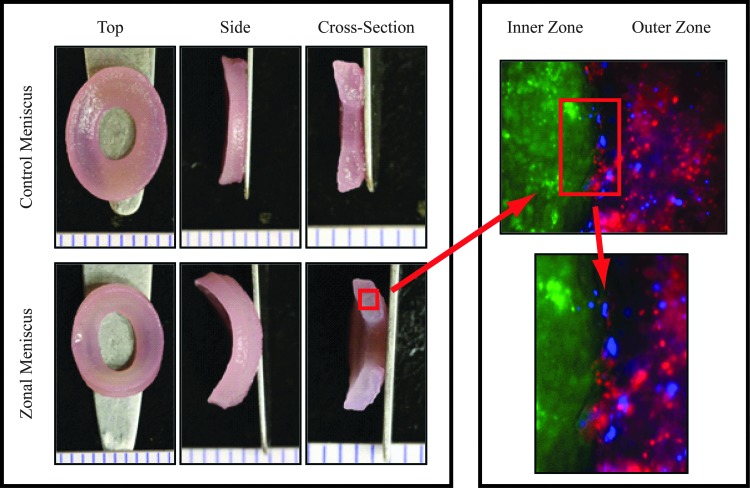
The resulting paper, published in Tissue Engineering Part A in 2014, has the gloriously uncommercial title “Building an Anisotropic Meniscus with Zonal Variations.” It describes an inner zone made entirely from articular chondrocytes and an outer zone made from a mixture of chondrocytes and meniscus cells. The two zones retained distinct properties, yet integrated. In the radial tensile test, the interface behaved as though it were not there.
This is not a claim that a corporate career can be diagnosed from a laboratory experiment. Résumés are not microscopes, however much LinkedIn may wish otherwise. But the paper supplies an irresistible motif for what followed. Higashioka would leave tissue engineering for management consulting, then move into the office of a technology-company CEO, then into the junction where marketing strategy, operations, analytics and executive judgment meet. Again and again, his work landed at the seam.
First, make the parts behave differently
Higashioka studied biomedical engineering at the University of California, Davis, and later earned a master’s degree in mechanical engineering at Columbia University. His Columbia activities add two small human details to the technical record: he represented his department on the Engineering Graduate Student Council and served as vice outings chair of the university’s photography society. The engineer, in other words, also volunteered to help decide where people with cameras should go.
At UC Davis, his research asked how engineered tissue could copy not just the shape of a meniscus but its internal organization. The distinction mattered. Native tissue does not possess one uniform set of properties. The inner region is more suited to compression; the outer region, richer in collagen, handles greater tensile forces. A plausible replacement had to respect that division of labor.
The numbers tell a neat story of specialization. After four weeks, the engineered inner zone showed 42 percent higher instantaneous and relaxation compressive modulus values than the outer zone. The outer zone, meanwhile, had a 101 percent higher circumferential tensile modulus and 129 percent more collagen. Separate strengths, joined successfully. The study’s authors wrote that the two areas “fully integrated together” while remaining distinct.
Scientific research is an education in qualified verbs. One does not “prove” when one can “suggest,” nor “transform” when one merely “measure.” It also teaches an intolerance for the handsome answer unsupported by the test. Higashioka’s next field would reward those habits, even if its preferred specimens were companies and their operating models.
The consultant crosses the lab door
In 2013, Higashioka joined Accenture as a business analyst. He advanced to senior business analyst, then moved to PwC in 2015, where he worked first as a senior associate and then as a manager in advisory management consulting. The trajectory looks like a hard turn only if engineering is defined narrowly as the handling of physical things. Consulting also begins with a system that does not behave as intended. It also requires a model, a set of measurements and some tact around the interface.
By October 2017, Higashioka had joined Nutanix, the San Jose enterprise software company known for cloud infrastructure and its roots in hyperconverged systems. He entered as a senior manager in strategy and operations in the Office of the CEO. Two years later, he became a director in the same function. The promotions are the public milestones; the more interesting fact is the vantage point. The CEO’s office sees the entire machine, including the departments that would prefer to be considered separate machines.
A career in four operating systems
Same habit, wider field of view
In March 2021, he moved into marketing as senior director of strategy, operations and analytics. From April 2022, his remit also included serving as chief of staff to the CMO. The title is a stack of nouns that conceals a practical challenge: make the organization’s information useful to the person who must decide, and make that decision legible to the people who must act.
Ben Gibson, who served as Nutanix’s chief marketing officer, later wrote about the people who shaped his time at the company. He said Higashioka, along with Jeff Yuille, had made him “significantly better as a data-driven CMO.” Praise from a former boss is common currency online; specificity is rarer. Gibson did not merely call him excellent. He named the changed behavior: better decisions through data.
The work behind “data-driven”
“Data-driven” may be the corporate world’s favorite way to describe a car after removing the steering wheel. Data does not decide. It arrives late, contradicts itself, reflects the definitions chosen by its collectors and then waits for a human being to take responsibility. A strategy-and-operations leader makes that waiting period shorter and more honest. The role demands enough technical sense to question the metric, enough organizational sense to know who trusts it, and enough editorial sense to explain what matters.
Higashioka’s public footprint is modest beside the job’s scope. His LinkedIn profile lists a little over a dozen posts rather than an industrial content operation. The visible entries point outward, toward company work. In 2023 he highlighted the global partnership between Cisco and Nutanix around hybrid multicloud infrastructure. From NVIDIA GTC in March 2025, he wrote about Nutanix’s role in an AI data platform and the aim of helping enterprises “cut through the AI hype” with infrastructure designed to be private, resilient and manageable.
That last phrase is well chosen. Hype is the enemy of operations because it makes every possibility sound like a priority. Enterprise AI adds new technical questions to familiar managerial ones: where data resides, how workloads move, who controls the system, which costs scale unpleasantly, and how a promising demonstration survives contact with production. Strategic marketing must translate those questions without sanding off their difficulty. The chief of staff must then connect the translation to the company’s plans.
Higashioka’s route gives him several dialects for the work. Biomedical research supplied the grammar of hypotheses, properties and tests. Consulting supplied the grammar of clients, operating models and transformation. The Office of the CEO supplied company-wide context. Marketing added buyers, positioning and narrative. A less integrated career might leave those chapters competing for attention. In his, each appears to have prepared the next.
What holds at the interface
The most consequential people around an executive are often difficult to see from outside the company. Their output appears under someone else’s name, inside a planning process, or as a meeting that ends with an actual decision. Chief-of-staff work has a peculiar elegance when done well: the organization experiences less confusion but may not know whom to thank for its sudden good fortune.
There is still something to learn from the old meniscus experiment. The researchers did not force every region to become alike. They engineered difference on purpose, then concentrated on integration. That is a sound description of cross-functional work. Finance should not think exactly like marketing; an engineer should not wake up mysteriously speaking brand. The object is not sameness. It is an interface strong enough for the whole to carry weight.
Higashioka has now spent most of his public career performing some version of that task. At Accenture and PwC, the interface ran between analysis and client action. In Nutanix’s CEO office, it ran across the company. In marketing leadership, it runs between analytics, strategy, storytelling and execution. The materials keep changing. The crescent remains.
A career is often made coherent in retrospect, with the untidy parts politely cropped away. Higashioka’s needs less cropping than most. An engineer trained to examine how distinct zones hold together became an operator trusted to help an executive organization do the same. It is a progression with the satisfying geometry of a well-made bridge - though, given his first publication, perhaps a well-made joint is the more accurate compliment.