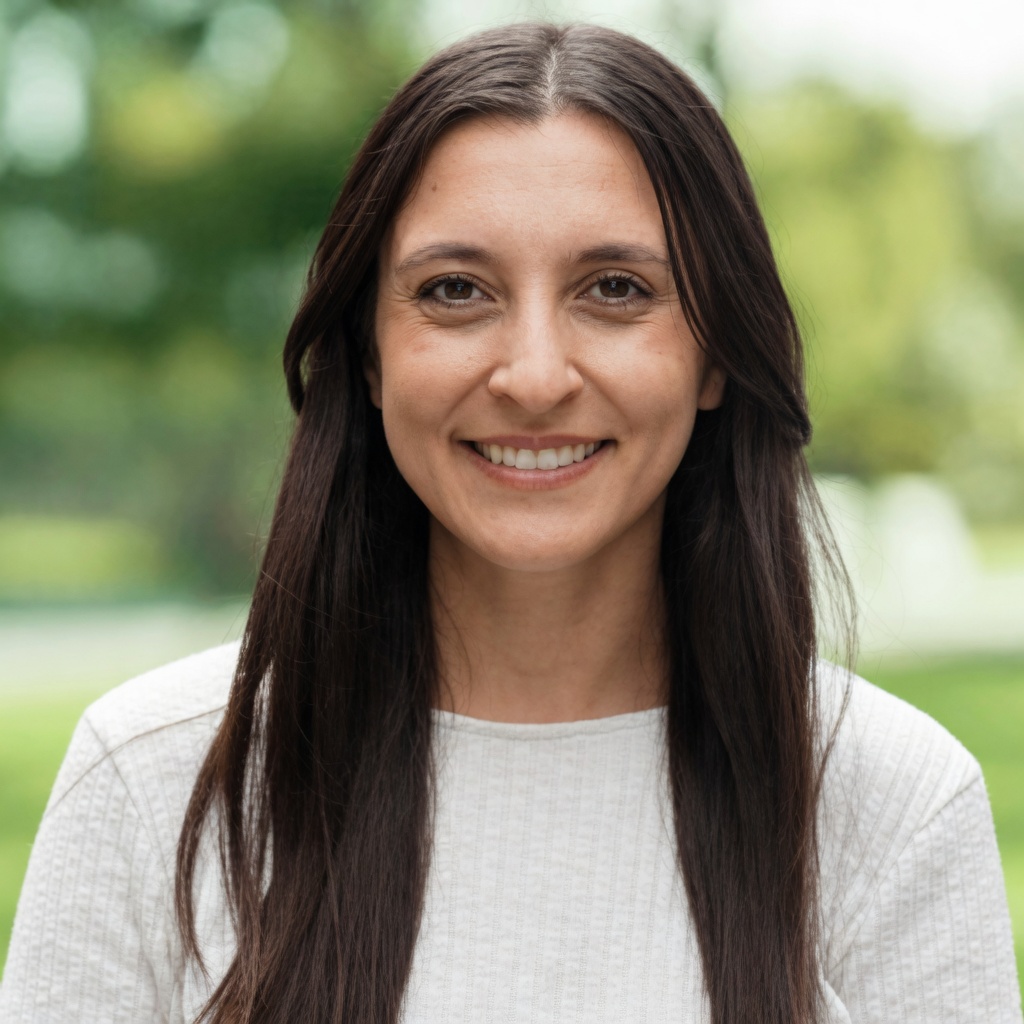
The Bridge Between Silicon Valley Capital and Real-World Care
Most VC partners can describe what a Direct Contracting Entity is. Samantha Walter built one - mid-pandemic, in 2020, when the entire healthcare system was improvising in real time.
There's a particular kind of knowledge that only comes from having sat across the table from a payor and watched a deal fall apart over a single contract clause. Samantha Walter has that knowledge. It's what makes her unusual at Andreessen Horowitz - and increasingly essential to the firm's bet on healthcare transformation.
Walter joined a16z's Bio + Health team as a Healthcare Partner - a title that, at a16z, means something specific. She's not picking deals. She's the connective tissue. Her mandate: help portfolio companies grow by building real partnerships with the people who actually pay for healthcare - payors, health systems, employers, and the rapidly expanding world of retail health. CVS, Amazon, Walmart, UnitedHealth, Elevance. The infrastructure of American medicine.
That requires a fluency most VC partners simply don't have. You can read every whitepaper about value-based care. You can sit in on every investor panel. But until you've actually drafted a performance-based contract, negotiated the fine print with a health plan's actuarial team, and then watched what happens when outcomes don't materialize on schedule, you're operating on theory.
Minneapolis to Madison to the Machine
Walter grew up in Minneapolis - a city with a serious healthcare ecosystem of its own (Mayo Clinic is two hours south; UnitedHealth Group has its headquarters in the suburbs). She studied finance at the University of Wisconsin-Madison, where she also spent a semester in Seville, Spain - an interlude that feels incongruous with the dense contractual world she'd eventually inhabit, but probably explains a certain ease with ambiguity that the job demands.
Her first real job after Madison was at Huron Consulting Group in New York City, focusing on healthcare revenue cycle management. Revenue cycle is not glamorous. It's the plumbing of hospital finance - coding, billing, denials management, the back-office mechanics that determine whether a health system gets paid for the care it delivers. Most people who start there stay there or move to hospital administration. Walter saw it differently: understanding how money flows through the healthcare system is the prerequisite to changing how it flows.
Her career traversed the full healthcare value chain before she turned 35: hospital consulting, payor-side BD, behavioral health tech, and VC. A credential set almost no one else on Sand Hill Road holds.Career Analysis - Samantha Walter Profile
The Operator Years: CareMore, Aspire, Carelon
From Huron, Walter moved into business development - first at CareMore Health and Aspire, then at Carelon Health (the Elevance subsidiary, formerly Anthem). This is where the real education happened. CareMore is an integrated care model, built for complex patients. Aspire is a palliative and serious illness care company. Both operate in the space where traditional fee-for-service medicine fails most visibly - with chronically ill, high-cost patients who cycle through emergency rooms and hospitals because the system isn't designed to meet them where they are.
Building business development for these organizations meant learning to speak the language of risk. Not financial risk in the abstract VC sense - but actuarial risk, clinical risk, the kind of risk that gets priced into a capitation contract and determines whether a care delivery company survives the year. Walter helped develop value-based care programs across mental health and primary care. She worked on both the behavioral health integration side (with Quartet Health later) and the serious illness side (with Aspire).
The DCE Moment
In 2020, during the COVID-19 pandemic, Walter helped build a Direct Contracting Entity. To understand what this means in practice: the Centers for Medicare and Medicaid Services created DCEs as a new model for taking financial risk in Medicare. You accept responsibility for a defined population of beneficiaries, build or partner with care delivery infrastructure, and then earn or lose money based on how you perform against a benchmark. It's sophisticated, legally complex, and requires navigating CMS regulations while simultaneously convincing care providers to change how they practice.
Building one in 2020 - when the healthcare system was in emergency mode, when every meeting was a Zoom call, when health plans were scrambling to figure out what pandemic-era care would cost - required a particular kind of nerve. Most organizations shelved their 2020 transformation initiatives and focused on survival. Walter's team launched one.
Revenue Cycle as Foundation
Understanding how money flows through hospitals - before learning how to restructure that flow. Most reformers skip the plumbing. Walter started there.
Full-Stack Operator
She touched every stakeholder type in U.S. healthcare: consulting, payor, care delivery, behavioral health tech, and now venture capital. Almost no one has done all five.
DCE Launch
Built a Direct Contracting Entity mid-pandemic. A payment model so complex it takes most founders months just to understand the acronym.
The Quartet Chapter
After Carelon, Walter spent time at Quartet Health as a Client Executive. Quartet Health is a company focused on integrating behavioral health into primary care - connecting patients who have both physical and mental health conditions with appropriate care, and helping health systems and payors manage that population. It's a company that sits at the intersection of everything Walter had worked on: the revenue cycle complexity of hospital systems, the value-based care models of CareMore and Carelon, and the technology-enabled care delivery that Silicon Valley was funding.
Her role as Client Executive meant deep work with health system clients - understanding their workflows, their goals, their constraints. The healthcare B2B sales cycle is notoriously long (12-18 months minimum for a large health system deal), and success requires building trust with clinical leadership, operations teams, and finance simultaneously. It's the kind of work that either exhausts you or gives you exactly the map you need.
The a16z Role: What "Healthcare Partner" Actually Means
When Walter joined Andreessen Horowitz's Bio + Health team, she stepped into a role that's relatively uncommon in venture capital. Most VC firms have investment partners who pick deals and sit on boards. A smaller number have operating partners who help portfolio companies with specific functions - recruiting, go-to-market, finance. What a16z has built with its Bio + Health business development function is something more specialized: someone who understands the buy side of healthcare well enough to open doors that founders can't open themselves.
The care delivery ecosystem is not a free market. Payors have compliance requirements and actuarial committees. Health systems have procurement processes and medical staff approval chains. Employers have benefit consultants and plan administrators. Retail health is newer and faster-moving, but still highly regulated. Getting a digital health startup from "proof of concept" to "signed contract with a major health system" requires navigating all of this - and usually requires relationships that take years to build.
Walter brings relationships across that entire landscape. She's worked with payors (Elevance/Anthem, Medicare's DCE program), care delivery organizations (CareMore, Aspire, Quartet's health system clients), and has the revenue cycle background to understand how health systems evaluate financial partnerships. For an a16z portfolio company trying to close its first major enterprise deal, that network is worth considerably more than a whitepaper about value-based care.
The Bio + Health Context
The a16z Bio + Health team has made significant bets on companies at the intersection of technology and healthcare delivery. Pearl Health (where a16z led an $18M round) is building infrastructure for primary care physicians to take on Medicare risk - exactly the kind of DCE-adjacent work Walter understands from the inside. The thesis is consistent: technology can make it economically viable for more providers and patients to participate in value-based care models, but only if the business development infrastructure exists to create those partnerships.
a16z's healthcare portfolio spans mental health (where Quartet Health's model is now well-understood), primary care, oncology, women's health, and increasingly the intersection of AI and clinical decision support. Each of these companies needs to navigate the same fundamental challenge: how do you get a risk-averse, compliance-heavy, slow-moving healthcare institution to pay for a new technology?
Payors
UnitedHealth, Elevance, Humana, Aetna, BCBS plans. The organizations that hold the financial risk in U.S. healthcare and write the biggest checks to vendors who help them manage it.
Providers
Hospital systems, physician groups, ACOs. Organizations that deliver care and increasingly need technology partners to hit quality and cost benchmarks.
Retail + Employers
CVS, Amazon, Walmart in healthcare. Employers managing benefits. New entrants reshaping where and how primary care gets delivered in America.
Career Timeline
Who She Is Beyond the Resume
Walter lives in New York City - a deliberate choice that keeps her embedded in the healthcare market where deals get done on the East Coast. The bulk of the major health system networks, health insurance headquarters (UnitedHealth is in Minneapolis, but its executives are everywhere; Elevance, Humana, Cigna all have major New York presences), and the employer benefits ecosystem are accessible from New York in a way they simply aren't from Menlo Park.
She enjoys traveling - which at her level of professional network-building is probably less vacation and more extended field work. She's been learning French. She skis.
These details matter less than this one: she chose to spend the formative decade of her career on the unsexy side of healthcare. Not the founding side. Not the VC side. The actual operational side - the contracts, the relationships, the slow grind of getting health systems to change behavior. That choice is what makes her useful now.