Nearly half an hour into an earnings call on April 24, 2026, Sam Sidhu gave the analysts listening a reason to reconsider what they had just heard. The voice delivering his prepared remarks had belonged to an AI clone. The chief executive of Customers Bancorp had arranged for a synthetic version of himself to do the talking. Then the human returned to take questions.
Earnings calls are elaborate rituals of reassurance. Executives explain the quarter; analysts test the explanation. Sidhu had inserted a small identity puzzle into the proceedings. Chief financial officer Mark McCollom made clear that his own presentation had been his work throughout. One could understand the impulse to establish an alibi.
The demonstration was memorable. The harder question arrived almost immediately: what would artificial intelligence actually do for the bank’s revenue? Sidhu said he hoped to show results by the end of the year, and into 2027. A convincing imitation could get people’s attention. A banking business would still have to earn it.
“The prepared remarks you heard on my behalf today were delivered by my AI clone, not read by me.”
Sam Sidhu · April 2026 earnings call
Banking in the family, a route of his own
There is a less theatrical way to understand Sidhu: follow the route he took before becoming a full-time banker. His father, Jay Sidhu, built a career in banking. Sam grew up in Pennsylvania with the industry already close at hand. Yet his early professional life took him through investment banking, private equity and property investment before he joined Customers Bank’s management.
At Goldman Sachs, he worked in the technology, media and telecommunications group from 2005 to 2007. He moved to Providence Equity Partners, working there from 2007 to 2009 and again from 2011 to 2012. Those dates place his early career across a period when financial institutions were learning how quickly apparently settled assumptions could unravel.
He also founded Megalith Capital Management, a real estate investment firm focused primarily on New York City. Its work included acquiring, repositioning, developing and managing residential, commercial and mixed-use properties. The combination matters to his later career: technology businesses, investment decisions and physical assets all appeared on his desk before commercial banking became his day job.
His education followed a familiar finance route, through the Wharton School at the University of Pennsylvania and an MBA at Harvard Business School. Familiar credentials, however, do not explain the specific operating choices he would make. For those, the more useful distinction is between studying a bank from its boardroom and having to make its departments work together.
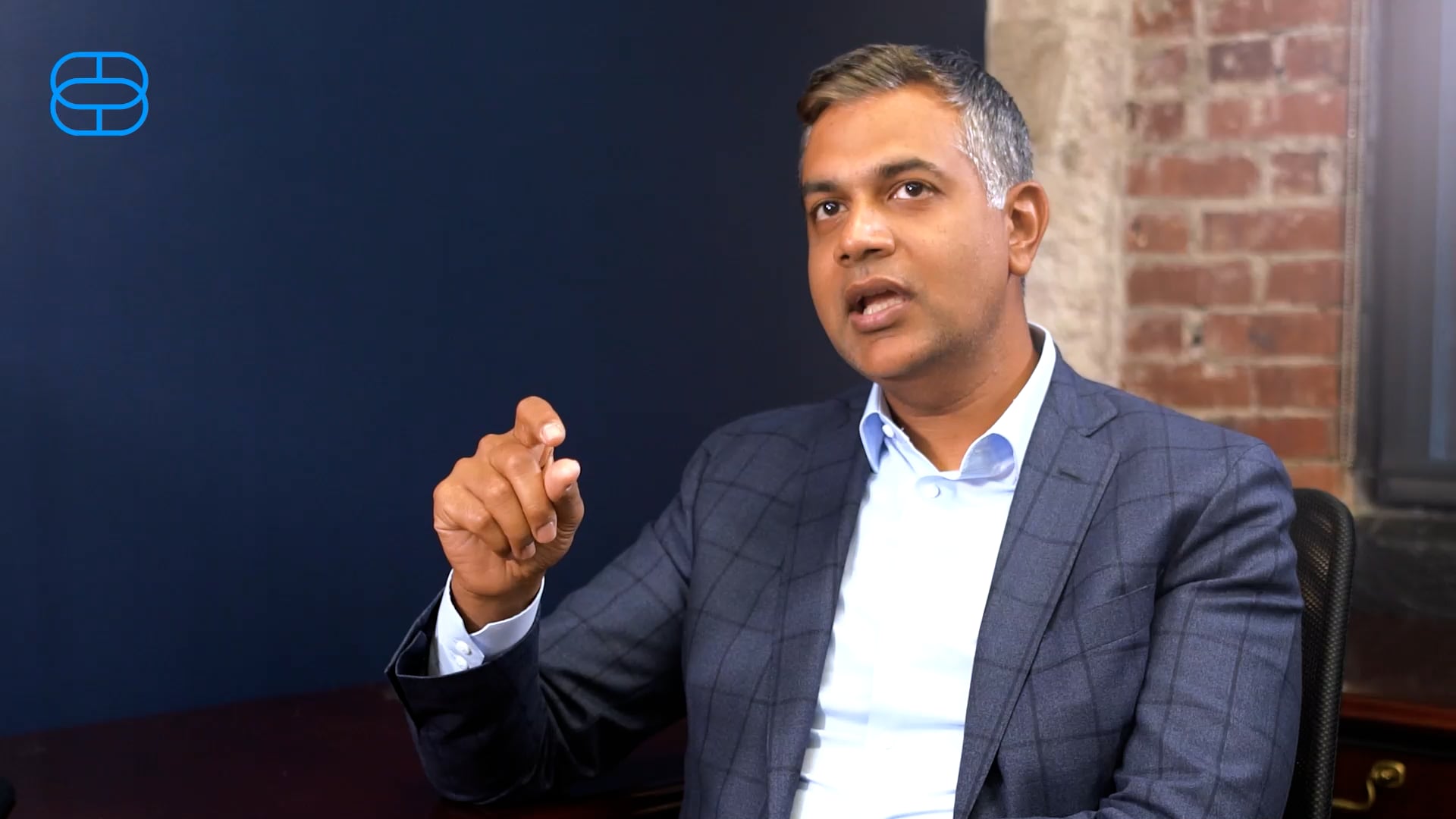
Eight years watching, then the operating seat
Sidhu joined the Customers Bank board in 2012. He became a full-time executive in early 2020, serving as vice chairman and chief operating officer, with responsibility for corporate development at the parent company. In July 2021 he became president and chief executive of Customers Bank. The move from observer to operator had been relatively quick; the acquaintance with the institution had been long.
In a 2025 account of his preparation for the parent-company job, he described the preceding five years as a crash course. Knowing technology and knowing the bank were starting points. Learning how the various businesses operated and how to develop customers required another kind of education. The admission gives the succession story some useful texture. A board seat supplies a view; an operating job supplies consequences.
He remained based in New York, travelling to Pennsylvania at least every other week and sometimes weekly. He said he had no plans to move the parent company from West Reading or the bank from Malvern. The arrangement offers a concrete picture of his working geography: a New York life, a Pennsylvania institution, and a business reaching customers across the country.
The customer should know whom to call
Sidhu’s banking argument predates the AI clone. In a 2021 conversation with Peter Renton, he described a problem familiar to many small businesses: a company might have an account at a large bank, another at a community bank, and a separate relationship with a financial technology provider. He wanted Customers to offer enough capability to become the primary banking relationship.
That ambition involved digital services, but also a particular understanding of service. Customers uses a single point of contact approach. The appeal is practical. A client dealing with several financial needs should have a person who can help navigate them. Technology has to make that person more useful if the model is to deliver what it promises.
His account of his own management style fits that arrangement. In 2023 he described himself as hands-on while acknowledging the limits of his expertise. He said he tried to support teams whose different experiences suited particular problems, and wanted the organization to remain entrepreneurial and avoid bureaucracy. This is his stated approach, rather than a personality diagnosis from a distance.
The service proposition received a public marker in April 2026, when Business Intelligence Group recognized him in the Executive of the Year category of its Excellence in Customer Service Awards. Customers also reported a Net Promoter Score of 81, against an industry comparison of 41. That is a customer recommendation measure, not a percentage of customers satisfied; the distinction keeps an attractive number honest.
The part of speed that requires brakes
The account also has a regulatory chapter. In August 2024, the Federal Reserve announced a written agreement with Customers Bancorp and Customers Bank. The agreement addressed risk management and compliance weaknesses, including issues associated with the bank’s digital asset business. It belongs in any serious assessment of the institution Sidhu leads.
By August 2025, he said Customers had added roughly three dozen risk and compliance employees and spent between $10 million and $15 million addressing the issues. He described the need for a risk foundation that could hold regardless of the regulatory climate, and for closer communication with supervisors about newer businesses.
The lesson is particularly relevant to his enthusiasm for faster systems. A process can be impressively quick and still need better oversight. Adding people, controls and conversations costs money. In Sidhu’s telling, that investment also made it harder for another bank to reproduce Customers’ infrastructure. His argument places risk management inside the growth strategy, where it can be judged against the bank’s subsequent performance.
Three partnerships, a very ordinary pile of paperwork
On January 1, 2026, Sidhu succeeded his father as CEO of Customers Bancorp. Jay became executive chairman. Sam kept the bank leadership role as well. The transition brought the parent company and its banking subsidiary under the same chief executive, after years in which he had already been running the bank.
In April, Customers announced an expanded, multiyear collaboration with OpenAI. The relationship had begun in 2023 with ChatGPT Enterprise. The new work involved technical teams on site, building around the bank’s own information and processes. Lending documents, credit memoranda, account setup and payments were among the intended areas of work. These are tasks a borrower may barely notice until they become the reason a transaction is waiting.
June brought an ElevenLabs collaboration covering voice and digital agents, assistance for relationship managers, and conversational account opening. In October came Palantir, with engineers working alongside the bank’s teams on deposit onboarding. The proposed work joined document collection, entity verification and risk information in a connected application process. Behind the futuristic language sat a recognizable ambition: fewer occasions for somebody to ask where the paperwork had gone.
Partnership scopes and intended applications. They are not a claim that every planned capability has been delivered.
Sidhu’s public writing follows the same line of inquiry. A June 2026 essay examined why size alone no longer guaranteed strength in banking. In October he wrote about payments as a round-the-clock ecosystem. Read together, those subjects suggest where he wants Customers to compete: in the organization of work and the movement of money, rather than simply the number of branches.
His professional network extends beyond Customers. He has been appointed to the New York Stock Exchange’s Listed Company Advisory Board and is a trustee of the Committee for Economic Development of The Conference Board. Those roles put him in forums concerned with public companies and economic policy. They also give his working life another dimension: the bank executive taking part in discussions about the wider conditions in which businesses operate.
The next call still needs a human answer
The quarter ending September 30, 2026 supplies a more prosaic checkpoint than the cloned voice. Customers reported $22.6 billion in deposits, $18.5 billion in loans and $78.4 million in net income available to common shareholders. Its efficiency ratio fell to 47.2% from 50.6% the previous quarter. Nonperforming loans were 0.29% of loans and leases, higher than a year earlier, though lower than in June.
The same October results said a deposit onboarding pilot had opened commercial accounts in minutes. The bank also reported 76,000 cumulative hours saved through AI, based on employees’ own estimates rather than independently validated measurements. That qualification matters. An estimate can indicate where to investigate progress; it cannot do all the work of proving it.
Away from the balance sheet, Sidhu has offered a simpler account of time. He and his wife have three children. Speaking in 2023 about being present with them, he said: “I know I won’t get a second chance at this time with them.” It is an unusually direct observation from someone whose professional project is to make things happen faster.
Sidhu’s synthetic stand-in was able to read a script. The responsibilities around it remain stubbornly personal: explaining a loan decision, meeting a regulator, making a customer relationship worth keeping, getting home. His career now turns on how well he can organize a bank around those obligations. The imitation made a good opening. The questions afterward are where his own voice has to count.