$9M
Series A, March 2026
He spent a career shipping payment screens and meme galleries. Then he built a funeral company that meets you on a beach, names a real price, and refuses to upsell the grieving.
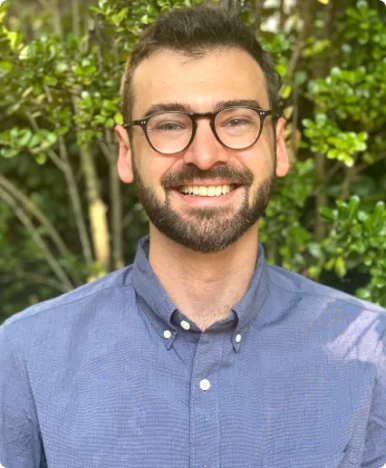
In a chapel that used to host weddings, a family is saying goodbye to someone they loved. There is music the deceased actually liked. There is food. There is no fluorescent showroom of caskets, no surprise line item, no salesperson nudging them toward the premium urn. This is the product Sam Gerstenzang is selling, and the strangest thing about it is that almost nobody else in America is selling it.
Gerstenzang is the co-founder and CEO of Meadow Memorials, the company he describes as "a contemporary funeral home without the home." Meadow does not own a single funeral parlor. Instead it partners with venues that already exist and already feel like something - chapels, beaches, theaters, restaurants - and runs cremation services and memorials there. The pitch is simple and a little subversive: a funeral should happen somewhere your person would have wanted to be, cost what it says it costs, and treat the family with what Sam calls "unreasonable hospitality."
The numbers behind that idea are doing the arguing. A typical Meadow funeral runs around $1,300. The national median for a cremation with a service sits near $6,280, and a burial closer to $8,300. When a founder cuts a price by roughly five times and the business still triples its revenue, the old way of doing things starts to look less like tradition and more like markup.
In January 2024, Gerstenzang arranged his grandfather's funeral. The pricing was unclear. The process was overwhelming. And at the end of it, he had the quiet, awful feeling that the service hadn't actually honored the man it was for. That feeling became a thesis: families need three things from a funeral, and the industry was reliably delivering none of them. A venue that reflects the person. A process simple enough to get through while grieving. A price with no hidden floor beneath it.
He partnered with Emma Gilsanz, an operator who had spent her career improving services for older adults and was recognized as an AARP Innovation Leader. The two had already built together before - they co-founded Moxie in 2022, a "business-in-a-box" platform that helps nurses open their own medspas. Meadow was the harder, more human version of the same instinct: take an industry built on opacity and rebuild it around the customer.
Because we're software-enabled and not stuck in the way things used to be, we can offer honest pricing and unmatched hospitality.
There is a tidy symmetry to his family showing up at both ends of his story. Before Meadow, Gerstenzang started a community organization together with his grandmother. After his grandfather's death, he started a company to fix funerals. The throughline is not branding. It is the kind of person who looks at the people he loves and decides the system around them should be better.
You do not get to funeral founder in a straight line. Gerstenzang studied History and Symbolic Systems at Stanford and spent time at Oxford, which is a fancy way of saying he learned to think about how humans make meaning out of symbols - useful, it turns out, when your product is a ritual.
He was early at Imgur, the image-sharing engine room of internet culture. He invested at Andreessen Horowitz. He incubated companies inside Sidewalk Labs. He co-founded Umbrella, which was acquired by IAC/Angi. At Stripe he led consumer payments product - the team obsessed with the exact moment a stranger decides to trust a checkout screen with their money. That obsession, honest pricing and a frictionless moment of trust, is the same muscle he now flexes at Meadow.
Between all of it he co-founded Boulton & Watt, a permanent-capital firm he cheerfully calls "the world's slowest incubator." The joke has teeth: it is patient money, built to back things that take time. Meadow's seed and the firm behind it grew out of that same long-game philosophy.
Meadow's whole model is a refusal. It refuses the storefront, which is the single biggest cost a traditional funeral home carries and quietly passes on to grieving families. By skipping the building, Meadow can route the savings back into price and into people. Families arrange everything over the phone or online, choose a venue from a curated set, and pick the music, the food, the shape of the day.
The growth says the appetite was always there. Revenue tripled from 2024 to 2025 and is tracking to triple again in 2026. In February 2026 alone, Meadow worked with more than 400 families. It became California's largest independent funeral home, then expanded into Texas and Washington, with Arizona and several more states on deck. Most quietly telling of all: pre-planning - people arranging their own send-off in advance - has grown to nearly a third of the business. People, it turns out, will talk about death. They just want someone honest in the room.
Chapels, beaches, theaters, restaurants - places that hold meaning, not showrooms that hold inventory.
The grieving get concierge-level care through every detail, not a transaction processed at a desk.
Fair, upfront costs. No hidden fees. No upsell on the worst day of someone's year.
Look at Moxie and Meadow side by side and the founder's signature is unmistakable. Moxie, launched in 2022, hands a nurse everything she needs to open and run a medspa - the licensing, the software, the back office - so she can be a practitioner instead of a paperwork clerk. Meadow does the funeral version: it hands a family everything they need to hold a meaningful goodbye, so they can grieve instead of negotiate. Both take a fragmented, intimidating industry and wrap it in software and service. Both were built with the same co-founder, Emma Gilsanz. Both bet that ordinary people will choose honesty over the status quo if someone bothers to offer it.
It is a worldview as much as a business model. Gerstenzang keeps finding the moments in life that are emotionally enormous and logistically miserable - opening a practice, burying a grandfather - and treating the misery as a design flaw rather than a fact of nature. The spreadsheets follow the empathy, not the other way around.
He is passionate about bringing modern technology to help make end-of-life planning a little bit easier.
Long before Meadow, Gerstenzang built a quiet following as someone who writes down what he learns. His Substack and Medium archives carry essays with titles like "The right way to start a company" and "17 lessons I learned in 2017" - the kind of operator's notebook that other founders quote back to each other. The newsletter description is characteristically plain: "Writing and essays from @gerstenzang." No grand mission statement. Just the work, examined.
That habit of reflection shows up in the company. Meadow's three principles - real venues, unreasonable hospitality, honest pricing - read less like a marketing deck and more like a thesis defended over years of watching how people actually behave around money, trust and loss. He learned the trust-at-checkout problem at Stripe. He is now applying it to the highest-stakes checkout there is.
There is a contradiction at the center of Gerstenzang that makes him interesting. He runs "the world's slowest incubator" and he triples revenue two years running. He spent a decade in the fastest corners of tech and chose, of all things, the funeral - an industry that has resisted reinvention precisely because nobody wants to shop around while they cry. He writes essays on his Substack with titles like "The right way to start a company," then goes and tests them against the one purchase no founder can A/B test their way out of.
What he is actually selling is not cheaper death. It is the radical idea that a goodbye can be honest, personal and humane, and that software can make it so without making it cold. That is a hard thing to build. It is a harder thing to mean. Gerstenzang appears to mean it.
The investors seem to agree. When Lachy Groom and Haystack put $9 million behind a funeral startup in March 2026, they were not betting on a clever app. They were betting that the trust Gerstenzang spent a career learning to engineer - the moment a stranger decides you are honest - is portable. That it works at a checkout screen and works again at a memorial service. The early returns, 400 families in a month, the largest independent funeral home in California, a third of the business already coming from people planning their own farewell, suggest the bet is paying out. The slowest incubator in the world, it turns out, can build something that moves remarkably fast.