Sam Darawish had paid for a booth at Affiliate Summit in Las Vegas. He had screenshots. He had an idea of what the software should become. He also had an awkward problem familiar to anyone who has tried to sell a future tense: people generally prefer a demonstration of something that already works.
Two prospects became Everflow’s first customers. One wanted an unusual insurance policy: an agreement allowing the customer to take over the software if the business went under. Imagine closing a sale that includes instructions for your own commercial funeral. Darawish tells the story without dressing up the mistrust. The customer was taking a risk. The paperwork acknowledged it.
The scene is a useful introduction to the Everflow co-founder and CEO. He was willing to expose an unfinished product to buyers who could walk away. His pitch depended on understanding an existing irritation well enough that someone would tolerate the inconvenience of trying something new. Before there was much software to demonstrate, there was a customer’s problem to discuss.
The engineer who learned the advertising business
Darawish holds bachelor’s and master’s degrees in industrial engineering from the University of Toronto. His career took him into Bay Area product work, with roles at Model N and PRN before Adteractive. The sequence matters: software products, commercial operations, then the business of connecting advertisers with potential customers. Everflow would eventually sit at the intersection of all three.
At Adteractive, he worked in mortgage lead generation. By his own account, he entered affiliate marketing around 2006, when the mortgage business was booming. This was advertising with a measurable commercial destination: a prospective borrower, an inquiry, a lead someone would pay to receive. Knowing that an advertisement had appeared was only the beginning of the accounting.
Then smartphones changed the available screen. Darawish and his colleagues saw an opportunity to apply their desktop advertising experience to mobile. He dates Moolah Media’s beginning to 2009 in his public biography. The early mobile performance network became the first business he would bootstrap and sell. The lesson he carried forward concerned the tools required to run it.
A second company with familiar faces
Moolah bought and sold advertising. Its technology had to be built internally, and the people building it acquired a close view of the work that outside software failed to handle. Opera acquired the business in 2013. Darawish has described the sale as a $50 million transaction. That was a company deal, with an earn-out; it should not be mistaken for a statement about his personal wealth.
The relationships survived the exit. Kanwar Dhaliwal had co-founded Moolah with Darawish; Jonathan Blais had been its first hire. The three became Everflow’s founding team in May 2016, with Darawish as CEO, Dhaliwal as COO and Blais as CTO. They had already worked together through building technology and operating an advertising business. Their next venture began with that shared experience.
Dhaliwal’s account of the transition is plain: they wanted to move from buying and selling ads into building a technology platform. They knew the users because they had done the work. They also had proceeds from an earlier exit, which gave them the option of financing the new company themselves. Familiarity supplied the starting point. Customers still had to supply the verdict.
- 2009Moolah MediaMobile performance network
- 2013The Opera acquisitionA company exit and an earn-out
- 2016Everflow beginsThe team turns to software
A customer can love you into a corner
Darawish’s early interviews contain a warning that deserves space beside the screenshots story. A large customer can pull a young software business toward a very particular need. Keep following that request and the company may end up building a custom solution for one buyer. An enthusiastic customer can be excellent news and an unreliable product roadmap at the same time.
His response was to keep development responsive, with short release cycles and public release notes. The distinction is practical: a request should improve the product for a market, rather than consume the team on behalf of one account. Saying yes is easy when revenue is welcome. Deciding which yes will still make sense next year requires more restraint.
He also emphasized onboarding. Everflow’s software dealt with tracking, reporting and campaign management; customers needed help learning it. Dedicated customer success staff organized kickoffs and training. A purchase did not finish the work. Someone still had to understand the system well enough to trust it with a live campaign, while colleagues and partners expected the numbers to add up.
The difficult business of asking people to move
That trust becomes especially visible during a migration. SmartAdv’s account of moving to Everflow describes tracking, domain and systems problems that had disrupted its advertising business. The network had used CAKE for years. Choosing another platform meant changing infrastructure while continuing to serve advertisers and publishers. Nobody gets to close the shop for a leisurely software renovation.
The case study describes a transition without interrupted business. It also records a familiar demand from an operator: invoicing and payments needed to accommodate thousands of relationships on different terms. Tracking a conversion and getting everybody paid belong to the same working day, even if software vendors prefer to discuss them in separate brochures.
Darawish’s ambition in that earlier case study was explicit. Everflow had more than 250 customers, and he wanted to exceed 1,000. He was already describing a move beyond networks toward direct advertisers. The ambition was broader distribution for a system built in a narrow market. Getting there would mean understanding more kinds of customers, and more ways that seemingly routine work can become complicated.
“Our goal is to eventually be at over 1000 customers over the next couple of years.”
Sam Darawish, in the SmartAdv migration case study
Email gets to keep its chair
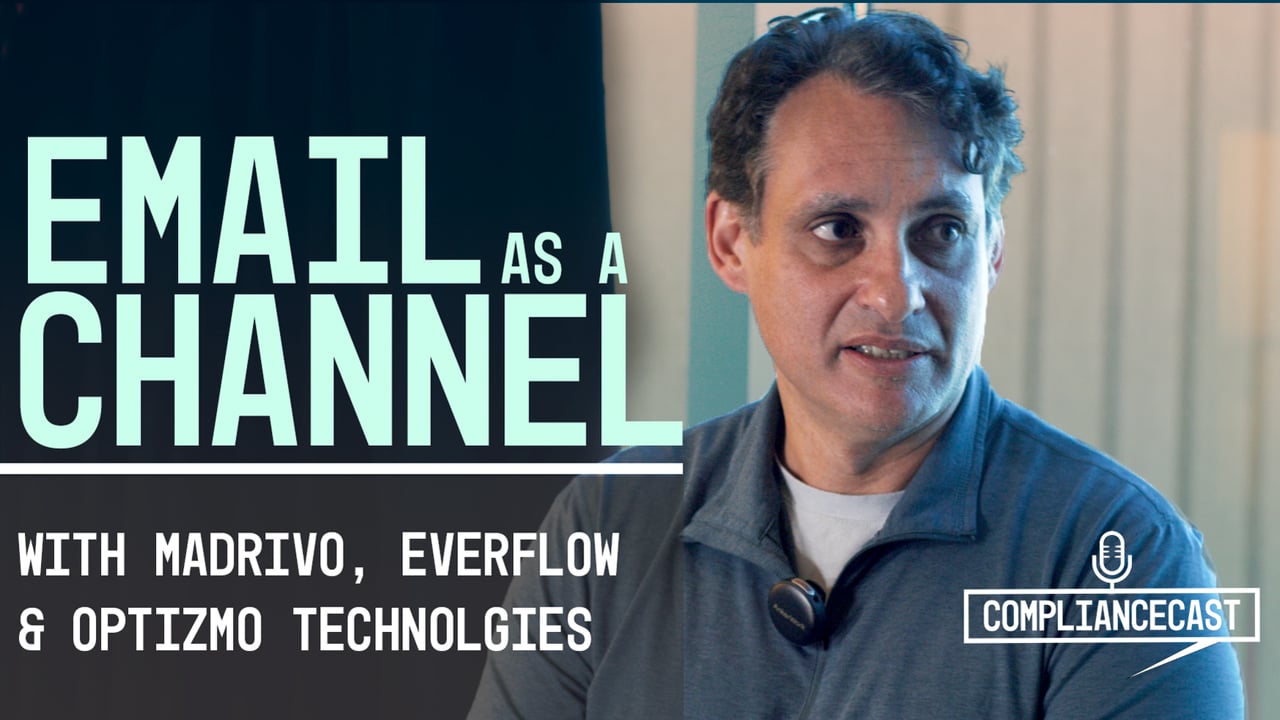
The newer vocabulary of partner marketing includes creators, influencers and media buyers. Darawish has followed those changes without treating every established channel as an embarrassing relative. At Affiliate Summit West 2024, he joined Madrivo’s Sarah Miller for a discussion of email marketing, including traffic security and direct messaging. Email was still part of the conversation while attention moved toward newer platforms.
That is consistent with a prediction he contributed to a Tipalti publication about the creator economy: brands were still early in their use of tracking and reporting, leaving room for more tools. The glamorous part of a creator partnership may be the content. The working arrangement also needs a way to connect activity with results and keep a record both sides can use.
By 2025, he was describing enterprise customers that followed more than 15 events downstream of a lead. The point was to see what happened after the initial response. A partner who delivers a click, a registration and a valuable continuing customer has done several commercially different things. Treating those events as one indistinct success makes it harder to decide what that relationship is worth.
The numbers acquired some company
Everflow’s growth gives those operational details a different scale. In December 2025, the company announced that annual recurring revenue had crossed $30 million. It also reported $4.3 billion in partner-tracked customer revenue for the year. These figures measure different businesses: one describes Everflow’s recurring software revenue; the other describes revenue tracked for its customers. Combining them would produce a very impressive misunderstanding.
The same announcement described more than 20 major platform features and updates, including tools for customer value and clearer visualization of the customer journey. The recurring concern was still the quality of the information available to a marketer. More activity creates more questions about what happened, which partner contributed and what should happen next.
Darawish’s public language about relationships is less technical. “Connecting with people is at the core of what we do,” he said ahead of PI LIVE USA in 2025. Conferences had supplied his earliest customers. Years later, face-to-face meetings remained part of the business. A platform can automate a surprising amount of work; people still like to know who is on the other end.
Company-reported figures. Customer revenue tracked is distinct from software revenue earned.
Turning the tracking inward
In August 2026, Everflow described applying its own attribution machinery to a problem inside the company: understanding which sales content prospects actually used. The Resource Hub grew from work by product education manager Dasha Shareyko, with CMO Michael Cole asking whether shared resources could carry tracking links. It brought the company’s own selling process into view.
Darawish described the direction in a sentence: “We’re building toward a company where the data layer is just open.” The proposed next steps included connecting the Hub’s AI layer with Everflow’s MCP server and an internal Slack agent. Those were plans in the account, rather than completed promises. The underlying question was familiar: how do you make the record of what happened accessible enough to act on?
There is an appealing continuity between that internal project and the early booth. Both involve a sales conversation and the need to learn from it. The first version required people to stop and respond to screenshots. The later version tried to reveal what prospects read between conversations. Experience had made the machinery more elaborate. The need for feedback had survived.
What happened?→Attribution
Who contributed?→Action
What next?
A conceptual view of partner measurement, not a product interface.
A notebook small enough to finish
Away from the product discussion, Darawish offers details that make the chief executive easier to picture. He likes music and has entertained an AI DJ idea: a system that would respond to how a crowd feels and choose a track. He also earned a taekwondo black belt at 15. His account of that teenage achievement comes with a joke about having peaked early.
His planning habit is considerably quieter. On Sunday nights, he writes three or four things he wants to achieve during the coming week in a small notebook. He keeps the list short enough to be realistic. Beside a company devoted to measuring complicated activity, there is room for a page with only a handful of lines.
That notebook makes a fitting companion to the screenshots. Each gives an incomplete future a manageable shape. Darawish can describe a business with years of growth behind it, yet the details that stay with you are smaller: a buyer demanding a safeguard, a customer asking for training, a few tasks written down before Monday. Each is a place where somebody has to decide what to do next.