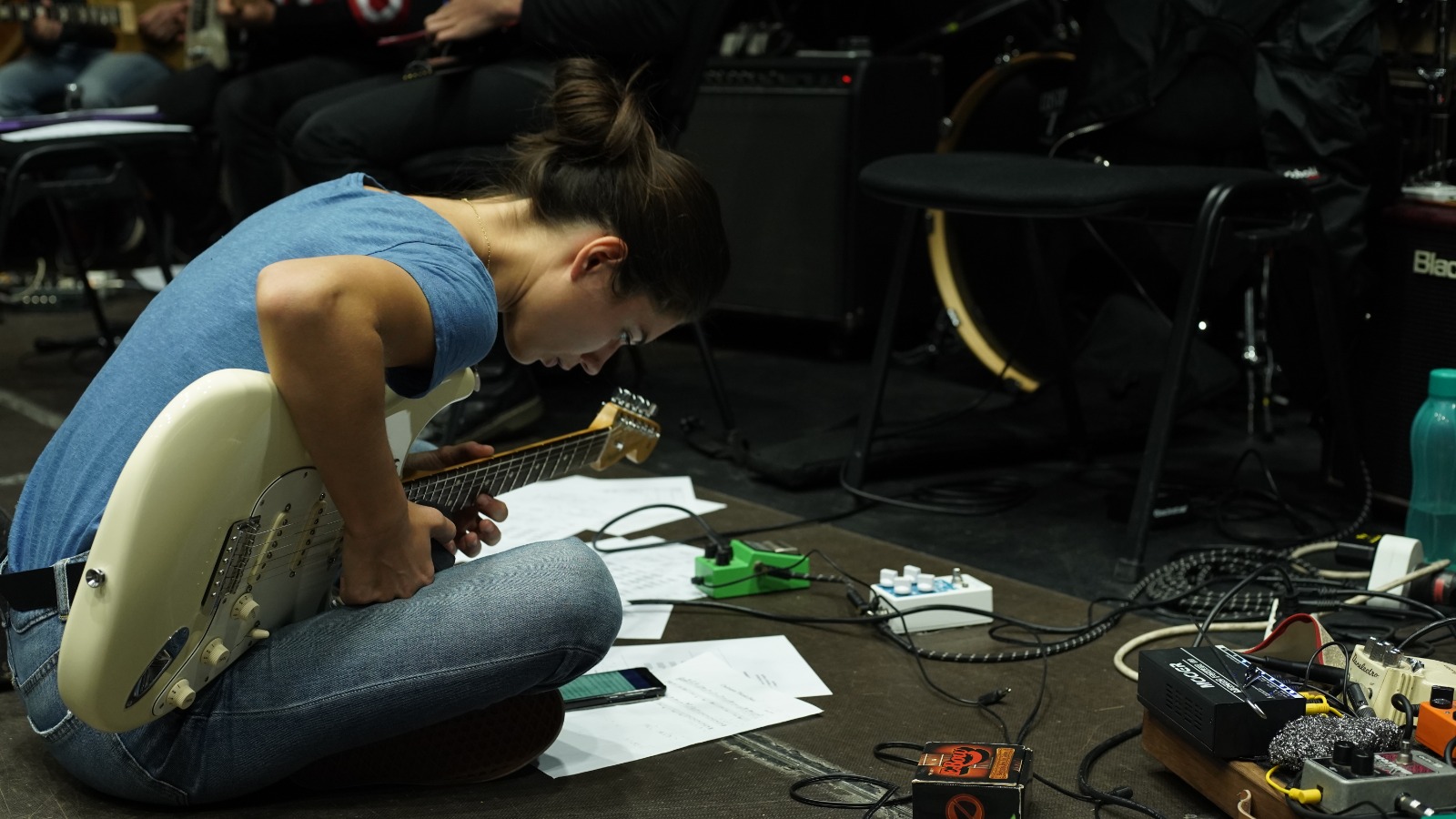
Twenty guitarists arrived for rehearsal in Villeurbanne. There were instruments to warm up, pieces to learn and a collection of accessories that included stainless steel sponges and alligator clips. Salah Kamel was among the musicians. He was also the CEO of a data software company. The sponges belonged to the music.
In October 2020, Kamel described five days of preparation for the recording of 100 guitars on a drunken boat. Guitars would suggest whales, falling water and thunderstorms. Familiar instruments were being asked to make unfamiliar sounds. The players had to adjust parts for the studio, follow a click and sometimes change guitars between pieces.
“Being all together again felt like heaven,” he wrote. It is a warmer sentence than one generally encounters in enterprise software. It also opens a useful door into his life. Kamel’s career includes Sunopsis, Oracle and Semarchy, alongside a musical history that reaches back to Lyon’s underground scene. The rehearsal belongs in the picture as much as the boardroom.
The order of three letters
At INSA Lyon, where his studies ran from 1991 to 1996, Kamel pursued computer engineering while also studying theatre and music. Later in the 1990s, he played bass and guitar in a Lyon scene spanning rock, funk and music from around the world. He was a founding member and composer of a band called Kebab’s. It is a name admirably resistant to being mistaken for enterprise middleware.
His early technical work concerned data warehouses and SQL optimization. Between 1995 and 1999, his consulting work covered database systems including Oracle, SQL Server, Sybase and Teradata. These are the places where an apparently simple question can require a considerable amount of machinery to answer. The useful skill is understanding where the machinery spends its effort.
That question followed him to Sunopsis, where he became a co-founder and chief technology officer. His work helped advance ELT, an approach that changes the order in which data is processed. In ETL, information is extracted, transformed and loaded. With ELT, it is loaded before being transformed, so the database can handle that work using its own processing capacity.
The letters look almost interchangeable. The architectural decision is consequential: decide where a task belongs, then make use of the computing power already there. Oracle acquired Sunopsis in 2006. Kamel subsequently worked as a senior architect on Oracle’s enterprise information management products, including data integration. In 2011, he helped establish Semarchy.
Move the transformation into the destination database. Put its processing capacity to work.
A company with a shorter wait
Semarchy’s subject was master data: the shared records that let different parts of a business agree on customers, products and other essential entities. A company can have plenty of information and still struggle to establish which records belong together. Getting a common view requires decisions about identity, quality and responsibility.
In a 2017 article co-written with Ravi Shankar, Kamel examined how master data management and data virtualization could work together. The practical concern was customer service: information scattered across systems can prevent an organization from seeing the relationship it already has with someone. The customer experiences one company. Its databases may have a more fragmented acquaintance.
Semarchy, founded in 2011, pursued an iterative approach to that problem. Kamel wanted implementations to produce business value sooner. He also developed SemQL, a semantic query language based on SQL, used within the platform. Beneath the sales language sat a familiar engineering ambition: make complicated information easier to work with.
The intended user mattered. When Semarchy introduced its xDM interface in 2017, Kamel argued for putting data stewardship in the hands of business users. The people responsible for understanding a customer or product needed a usable way into the system. A technically capable platform could still disappoint if its daily operation remained difficult.
That year brought professional recognition. At Enterprise Data World in Atlanta, Semarchy announced that Kamel was receiving the 2016 DAMA International Excellence in Data Management Award. The recognition covered contributions to data integration and master data management. His career now had an award attached to work most people encounter only indirectly, when information either holds together or comes apart.
“Being in San Francisco,” says Kamel, “puts me close to new customers and partners.”
Salah Kamel / November 2016
A change of address, a change of scale
Building software was only part of running Semarchy. In November 2016, the company announced that it was moving its headquarters to the United States and that Kamel would relocate to San Francisco. Operations were already established in France and the UK. North America offered room to expand, particularly among businesses for which older master data projects had been expensive to undertake.
The geographical choice was quite concrete. Being near customers and partners would let him participate more directly in the market the company wanted to reach. A founder who had spent years thinking about where computing work should happen now had to decide where his own work should happen.
The company described triple-digit growth in North America at the time. That was its reported commercial context for the move, rather than a personal trophy for Kamel. The announcement also named colleagues responsible for operations and customer success. Expansion had become a job for an organization, with different people carrying different parts.
- 2006Oracle acquires Sunopsis.
- 2011Semarchy begins.
- 2021Kamel hands over the CEO role.
A ball, a boardroom, a handover
His interests occasionally appeared in unexpected corporate decisions. In 2013, Semarchy sponsored the US Soccer Freestyle Association. Kamel drew a comparison between the performers’ agility and control and the company’s approach to handling data. It was an unusually physical metaphor for a business concerned with records and systems.
The sponsorship supported young performers and a North American competition. It also gave the company a way to talk about its work through something people could watch. Database architecture is difficult to demonstrate in a sunlit public space. A football kept improbably airborne makes fewer demands on the audience’s patience.
Another decision had a more conventional corporate setting. In March 2021, Semarchy announced that Thorwald “TH” Herbert, its chief operating officer, would become CEO effective March 31. Kamel would move into a strategic board role and continue advising the company, its partners and clients.
Herbert had joined in 2017 and become COO in late 2018. Kamel pointed to his work growing the North American business when explaining the succession. The change followed an investment by Providence Strategic Growth in September 2020. It gave the company’s next stage a different division of responsibilities.
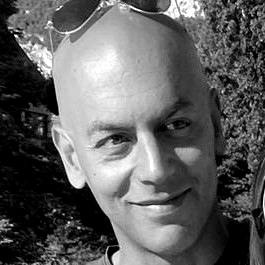
For Kamel, the handover also makes the chronology clear. His involvement in collective music was already underway. There was no need to discover a guitar after leaving the CEO’s chair. The guitar had been there for years.
The noise worth keeping
Late in 2018, he had contacted Gilles Laval to help develop the work around 100 guitars on a drunken boat. His involvement with GSUBI included investment and practical responsibilities across the organization. Musical exploration came with legal, financial and commercial work. Someone still had to attend to the unromantic details.
The recording sessions offered details of another kind. Twenty players meant twenty amplifiers, microphones and pedal setups, each capable of adding an unwanted sound. The ensemble made multiple takes and swapped instruments to vary the recorded texture. Some pieces accumulated more than 120 tracks. The sound engineers had plenty to occupy them.
Kamel’s account also made room for coffee and an old Nintendo console in a room beside the studio. These small observations give the sessions their human scale. A large musical project consists partly of people waiting, preparing and finding something to do between the moments everyone will eventually hear.
GSUBI’s 2020 studio project layered takes and separately recorded guitar effects. Twenty players could leave a much larger mixing job.
He described the recording work as completed after four and a half days, with mixing still ahead. That is a satisfying place to pause: the musicians have finished playing, yet the piece remains unfinished. There are individual contributions to preserve and relationships between them to settle. The work continues after the room goes quiet.
Six arrivals in Berlin
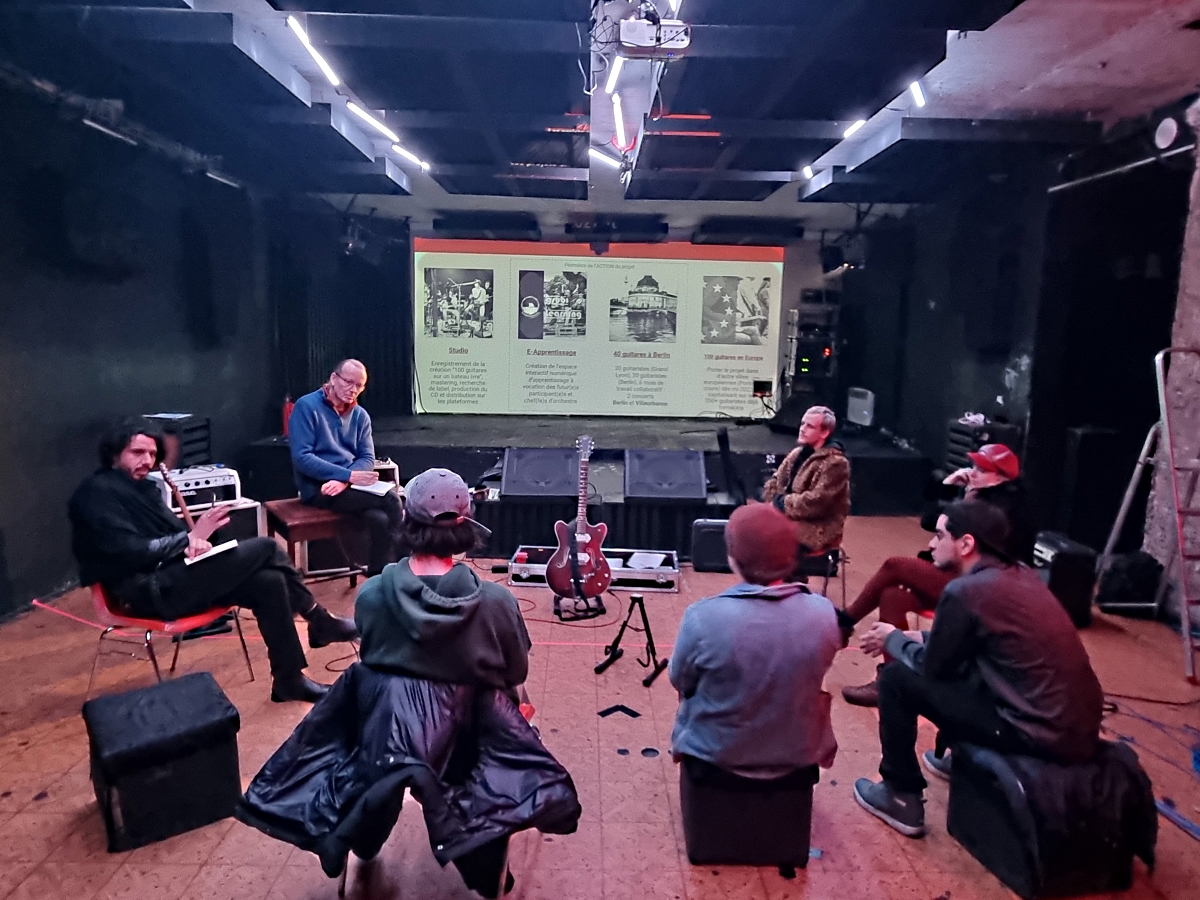
In January 2022, Kamel travelled with Gilles to Berlin for the launch of a 40-guitar project. At Urban Spree, the first six registered local players represented Germany, France, Australia, Guatemala, Canada and Ireland. His account lingered on that diversity and on their readiness to begin.
The practical arrangements included a sound system, a projector and online learning resources. The musicians worked on pieces including Embellie, Unsaved and Bateau Ivre. A later announcement invited audiences to a June concert bringing Berlin and Lyon guitarists together. The project had acquired another city and another group of participants.
His public professional profile now lists Slaâ Music in Lyon. The engineer and the musician remain parts of the same biography. Looking back, the recurring activity is collaboration: a database product, a company, a recording, a room of people learning how to play together.
In Villeurbanne, the work began at 9:30 in the morning. There were parts to revise and sounds to discover. For a founder accustomed to the patient construction of software, it was another demanding way to spend a weekend. With rather more amplifiers.