Sagar Pelaprolu asked his team a reasonable question: why had they chosen a process that still wasn't delivering? The answer was awkward. It had been his idea. He remembered offering a possibility; they remembered receiving direction. Somewhere between the meeting and the work, a passing thought had acquired an executive title.
He described the episode in August 2026, calling it “The Weight of the Chair.” His first response had pushed responsibility toward the team. Their silence sent it back. He was left considering how to keep exploring ideas aloud when his position could turn exploration into a decision. For a technology executive, it was a particularly human problem of transmission.
“Months later, I remembered a conversation. They remembered an instruction.”
Sagar Pelaprolu, “The Weight of the Chair”
The incident offers an unusually useful way into Pelaprolu's career. The CEO and co-founder of SAGE IT works in a business concerned with connecting systems. His writing keeps returning to what happens between people: the assumption that becomes a judgment, the explanation that fails to persuade, the authority that changes the meaning of a sentence.
The ice cream came before the enterprise
His route into technology began with a friend and an ice cream conversation in India. A problem from the friend's IT job suggested a business opportunity. They started Athene Softek, borrowing a name from Athena. Pelaprolu says Greek names became a habit in his subsequent ventures. Even an entrepreneur needs a naming convention.
He had already tried manufacturing and other small businesses. There were early starts and long working days. The first IT business enjoyed success, then failed. His account puts the blame on his own inexperience, particularly the work of managing operations, money, and administration. A product could succeed while the business around it came apart.
Entrepreneurship survived that disappointment. He moved from India to the United States and took employment to keep himself financially afloat while pursuing business. The detour mattered, but he describes running a business as a commitment he had already made.
A company built around the handoff
Today, Pelaprolu is based in Frisco, Texas. SAGE IT's work spans enterprise integration, automation, data, cloud, and AI. Established in 2003, the company serves customers across North America, Europe, India, and Australia. Those geographies give his work a different scale from the conversation that started his technology career.
His leadership team includes Satya Govindu, president of global IT services, and Sunny Francis, chief operating officer. Running such an organization entails responsibilities distributed across people and locations. The founder's idea must become something colleagues can understand, adapt, and deliver. His meeting-room story shows how easily the first of those steps can be mistaken for the last.
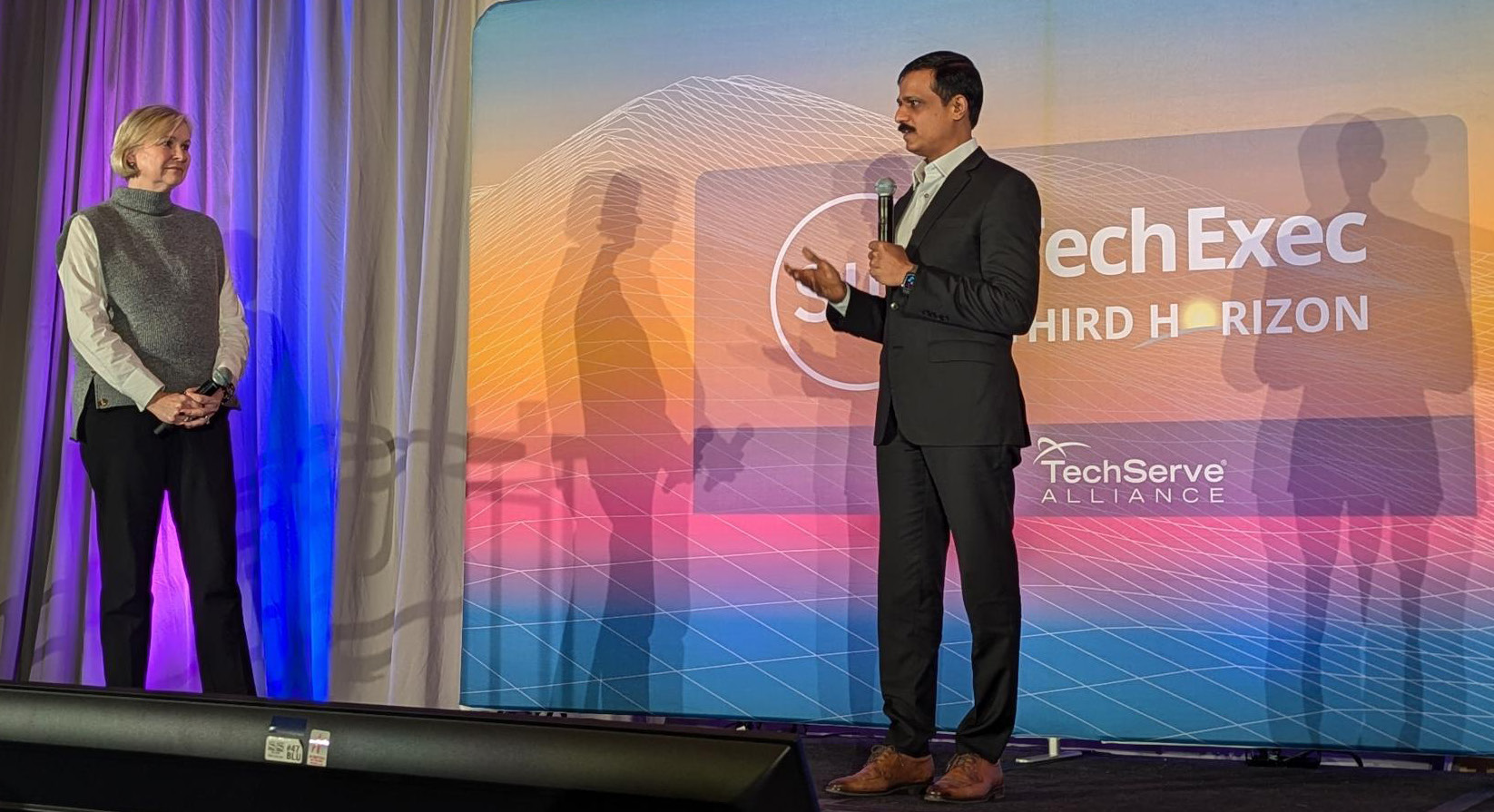
In discussing automation, Pelaprolu has emphasized the difficulty of making different technologies work together. The obstacles he identifies include choosing suitable processes, finding talent, managing organizational change, and coordinating the technology itself. Buying the pieces leaves plenty of assembly required.
He argues for treating automation as a strategic undertaking, with technology, operations, and business leaders involved in planning. His emphasis falls on agreement about the intended business outcome. A fast process is of limited use if the participants disagree about where it is supposed to go.
His distinction between running a business and growing one also shapes the company's approach. Efficiency and profitability belong alongside the ability to respond to new opportunities. The resulting picture of his work is less about a single invention than the ongoing effort to make an organization function across its moving parts.
The expert who left a meeting short of answers
That work places him in conversations with other technology leaders. In one, during a period of travel, he met a senior executive overseeing a generative AI transformation. He had an opportunity to learn. Instead, he spent too much of the discussion establishing that his own organization understood the subject and had relevant experience.
Afterward, he recognized the cost. He had spoken at length and learned less than he might have. In another conversation, he encountered the same behavior from the other side. He wrote about it under the title “What I Missed While Trying to Prove.”
It is a useful admission from someone whose job requires credibility. Demonstrating competence can occupy the very space where discovery should happen. Pelaprolu doesn't present the episode as a triumph. The interest lies in his willingness to leave the missed opportunity intact, rather than polish it into a sales anecdote with a happy ending.
AI adoption begins with the people in the room
His advice on generative AI follows a related line. He asks leaders to take employee concerns seriously, explain practical uses, and make room for experimentation. The examples are deliberately ordinary: drafting, coding, summarizing, learning how to evaluate an answer. An unfamiliar technology becomes easier to discuss when someone can name a task it might help with.
He recommends practical workshops, places to try tools with limited risk, and a record of experiments that includes failures. He also calls for training on bias, privacy, and checking generated work. In this account, leadership includes making uncertainty discussable. Employees need a way to ask questions before a new requirement appears in their workflow.
At nasscom Technology Confluence 2025, his message similarly connected AI with cloud, robotics, and the Internet of Things, emphasizing collaboration. The recurring concern is the preparation around the technology. He keeps bringing the discussion back to the people expected to make it work.
A garden declines to follow the plan
In August 2026, that concern turned up in his garden. Most beds were growing well. One corner was producing thin stems despite receiving water and attention. He eventually remembered that its soil had not been turned at the beginning of the season because perennial plants were already there.
He was careful about the conclusion: he could not establish that this alone explained the difference. Still, the contrast made him reconsider the preparation behind a change. Had he made room for a new habit? Had his teams helped shape a proposed approach before being asked to adopt it?
His essay also resists its own convenient metaphor. People have opinions about what gets planted. A leader's proposal might be wrong, badly timed, or less useful than an existing practice. More reminders cannot fix every mistake made before the work began.
The vegetables provide a modestly comic setting for a serious admission. Even sustained attention may arrive too late. The person introducing the change remains responsible for the conditions around it, including the possibility that the idea deserves another look.
Before choosing a goal, choose a person
Pelaprolu has also developed a framework he calls the WHO Compass. It starts with the person someone wishes to become, proceeds to the learning and activities that would support that direction, and then considers the method. Starting a business is one possible method among several.
Published in January 2026, the argument distinguishes an individual's identity from an organization's purpose. He treats Simon Sinek's familiar emphasis on “why” as useful for companies, while proposing that people first examine the character they want to develop.
That distinction gives his career a question beyond the next business objective. A title tells others what someone does. It leaves plenty unresolved about the life being built around the work. His compass asks for a deliberate choice before momentum makes the choice feel inevitable.
He continues to study, too. His public credentials include executive education in AI business strategy, robotics, IoT, and introductory quantum computing. His undergraduate training was in electronics and communications at the University of Madras. The range suggests a working curriculum that has kept expanding beyond his original discipline.
Room for other people to begin
The circle around his work extends beyond SAGE IT. He serves as chairman of AppsTek Corp and on TechServe Alliance's board, where he was elected among four new directors for 2025 and continued into 2026. The association brings together businesses in IT and engineering staffing and solutions, placing him alongside peers facing changes in technology and work.
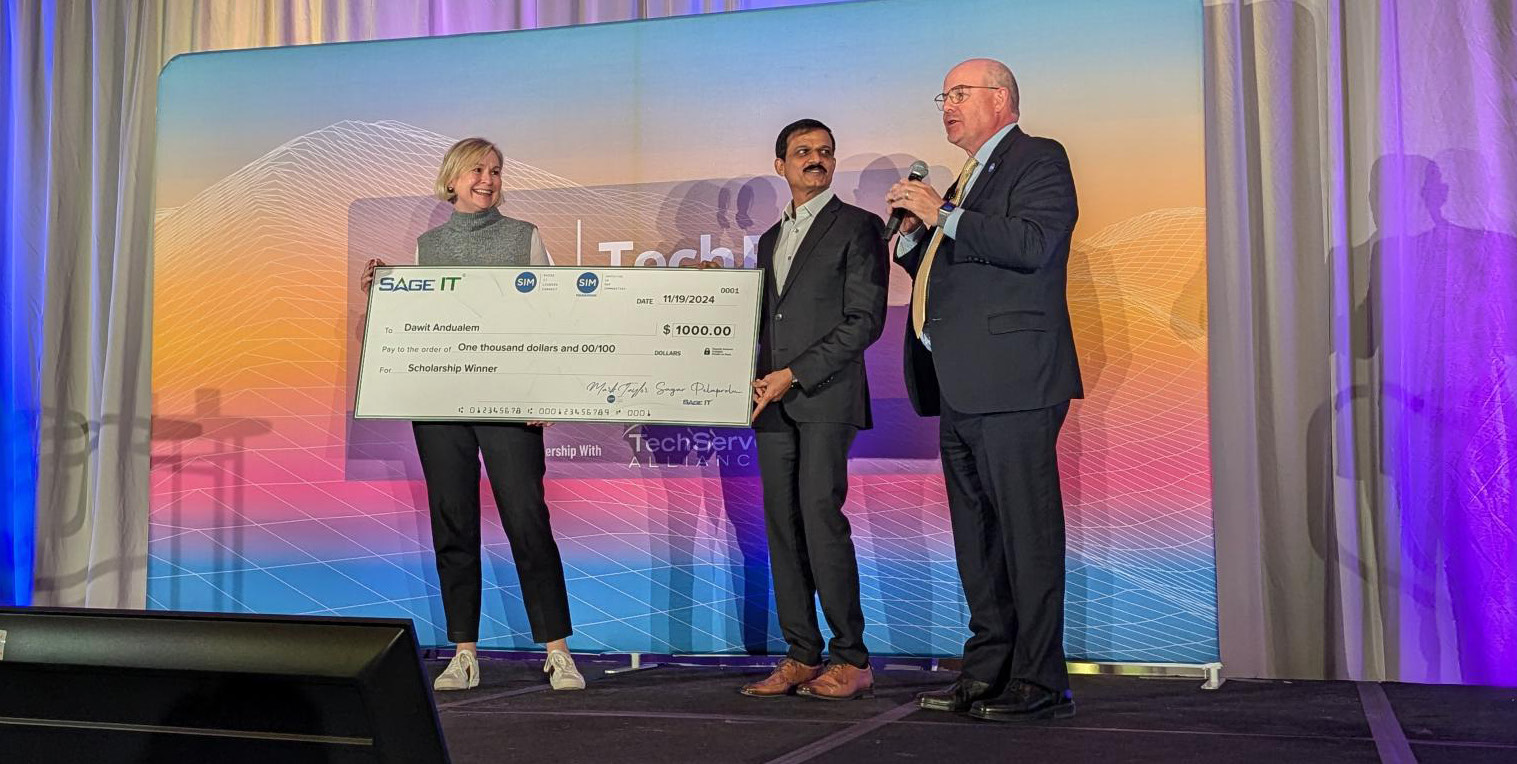
His community commitments include founding and serving on the boards of We Care To Care Inc. and the Pelaprolu Charitable Trust. Their stated activities include education and employment initiatives for underserved communities in the United States and India. At SIM TechExec 2024, SAGE IT and the SIM Foundation also marked a scholarship award.
There is a connection between that activity and an observation he made after noticing a daisy between pavement blocks. The flower led him to consider people whose help mattered earlier in life, then became easier to overlook as circumstances changed. He questioned the habit of judging someone's worth by their current usefulness.
Across these stories, Pelaprolu keeps revisiting the judgments that a busy executive might otherwise hurry past. The business continues; a meeting ends; the garden needs attention. Later, he returns to a sentence, a conversation, or a neglected corner and asks what he misunderstood. The chair still carries weight. He is paying closer attention to where it lands.
Keep the conversation going
- SAGE IT - company website
- Sagar Pelaprolu on LinkedIn
- The Weight of the Chair
- The Patch That Did Not Grow
- The WHO Compass
- What I Missed While Trying to Prove
- The Daisies We Forget
- Building an AI-Ready Culture
- Watch: nasscom Technology Confluence 2025
- Interview With an IT CEO - DECA Direct
- An automation conversation - The Silicon Review
- TechServe Alliance board of directors
- Forbes Business Council author profile