In November 2014, a cystic fibrosis charity received $3.3 billion. It had not discovered a new donor with an unusually generous chequebook. Its affiliate had sold something less obvious: the right to collect future royalties on treatments developed by Vertex Pharmaceuticals. The buyer, Royalty Pharma, was purchasing a stream of payments. The charity was purchasing time.
- The trade: cash today for a share of drug income tomorrow.
- The customer: a biotech, university or nonprofit that needs capital.
- The catch: avoiding new shares still means giving up future money.
That distinction explains a company whose name sounds more like a drugmaker than its business actually is. Royalty Pharma finances medicines. Its particular skill is finding situations in which the people entitled to future income have something more urgent to do with money now. A laboratory needs funding. A biotechnology company wants to remain independent. A foundation wants another experiment to happen this year.
A charity with a timing problem
The Cystic Fibrosis Foundation had helped finance research into treatments addressing the disease’s underlying cause. Its venture philanthropy model put money into drug development when commercial incentives alone were insufficient. Successful medicines produced royalties. Those payments could support its mission, but they would arrive over years.
Royalty Pharma offered a different calendar. Its $3.3 billion payment in 2014 gave the Foundation resources for research, care and patient programs immediately. The buyer financed the acquisition with cash and a $2.7 billion unsecured term loan. This was a substantial financial commitment to the durability of a particular drug franchise.
There was patience behind the cheque. Royalty Pharma first acquired a cystic fibrosis royalty, on TOBI, in 1999. It followed the field and approached the Foundation in 2008 after promising Phase II results for Kalydeco. The eventual transaction followed years of observation. The apparently sudden exchange had a long scientific prehistory.
The asset hiding inside the medicine
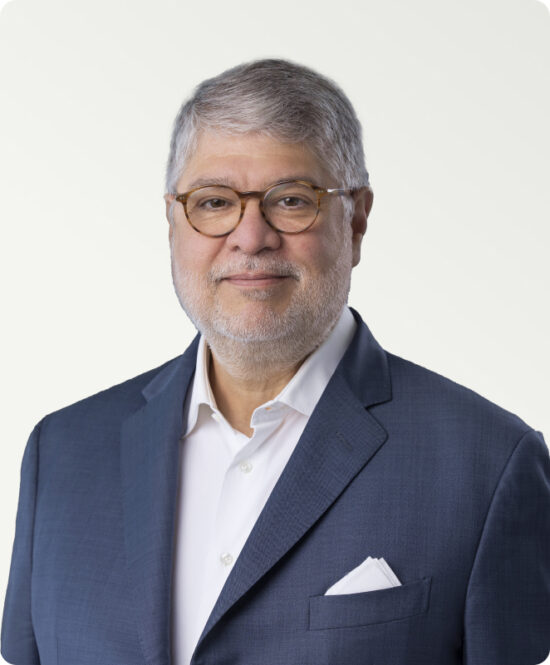
Pablo Legorreta founded Royalty Pharma in 1996 after working at Lazard. The useful insight was contractual: a medicine’s economic benefits can be divided. A company may develop and commercialize the treatment while another institution holds a royalty. That institution’s claim can be bought without buying the drugmaker.
Royalty Pharma occupies that space between scientific invention and financial markets. It purchases existing royalties and also supplies development and launch capital. Universities and nonprofits can monetize rights they already hold. Drug companies can redirect capital toward other programs. Public shareholders, through Nasdaq-listed RPRX, participate in a collection of these interests.
The work requires scientific judgment as well as a calculator. Clinical results matter. So do competing medicines, likely sales and the duration of contractual rights. The company describes a culture of interdisciplinary teams and challenged assumptions. Those are useful habits when an elegant spreadsheet can conceal a fragile biological premise.
“We offer fair terms, capital, and support without interference.”Royalty Pharma’s description of its partner proposition
Keep the company. Share the sales.
A synthetic royalty starts from the other direction. Instead of purchasing an existing entitlement, the financier supplies cash in exchange for a newly created right to future product sales. For a biotech, the appeal is control: financing need not require issuing shares or handing a pharmaceutical partner the commercial territory.
Consider the agreement Revolution Medicines announced in June 2025. It provided up to $2 billion in committed financing: up to $1.25 billion for a synthetic royalty on daraxonrasib and up to $750 million in debt. At closing, the royalty buyer paid $250 million. Other payments depended on milestones, with some available at Revolution’s discretion.
The distinction between committed and delivered capital matters. So does the price. Royalty payments run for 15 years under the announced terms, with tiered rates and no royalty on annual sales above $8 billion. Revolution retained operational control, while promising part of a possible future revenue stream. That is a negotiated exchange of rights.
The alternatives take different things. Equity takes ownership. Debt brings repayment obligations. A licensing partnership can transfer development or commercial rights. Other royalty investors offer competing structures. Royalty Pharma’s distinction is its capacity for large transactions and its focus on medicine-linked income. Whether its proposal is attractive depends on what a partner most wants to preserve.
A contract cannot fix a failed trial
In 2022, Roche’s gantenerumab studies missed their primary endpoints in early Alzheimer’s disease. Royalty Pharma recorded an approximately $274 million noncash impairment. The contractual machinery had not malfunctioned. The underlying clinical proposition had disappointed.
Approved medicines face another clock. Patent protection and royalty terms expire; competitors arrive. In the second quarter of 2026, Promacta royalty receipts fell to $8 million from $33 million a year earlier, with the company citing U.S. generic competition. A portfolio spreads exposure, but every payment stream still needs an argument for its staying power.
The cost of the capital itself
Royalty Pharma has also revised its own machinery. In 2025 it acquired its external manager in an announced transaction valued at roughly $1.1 billion. Investors had said the external structure impeded investment. Bringing management inside promised simpler governance and lower costs. Those projected savings still had to be earned.
By August 2026, the company had raised its full-year Portfolio Receipts forecast to $3.4 billion-$3.5 billion. That cash-based measure is distinct from accounting revenue. The useful lesson for anyone studying this business is equally precise: identify the asset, price the rights surrendered, and match financing to the next achievable milestone. The Foundation’s transaction worked because two institutions valued the same future payments on different calendars. Royalty Pharma made that difference tradable.
Follow the money
Explore the financing options, the Foundation’s royalty story, Revolution’s deal terms, and the gantenerumab write-down. Read the management decision and 2026 results.
Website ↗ · LinkedIn ↗ · News ↗
Watch: Legorreta on the IPO, CNBC · Founder Stories interview