In April 2024, Ron Carson gave away his neckties. After forty years in financial services, he had rather more to shed than a drawer of silk, but the ties made a pleasing start. He had just handed the chief executive’s job at Carson Group to Burt White. He remained chairman. The company still carried his surname. The business wardrobe, apparently, had served its term.
The first name was changing too. Carson now goes by Omani. For someone whose work involves helping people plan their futures, he has become an unusually public example of revising the plan. The young Nebraskan who began selling insurance from a university dormitory in 1983 had built a national advisory business. Decades later, he wanted more room in his life for family, philanthropy, and another venture called Omya. Retirement would have been a misleading word for any of it.
A phone book on the eleventh floor
His beginnings belong to a Nebraska of farms and kitchen tables. Carson grew up near Tekamah, north of Omaha. He and Jeanie met when they were seventeen; both came from farming families. Their partnership long predates the corporate vocabulary of partners, platforms, and stakeholders. They built their family alongside the business, which makes the later talk about legacy rather less abstract.
At seventeen, Carson saw his parents lose their financial footing. Their bankruptcy gave his ambition a sharp edge. He has recalled discovering a magazine article that listed financial planning among attractive professions and deciding to pursue it. Financial security was a personal objective before it became his professional subject. The young salesman had an excellent reason to take the prospect of losing everything seriously.
In 1983, he began what became Carson Group on the eleventh floor of Abel Hall at the University of Nebraska-Lincoln. His equipment included a phone book. His opening financial position, by his own account, was about $2,600 below zero. He had gone to Nebraska to play football; his business emerged during those college years. A dormitory is a thrifty place to establish an office, provided one does not require an impressive reception area.
The setting matters because it puts the later enterprise in proportion. There was no national platform at the beginning, just a young person making calls. Carson Wealth’s own account of its origins connects his farm upbringing with his wish to help other Nebraskans avoid the financial hardships his family had experienced. The practical problem came first. The organization grew around it.
Making attention repeatable
Carson’s early business depended on relationships. He has described a turning point when he called clients simply to see how they were doing. He learned about their families and pets. Annual revenue subsequently rose from under $30,000 to $1 million within two years. Those are his retrospective figures, and the lesson he draws from them is remarkably ordinary: people noticed when somebody paid attention.
Eventually he began writing down the details of service, including greetings and voicemail messages. “Everything is repeatable,” he has said. Here is an appealing wrinkle in the Carson story. Personal attention sounds spontaneous; an expanding business needs a way to remember to deliver it. The greeting may be warm, but somebody still needs to decide who makes the call, when it happens, and what follows.
In 1993, he founded the advisor coaching business originally known as Peak Advisor Alliance. Coaching gave other advisors access to methods he had developed in his own practice. Carson Partners followed in 2012, supplying independent firms with shared infrastructure. An advisor could have a local relationship with clients while drawing on a much larger organization for technology, marketing, compliance, and investment support.
These three businesses explain his career better than a single large assets figure. One serves households. Another teaches practitioners. The third supplies the machinery behind a practice. Carson’s experience as an individual advisor became something other advisors could use. The commercial advantage lay in giving a firm more capacity without requiring every advisor to invent an entire institution from scratch.
The instructions were meant to be used
He also put his methods into books. Tested in the Trenches, written with Steve Sanduski, addressed building a financial services practice around service, relationships, and a life beyond work. The title has the reassuring lack of glamour of a useful pair of boots. Carson was selling the value of experience organized well enough for somebody else to apply.
His 2020 book, Proven in the Trenches, continued that project with eleven principles for advisors. A companion workbook supplied exercises and tools. Even the audiobook became an opportunity to add observations after the manuscript was finished. The underlying habit is consistent: take an operating lesson, give it a structure, and send it out into somebody else’s working day.
His coaching materials describe a process called blueprinting, which asks advisors to connect their mission, values, and goals. One workbook says Carson himself had returned to the process more than a dozen times over twenty years. There is something agreeably inconvenient about that detail. A founder who sells planning would presumably prefer to have completed his own plan. Instead, he kept reopening it.
A billion-dollar valuation, with an asterisk
In July 2021, Bain Capital invested in Carson Group at a valuation above $1 billion. Carson remained the majority owner. Bain purchased the stake previously held by Long Ridge Equity Partners, which had invested in 2016, and committed additional growth capital. The intended uses included technology, acquisitions, and further expansion. An enterprise born with a phone book now had an institutional investor helping finance its next chapter.
The distinction between a company’s valuation and its clients’ assets is worth keeping clear. The former concerns what the business is worth. Assets under management describe money entrusted to the firm for investment management. Neither number is the founder’s bank balance. Financial profiles become much more intelligible when their impressive figures are made to wear the correct name badges.
Reported assets under management
By October 2025, Carson Group reported that assets under management had passed $50 billion. Its announcement described acquisitions, recruitment, and technology investment as contributors, and noted its first Carson Wealth office in Alaska. In July 2026, the company reported more than $60 billion while announcing a program to give eligible advisors and team members opportunities to own equity. The institution was continuing to change after its founder’s change of job.
Two pairs of hands on the steering wheel
The formal handover came on April 9, 2024. White, previously managing partner and chief strategy officer, became CEO immediately. Carson kept majority ownership and moved toward the company’s longer-term direction. White brought fourteen years as LPL Financial’s managing director and chief investment officer before joining Carson in 2022. This was a successor with his own experience and ideas.
Carson later described the awkwardness with a steering-wheel analogy: he gave White control, then put his own hands back on the wheel. Eventually he let go. He also admitted that seeing another person identified as CEO provoked his ego. An ownership transition may arrive with a legal document. A founder’s sense of ownership tends to require additional paperwork of a less orderly kind.
“If you really slow down, you can speed up.”
Omani Carson
That admission gives his current advice some texture. He has encouraged business owners to spend enough to recruit capable leaders and share ownership. The equity program announced under White in 2026 offers a concrete company example of widening participation. Whether hiring, succession, or compensation is involved, Carson’s evolving position asks a founder to tolerate other people having a consequential part in the outcome.
Please call him Omani
Carson explained his chosen name publicly in November 2024. He said Indigenous visitors had given him the Lakota name Ta Te Omani, which he translates as walking into a stiff wind. He had already been using Omani informally. He asked people to make the effort to use it, while acknowledging that many had known him as Ron for decades. His account gives the name its personal meaning; it is his explanation of the experience.
The request was direct and quite human. A business can acquire a new logo in an afternoon. Friends take longer to revise their vocabulary. Carson has described the broader change as a move toward love and abundance, and his newer projects carry that language. Yet the familiar elements persist: gatherings, connections, capital, and the belief that people can learn from one another.
A family office, a membership, and a soccer club
Omya, which he founded after leaving the CEO role, describes itself as an invitation-only membership for conscious capitalists. Its offering brings leaders, investment, purposeful ventures, and shared experiences together. The ambition is recognizably entrepreneurial: assemble people and resources, then see what they can build. The language has changed considerably since the dormitory calls. The appetite for starting something has survived.
Momentis, co-founded with Jeanie, organizes the Carson family’s investments, philanthropy, and estate planning. Its stated areas include financial technology, artificial intelligence, sports, and regenerative development. The family office makes a practical companion to his talk of impact: it supplies a structure for deciding where capital goes, who works with it, and what the family wants it to accomplish over generations.
In August 2024, he also joined Union Omaha’s ownership group. Carson said his family had not played soccer, but could see the next generation’s enthusiasm and the potential benefit to the community. A lifelong Nebraska Cornhuskers supporter had found another local team to back. Sporting expertise, happily, was not an entrance requirement for caring about Omaha.
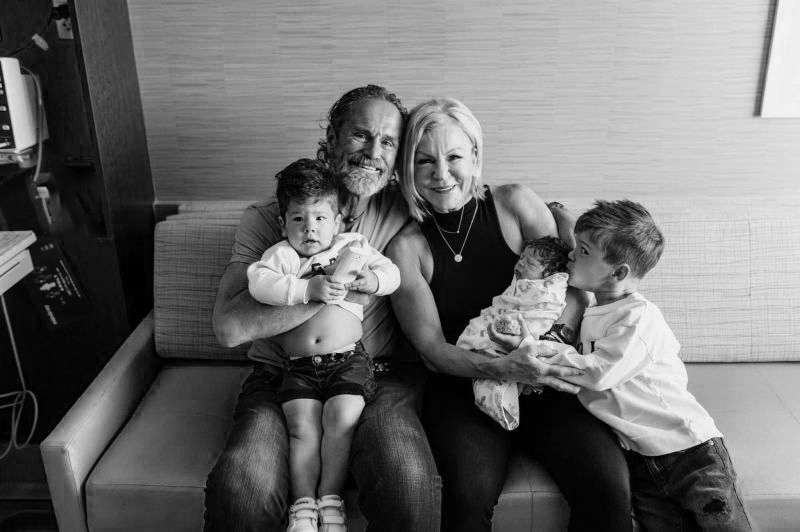
He still enjoys aviation, hiking, and time with his family. Those details sit comfortably beside the newer ventures because they return the story to its geography and its people. The company expanded nationally; his life remains rooted in Omaha. The person who once called strangers from a dorm room now has institutions to run, capital to deploy, and a first name he wants friends to remember. The neckties are somebody else’s problem.