In autumn 2015, a developer at Avensia sent an email suggesting that the company try Slack. His name was Maxim. A few colleagues gave it a go. Management had neither ordered the experiment nor approved it. Soon, about half the company was using the service. By Christmas, Avensia was paying for a plan.
Robin Gustafsson, its CEO, later described the arrangement with evident interest. There were enthusiastic users and people wondering whether life really required another communication channel. His response was a coffee-break policy: conversation could wander, normal standards of behaviour applied, and nobody had to join. A software company had acquired a second coffee room. Mercifully, this one required no washing-up rota.
It is a useful place to begin a story about Gustafsson. The co-founder appears here as someone explaining how a decision made without him became part of the company. His public career contains plenty of titles. This small incident gives those titles something to do.
A civil engineer takes the software route
Gustafsson moved to Lund in 1991. He studied at Lund University’s Faculty of Engineering, LTH, and holds a master’s degree in civil engineering. His subsequent working life led into software development, project management and product development. His experience includes Prevas and Scalado, alongside the consultancy he helped establish.
In 2001, he was one of the founders of the original Avensia. The early work included software consulting and project management. The distinction matters: this was a business built around doing technical work for customers, with all the practical obligations that entails. A consultant’s recommendation eventually has to survive contact with somebody’s actual system.
The company’s path to the stock market came through a 2007 reverse acquisition involving Avensia, LUVIT and INXL. Looking back in February 2025, Gustafsson wrote that he had sold half his holding at that point. He described the proceeds as the foundation of his personal finances thereafter. He also said he had been a net buyer of Avensia shares since 2007.
His professional route included a spell at Scalado, where he worked as product-development manager on imaging products for mobile phones. When Avensia announced his appointment as its subsidiary CEO in October 2010, he was returning from that job. The announcement said he would take over by the turn of the year. Company biographies record the resulting CEO period as 2011 to 2018.
- 2001Co-founds the original consultancy.
- 2011Begins the first recorded CEO period.
- 2021Returns as acting CEO on March 4.
The listed-company job, with the sleeves rolled up
By December 2015, Gustafsson was writing about the less ceremonial parts of running a listed business. Avensia had one marketing manager and nobody employed specifically for investor relations. The CEO was part of the communications department because the communications department was, in effect, whoever could get the work done.
He joked about secretly dreaming of the arrangements available to large-company chief executives. Then he got practical. Different channels served different audiences. LinkedIn helped with recruitment and business communication; Twitter offered access to journalists and investors. Internal tools let colleagues collect knowledge and share experience.
“This is very much a do it yourself situation.”
Robin Gustafsson · The Social Media CEO · 2015
The essay carries a mild comic resignation. More ways to communicate also meant more places requiring attention. That tension helps explain the Slack experiment: a useful tool could spread because employees wanted it, while still provoking perfectly reasonable complaints about yet another place to check. Gustafsson’s account allowed room for both reactions.
His first CEO period also brought measurable expansion. When the board announced his return in 2021, it credited his earlier years with average annual growth of 31%, reaching revenue of SEK 189 million. Those figures describe the earlier period. They are part of the explanation for his recall, rather than a promise about what would happen next.
Average annual growth during Gustafsson’s earlier CEO years, as reported in the announcement of his return.
The shopping street outside the spreadsheet
Another set of essays from 2015 begins in Lund. Gustafsson looked at its city centre, the Nova shopping centre on the outskirts, and the expanding business of buying online. He described changes in the shops and services occupying the centre, then considered how landlords, retailers and planners might respond.
His proposals were unusually physical for a software executive. Put more offices in the centre, because workers bring everyday custom. Encourage landlords to cooperate. Make online purchases and physical stores easier to connect. Consider rental arrangements that recognise a customer can discover a product in one place and buy it elsewhere.
These were his arguments about the city, including his reading of its commercial changes. Their appeal lies in the questions they raise. Where does demand originate? Who pays to attract a shopper? Who benefits when the eventual transaction takes place on a different channel? A checkout records the sale neatly. The journey leading to it is considerably less tidy.
He wrote as a longtime resident and consumer, as well as an executive. Today, his public profiles place him in Malmö. Lund remains part of the story: the university, the company’s headquarters, and a shopping landscape he used to think through the consequences of his own industry.
Back to the mothership
After his first CEO period ended in 2018, Gustafsson remained involved through Avensia’s board. On March 4, 2021, he returned as acting CEO, succeeding Niklas Johnsson. The board’s explanation emphasised execution, organisational development and operational excellence. It wanted more return from the position the company had established.
Per Wargéus, then chairman, pointed to Gustafsson’s previous leadership and familiarity with the business. A returning founder brings knowledge of the organisation’s earlier decisions, along with the possibility of having to revisit some of them. In this case, the stated assignment was firmly practical: people, operations and delivery.
In his February 2025 reflection, Gustafsson said he had left the company operationally twice and always returned to the mothership. He acknowledged that Avensia had disappointed on the stock market in recent years while describing the much longer journey warmly. It is a more interesting account of attachment than an uninterrupted success story would have been.
Old working relationships also returned. When Martin Knutson joined Avensia in 2025 after a long career at Kjell & Company, Gustafsson recalled their collaboration about fifteen years earlier on the retailer’s e-commerce platform. He praised Knutson’s willingness to tackle complicated organisational and technical problems. The reunion had a working history behind it.
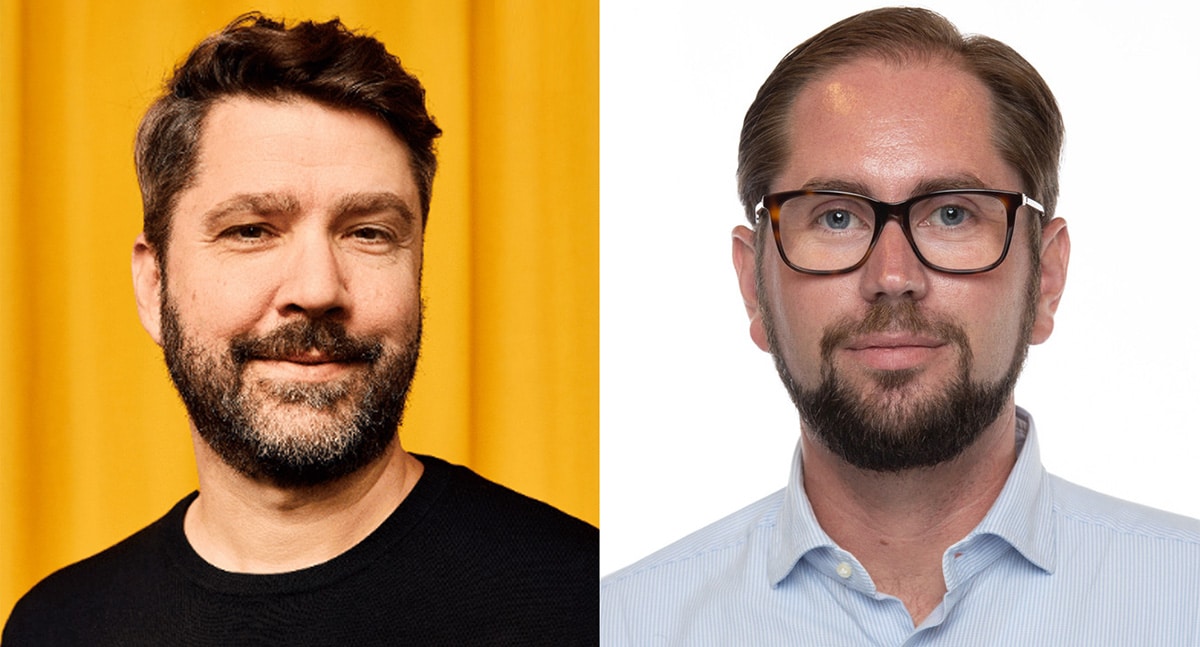
His responsibilities outside Avensia make that continuing connection to commerce visible in other forms. Current governance disclosures list him as chairman of Svenska Medalj and A5 Invest, and a board member of CoolStuff. These are separate assignments, alongside his executive work. They also help explain why a career chronology built only from CEO appointments would leave so much out. He has spent time as a founder, consultant, product-development manager, director and shareholder. When he discusses an organisation, the vantage point can change even when the person speaking stays the same.
A butler with a shopping list
By April 2025, Gustafsson was considering a customer who might never browse a retailer’s carefully designed pages. In a guest essay, he forecast consumer-controlled AI assistants that could recommend and purchase products using detailed knowledge of what a person wanted. He called them butlers.
The forecast brought him back to infrastructure. If software is comparing products, it needs accurate, accessible information about them: dimensions, prices, images, availability and delivery details. In his argument, the quality of that information would become a competitive concern as discovery moved beyond retailers’ own websites.
requirements→AI assistant
compares→Retailer’s
product data
There is a connection to those Lund essays, although the scenery has changed. The sale can move away from the place that once seemed to own the customer relationship. A landlord, a shopkeeper and a software company each have reason to care where that movement leads. The butler, presumably, has little sentimental attachment to anyone’s homepage.
He has also taken the interviewer’s seat. In a conversation recorded at Avensia Edge and made available in 2026, he spoke with Lyko founder and CEO Rickard Lyko about growth, mistakes and retail assumptions. The advertised questions include why a retailer might deliberately want a lower conversion rate and where AI could create business value. It is another setting for the same professional curiosity: asking an operator to explain the reasoning behind a decision that might look peculiar on a dashboard. The conversation runs for twenty-nine minutes.
The next return is in the numbers
Gustafsson took on the additional CEO role at Avensia Information Management in January 2025. In April 2026, Sofia Aru was appointed to succeed him there, with Knutson serving as acting CEO during her leave. Gustafsson continued as Group CEO. The distinction matters when following the company’s announcements: the group and its operating businesses have different leadership responsibilities.
The latest figures available on October 25, 2026, show a mixed business. Preliminary September revenue rose 5% to SEK 40.7 million. Third-quarter revenue was provisionally up 1%, while revenue for January through September remained down 6%. Gustafsson linked growth in Information Management to supply-chain work; Commerce was still contracting.
2026 figures preliminary, announced October 15. Final quarterly revenue scheduled for October 28.
On October 21, Avensia announced fifteen additional supply-chain consultants. The expansion followed a RELEX Solutions partnership established in 2025. It adds a concrete operational detail to the discussion of where the group is going: more people working on the availability and movement of goods.
The career has come a long way from its original consultancy, through phone-camera software and back into the daily obligations of a listed company. Its recurring interests remain close to the work: how colleagues communicate, how shoppers move, how information travels, how a promise becomes a delivery. For Gustafsson, returning to Avensia has repeatedly meant another turn at those questions.
Follow the conversation
- Avensia’s leadership team ↗Company website
- Robin Gustafsson on LinkedIn ↗ · X ↗ · Bluesky ↗
- Slack @ Avensia ↗His account of the experiment · March 2016
- A Small Town Perspective ↗His Lund retail essay · October 2015
- Retail in the AI Era ↗Guest essay · April 2025
- Listen: twenty years in e-commerce ↗Avensia Commerce Talks
- Watch: Q1 2026 presentation ↗YouTube · Swedish
- Watch: a conversation with Rickard Lyko ↗Avensia Edge · 29 minutes · Swedish, English subtitles · registration required
- The latest supply-chain expansion ↗Company news · October 21, 2026