The purchase included a brewery, an importer and a word that deserves more attention than it usually gets: perpetuity. In June 2013, Constellation Brands completed a roughly $4.75 billion acquisition of Grupo Modelo’s U.S. beer business. Rob Sands, the company’s chief executive, was buying the right to keep selling Corona and Modelo in America without an expiration date. A business built by his father around wine in upstate New York had acquired a different future, written into the fine print.
The distinction matters. Constellation did not buy Corona everywhere. It acquired exclusive, perpetual U.S. rights, a brewery in Mexico and control of the commercial business serving American customers. Geography, production and legal language belonged in the same sentence. For a former general counsel, this was an unusually consequential collection of clauses.
Sands had taken the family company’s top job in 2007. He would leave that job in 2019 and the board chairmanship in 2023, remaining a director. Between those dates sits a career that complicates the easy story of a son inheriting a business. Inheritance supplied his opening. His decisions changed what the business actually was.
A philosophy major enters the wine business
Marvin Sands founded the Canandaigua Wine Company in 1945. Rob grew up in Canandaigua, attended the Harley School and studied philosophy at Skidmore College. For a time, further study and a doctorate appealed to him. He eventually chose law as the more practical direction. The route to beer ran through a fair amount of reading.
He graduated from Pace’s law school in 1984 and worked at Harter Secrest & Emery in Rochester before joining the family business as general counsel in June 1986. Corporate responsibility arrived in stages: vice president, executive vice president, international chief executive, group president, then president and chief operating officer in 2002. He spent about two decades inside the company before becoming CEO.
His older brother, Richard, preceded him in that position. Their educations make an intriguing pair: Rob brought philosophy and law; Richard had trained in social psychology. Neither brother’s biography begins with a brewing qualification. Their working education came from the company and from Marvin, whose approach to colleagues Rob continued to describe years later.
In Rob’s telling, their father listened across the hierarchy and gave people room to act. Richard added a demanding interest in the numbers, particularly the expected returns on acquisitions. Together those influences suggest the demands of the eventual job: understand people well enough to work with them, and understand a deal well enough to explain why it deserves their money.
“From my brother, I learned the importance of numbers to help drive business strategy.”
Rob Sands, 2017
There was a less corporate side, too. In 2009, his brother described a serious exterior concealing a sense of humor. Away from work, Rob enjoyed skiing and science fiction, with Octavia Butler among his favorite authors. A philosophy graduate with a taste for imagined futures is at least an interesting person to ask about the next business category.
The inheritance came with a balance sheet
The 2007 succession had its own family vocabulary. Richard described it as passing the baton. He stayed involved as chairman, available to advise while Rob took ultimate responsibility. Richard traced the arrangement to their father, who had given the next generation authority while remaining close enough to offer an opinion.
That requires a certain restraint. A predecessor can be helpful, especially when he knows the business intimately. He can also turn every decision into a second negotiation. Richard’s explanation placed the operating responsibility with Rob and his team. Experience would remain in the room; the new chief executive would still have to make the decisions.
The timing was awkward. Sands became CEO shortly before the financial crisis. He later recalled a company carrying debt of 5.3 times EBITDA, with operations spread across the world. Acquiring businesses had created scale and complexity. His immediate task included consolidating those operations and making the collection work more coherently.
He also pushed the portfolio toward more expensive products. In 2008, the company was buying brands including Clos du Bois and Wild Horse while selling Inglenook and Almaden. The trade involved choices about which customers to pursue and which businesses to let go. A long list of labels can look impressive. It can also become a filing problem with vineyards attached.
- 1986Joins as general counsel
- 2007Succeeds Richard as CEO
- 2013Closes the Mexican beer acquisition
- 2023Leaves the board chairmanship
What $4.75 billion actually bought
The opening for the beer transaction came from somebody else’s merger. Anheuser-Busch InBev wanted to acquire the rest of Grupo Modelo. In January 2013, the U.S. Justice Department sued to block the proposed combination, arguing that it would weaken competition. Constellation, already a partner in the Crown Imports joint venture, became central to the solution.
An initial proposal would have given Constellation the remaining interest in Crown alongside a supply agreement. Regulators rejected that arrangement. An importer dependent on the merged company for its beer would still lack the independence the government wanted. The revised settlement added the brewing assets and permanent brand rights that gave the transaction its substance.
When the deal closed on June 7, Constellation obtained full ownership of Crown Imports, the Nava brewery near Piedras Negras, Mexico, and the U.S. licenses. Those pieces worked together: a place to make beer, an organization to bring it to market, and the continuing right to sell the brands. The acquisition announcement said the transaction nearly doubled company sales.
Three parts of an independent beer business.
Brewing assets in Mexico
Full ownership of the U.S. business
Exclusive U.S. Corona and Modelo brand licenses
Announced purchase price, June 2013. Rights are specific to the United States.
The brewery brought obligations along with opportunity. The antitrust settlement required capacity expansion, with milestones intended to make Constellation an independent competitor. Temporary supply and transition agreements would bridge the gap. A celebrated brand could attract a buyer; keeping shelves supplied required investment, schedules and a functioning plant.
It is here that Sands’s legal background becomes particularly interesting. The bargain’s value depended on the relationship between rights and physical capability. Selling beer under an enduring license mattered because the company could also make it. The label on the bottle was the visible part. The less photogenic machinery behind it helped determine whether the promise could last.
The acquisitions that resist a tidy ending
Success in imported beer did not make every expansion equally durable. Constellation paid $1 billion for San Diego’s Ballast Point in 2015, during Sands’s tenure as CEO. Craft beer offered another way into consumers’ changing tastes. It also exposed the difficulty of buying a fast-growing business and deciding how much of its recent growth could continue.
In December 2019, after Bill Newlands had succeeded Sands as CEO, Constellation announced an agreement to sell Ballast Point to Kings & Convicts. The deal included the brand and several facilities, while excluding the Daleville, Virginia, production brewery and distribution warehouse. The reversal belongs beside the Mexican beer acquisition in any account of the period.
There was a separate, substantial wager on cannabis. In 2018, Constellation announced a $4 billion investment in Canopy Growth for a stake of approximately 38 percent. The size alone makes it part of Sands’s record. His willingness to enter an emerging category sat alongside the more established business of Mexican beer, wine and spirits.
The career therefore invites a more useful question than whether he liked acquisitions. Clearly he did. The question is what makes a purchase hold together over time: consumer demand, price, control, production, or the assumptions connecting them. His transactions provide several different answers, and enough variation to make an uncomplicated victory lap feel premature.
Handing over the chair
Newlands became CEO in March 2019, with Sands moving into the executive chairmanship. In November 2022, the company eliminated its Class B common stock. The reclassification converted each Class B share into a Class A share plus $64.64 in cash, with an aggregate cash payment of approximately $1.5 billion to Class B holders.
The family’s enhanced voting power ended with that change. It was a paid restructuring of ownership rights, a significant distinction when describing the family’s move away from control. The company’s leadership story now included changes to the rules under which leadership itself could be exercised.
In July 2023, Sands announced that he would leave the board chairmanship following the annual meeting. He connected the timing to the move from two share classes to one and said he would continue working with the board. Constellation’s current leadership listing identifies him as a non-management director. The title is smaller; the history behind his seat remains substantial.
A law degree returns to campus
His work at Pace gives the later chapters a different setting. Sands joined the university’s board in 2018 and became its chair in 2021. Earlier, in 2016, the Sands Family Foundation and Constellation contributed $400,000 to launch the Food and Beverage Law Clinic. Students and faculty there provide legal help to farmers, entrepreneurs and nonprofit organizations.
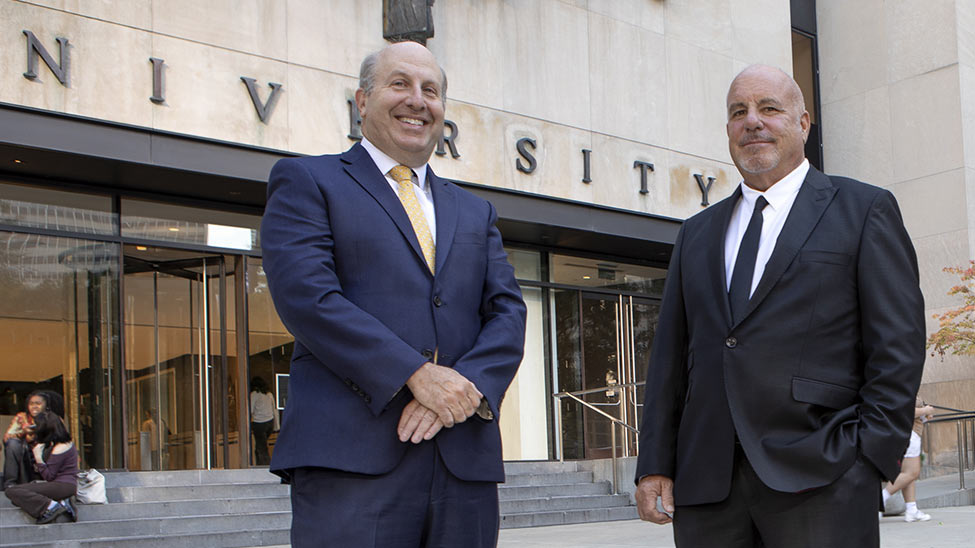
In 2023, Pamela and Rob Sands gave $25 million to Pace, recognized in the naming of the Sands College of Performing Arts. The college brought together disciplines including acting, directing, commercial dance, musical theater and stage management. The lawyer who helped build a drinks company was helping create room for people whose eventual work would take place onstage and behind it.
The connection continues. In Pace’s Summer 2026 leadership letter, Sands signed as chair of the board alongside university president Marvin Krislov. Their message discussed student opportunity, new academic spaces and the future of the university. Decades after earning his law degree, he was still participating in decisions about what the institution could offer the next cohort.
Seen together, the brewery and the college reveal a recurring practical concern: what must be put in place for an enterprise to keep working? In Mexico, that meant enduring rights and production capacity. At Pace, it means teaching, facilities and opportunity. Sands’s public career keeps returning to the structures behind the name on the door. The fine print has had a surprisingly large part.