As a little boy, Pat Gallagher was invited to try out a chair. His grandfather, Arthur, would sit him down and ask how it felt. Decades later, recalling the exchange from a leather chair at the company’s headquarters in Rolling Meadows, Illinois, Gallagher could still remember the founder’s enthusiasm. The furniture was incidental. The invitation was to imagine a place in the business.
Arthur J. Gallagher had started his Chicago insurance agency in 1927. By the time his grandson arrived as an intern in 1972, the family connection was hardly a secret: three of the four interns were cousins. This was an unusually efficient approach to the family reunion. It also came with instructions. Gallagher recalls his father and uncle telling him, “Don’t screw it up.”
There are more elaborate statements of corporate stewardship. Few are as easy to remember. Gallagher’s career has unfolded inside that compact assignment: take something built by people you know, enlarge it, and keep it recognizably theirs. His name helped explain how he got through the door. What happened over the following five decades requires a longer explanation.
Today he is chairman and chief executive of Arthur J. Gallagher & Co., the insurance brokerage and consulting business that carries his grandfather’s name. He has been CEO since 1995 and chairman since 2006. The headquarters remains in the Chicago area; the clients and the work extend around the world. The interesting distance in his story runs between those two facts.
The apprenticeship lasted longer than the internship
Gallagher studied government at Cornell University, earning a Bachelor of Arts. His full-time career began in 1974 as a production account executive. It is a useful starting point for understanding him: before he ran an organization that sells advice, he had to sell it himself. A policy could be described on paper. A client still had to decide whom to trust.
That same year, his grandfather gave him advice he would later repeat publicly: “Plan your work, and work your plan.” The line has the plainness of a carpenter’s rule. It asks for preparation, then the less glamorous business of following through. Gallagher was still sharing it in 2022, nearly half a century after he first heard it.
His promotions arrived in stages. Vice president of operations in 1985. A board seat in 1986. President and chief operating officer in 1990. Chief executive in 1995. Put those dates beside the 1974 start and there are 21 years between becoming a full-time employee and becoming CEO. The family surname was present throughout; so was a substantial period of learning the trade.
The sequence matters because his public explanations of leadership keep returning to the work of other people. Selling, serving and collaborating are recurring subjects. He talks about trusting colleagues and about the broker’s responsibility to understand a customer’s business. Even at the top, his preferred account of the enterprise begins close to the account executive’s desk.
- 1972Intern
- 1974Account executive
- 1995Chief executive
- 2006Chairman
Twenty-five rules, surprisingly little mystery
In May 1984, his uncle Robert E. Gallagher wrote down 25 shared values. The company calls the document The Gallagher Way. It remains displayed in offices around the world, a piece of family business thinking given a much larger distribution list. Its subjects include professional courtesy, cooperation, trust and the expectation that people will earn respect.
One rule permits very little wriggle room: “Professional courtesy is expected.” Another makes a harder demand: “Never ask someone to do something you wouldn’t do yourself.” Together they sketch a workplace in which rank ought to carry obligations. The document also makes room for competitiveness. Good manners, in this account, are compatible with wanting to win.
The appeal is its specificity. A colleague cannot do much with an instruction to embody excellence before lunch. Returning a call, sharing expertise and treating another department as part of the same business are actions someone can recognize. Those examples illustrate the practical challenge behind Gallagher’s repeated emphasis on culture: a large organization needs behavior that travels without its chief executive accompanying every instruction.
His own description of management begins with placing trust in people. That is a stated philosophy, with all the testing that a philosophy requires when a business grows. A list on a wall cannot settle every dispute. It can give people a common set of expectations, and it gives a leader something against which his own decisions can be judged.
“My management style is simple; it begins with placing trust in our people.”Pat Gallagher, 2023
Buying businesses means inheriting relationships
Acquisitions have made that test harder and more consequential. In a May 2026 interview, Gallagher described seeking successful businesses led by people who enjoy the work and whom his team likes. He put culture at the center of the assessment. The reasoning fits a brokerage: the acquired assets include people whose relationships with clients cannot simply be delivered in a crate.
He has also resisted invitations to take Gallagher private. His argument is rooted in the effort involved in becoming public and his preference to stay that way. It reveals a stubborn streak in his public business thinking. He is willing to change the company’s size and geographic reach while keeping a firm view about the ownership structure in which that change should happen.
On August 18, 2025, Gallagher closed its acquisition of AssuredPartners, bringing in a brokerage with offices across the United States, Britain and Ireland. The announced rationale included broader middle-market capabilities, more specialist expertise and opportunities across the group’s businesses. Those are ambitions at the point of a transaction, rather than proof that integration has already succeeded.
The practical distinction is worth keeping. Announcing a purchase takes a day; getting colleagues, systems and client service to work together takes longer. The company’s second-quarter 2026 results reported acquisition integration costs alongside growth. For Gallagher, the family instruction now applies to businesses whose founders and employees have their own histories to protect.
Two measures of scale
The reward came with a scholarship fund
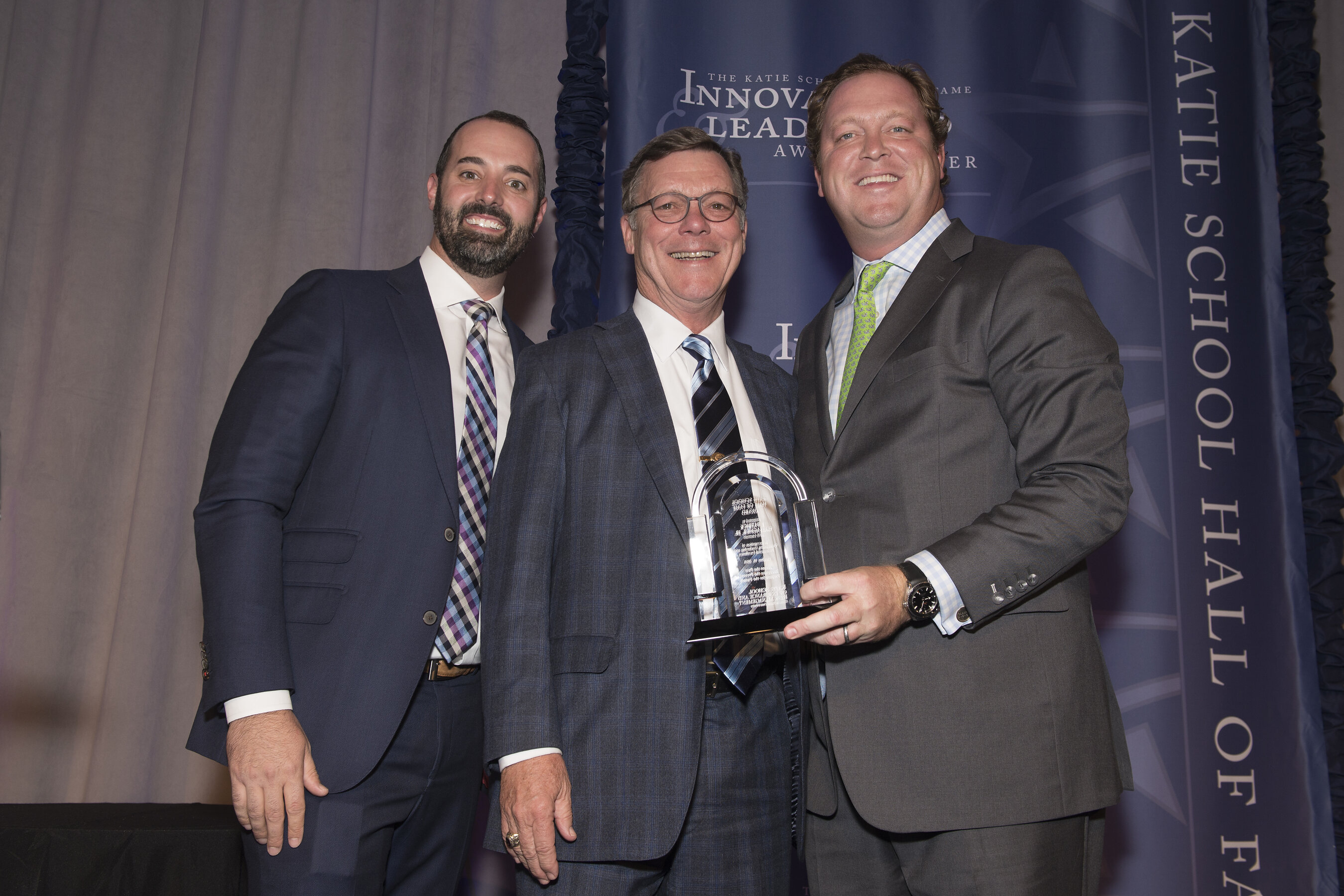
There is a more intimate way to see what he wants the industry to become. In October 2018, the Katie School of Insurance and Risk Management at Illinois State University named him its Hall of Fame Laureate. The awards dinner raised more than $1 million for the school. Nearly $200,000 went to an endowed scholarship fund carrying his name.
The event joined recognition to recruitment. Students would receive support for entering an industry that Gallagher has spent years trying to explain to newcomers. The honor also recognized his civic contributions and efforts to attract talent. A gala can produce an evening’s photographs; a scholarship fund gives the evening a reason to matter after the tables have been cleared.
The educational thread appears elsewhere in his record. London granted him Freedom of the City in 2007 for his contribution to the Lloyd’s insurance market and support of the Gallagher Lifelong Learning scholarships. The Spencer Educational Foundation honored him in 2009 for his continuing support. Those are separate institutions, connected by his interest in bringing people into the profession.
On June 20, 2025, he recorded a live conversation with interviewer Robert Reiss before 500 Gallagher interns. The symmetry is pleasing: a former member of a four-person intern class addressing a room of 500. The scale had changed. The opportunity to tell a young person why this work might be worth a career remained familiar.
A broker makes the future a little less abstract
Gallagher’s explanation of insurance starts well beyond insurance. “Insurance is the oxygen of commerce,” he says. Buildings, businesses and cargo moving across oceans depend on arrangements that let people take risks they could not comfortably carry alone. He likes to make a profession associated with paperwork sound like an enabling condition of ordinary enterprise.
His role within that arrangement is advice. The broker represents buyers looking for coverage; choosing and interpreting that coverage requires attention to the actual business. An organization’s exposures do not become simpler because its executives would prefer a short meeting. Cyber risks, international operations and unfamiliar technologies add questions that older policies may not have been designed to answer.
In a 2025 conversation, he urged CEOs to pay attention to who advises them on insurance and whether the coverage fits their operations. He also described technology as a way to shorten laborious reading and administrative work. His optimism rests on the idea that faster handling of information can leave more time for considered judgment and service.
By September 2026, he was describing an insurance market moving at different speeds across types of coverage. His emphasis was on helping clients understand what they were receiving. That is a modest-sounding responsibility for someone running a global business. It is also where his argument becomes concrete: growth means little to a customer who cannot understand the advice.
The next person in the chair
The Gallagher name now appears across several generations of leadership. Thomas J. Gallagher became president in January 2024. Patrick M. Gallagher, the CEO’s son, became executive vice president and chief operating officer. Pat retained the chairmanship and chief executive role, with a stated focus on strategy and domestic and international expansion.
The distinction between the two Patricks is useful beyond avoiding a mistaken introduction. It shows a family enterprise continuing inside a public company, with responsibilities assigned across generations. It also raises the ordinary question facing any long-serving executive: how does a business carry its habits forward when the people doing the carrying change?
His record offers a set of practical answers: a career built through successive jobs, principles written down before the company became this large, investment in newcomers, and repeated attention to the relationships acquired with each new business. None removes the need for judgment. Each gives the next employee something more usable than a surname.
The grandfather’s chair makes a good beginning because it holds the whole question in miniature. A child could imagine occupying the seat. An adult would have to decide what occupying it required. After more than 50 years at Gallagher, Pat is still working through the answer, with rather more colleagues depending on how well he keeps his word.
Watch, read & follow
Watch: Katie School’s Hall of Fame film ↗Listen: Pat Gallagher with 500 interns ↗Watch: September 2026 market conversation ↗Pat Gallagher on LinkedIn ↗Gallagher’s website ↗Read: Culture Is Key to M&A ↗Gallagher company channels: X · Facebook · Instagram · YouTube