Richard Wyles had a perfectly serviceable reason for running a global software company from New Zealand: he liked living there. Business geography could take the matter up with him later. The harder question was how to build something customers around the world could use, alter and trust without requiring its creators to work indefinitely for gratitude.
That question runs through his career, from publicly funded education projects to Totara, the workplace learning company he co-founded in 2010. It makes him an interesting sort of software entrepreneur. His argument for openness always came with a second argument about who would pay the people doing the work. Freedom needed a budget.
The two arguments could irritate different audiences. A conventional software investor might wonder why a business would let so much value escape to partners. An open source enthusiast might wonder why subscriptions cost money at all. Wyles spent years explaining the space between those objections. There was a company to run in it.
A small country shares the bill
The story begins in 2003, when Wyles secured New Zealand government funding for innovation in online learning. The problem was geographical as well as financial: a relatively small population, dispersed institutions and limited resources for building the technology education increasingly needed. Repeating the same investment across separate institutions offered an expensive route to standing still.
His early open source work involved a government-funded consortium of 20 universities and other education institutions contributing to Moodle. He also helped establish Eduforge, a community site, and became involved in Mahara, an electronic portfolio project. These were ways for institutions to share foundations while retaining room to do their own work.
Mahara began in mid-2006 as a collaboration led by Massey University, with Auckland University of Technology, the Open Polytechnic and Victoria University of Wellington among its partners. Wyles represented Flexible Learning Network on the steering group. He was already leading related Moodle work and work with the Fedora repository system. His career was taking shape around getting separate institutions to build useful things together.
In July 2007, Flexible Learning Network and Catalyst IT began collectively managing and supporting Mahara with their own resources. Wyles, who co-founded Flexible Learning Network in 2006, was confronting the difference between starting a useful public project and keeping one moving. A successful grant application could open a door. It could hardly promise to pay every future electricity bill.
Wyles’s early Moodle work joined universities and other education institutions around shared software development.
There had to be an easier way to make a buck
Wyles’s public writing could be rather less solemn than the subject of educational infrastructure suggests. In a 2009 online discussion about learning software, he defended the effort behind Mahara and the risks its supporters were taking. Neither of the two companies backing its development had yet made a profit from it, he explained.
He also pushed back against the suggestion that public funding made the enterprise an easy commercial proposition. His reply mixed irritation, detail and a wink. He joked about getting back to treading the pavements with his snake-oil bag. Even amid an argument, he could make room for a little theatrical salesmanship at his own expense.
The revealing part was the combination. Here was someone prepared to defend public investment and open software, while being candid about the commercial difficulty of sustaining them. In the same discussion he described choosing Moodle when it had only about 350 sites worldwide. A choice that later looked established had once required a judgment about an early project.
By September 2009, Massey University was describing Wyles as the person leading the Mahara project and continuing to work closely with the university. That relationship matters to his story. Totara emerged from years of institutional collaboration, rather than arriving fully formed with a corporate sales presentation and an agreeable photograph of people pointing at a laptop.
The classroom meets the organisation chart
In October 2010, three companies announced a joint venture called Totara: Flexible Learning Network, Catalyst IT and Kineo. They brought different pieces to the table. Catalyst had substantial open source development experience. Kineo had already been adapting Moodle for corporate clients. Wyles brought his work connecting education projects, software development and commercial delivery.
The plan was specific. Take Moodle as a starting point and build a workplace learning distribution with features employers needed: competency management, staff development plans, team management, classroom-event administration and reporting. A university course and a multinational employer’s training programme may share a screen, but the organisation chart soon begins asking questions of its own.
The original announcement scheduled public availability for January 2011. Wyles described standardising innovations the partners had already been making. That word, standardising, is doing useful work. Repeatedly building a similar feature for separate customers is a service business. Maintaining a common version that many customers can use begins to look like a product.
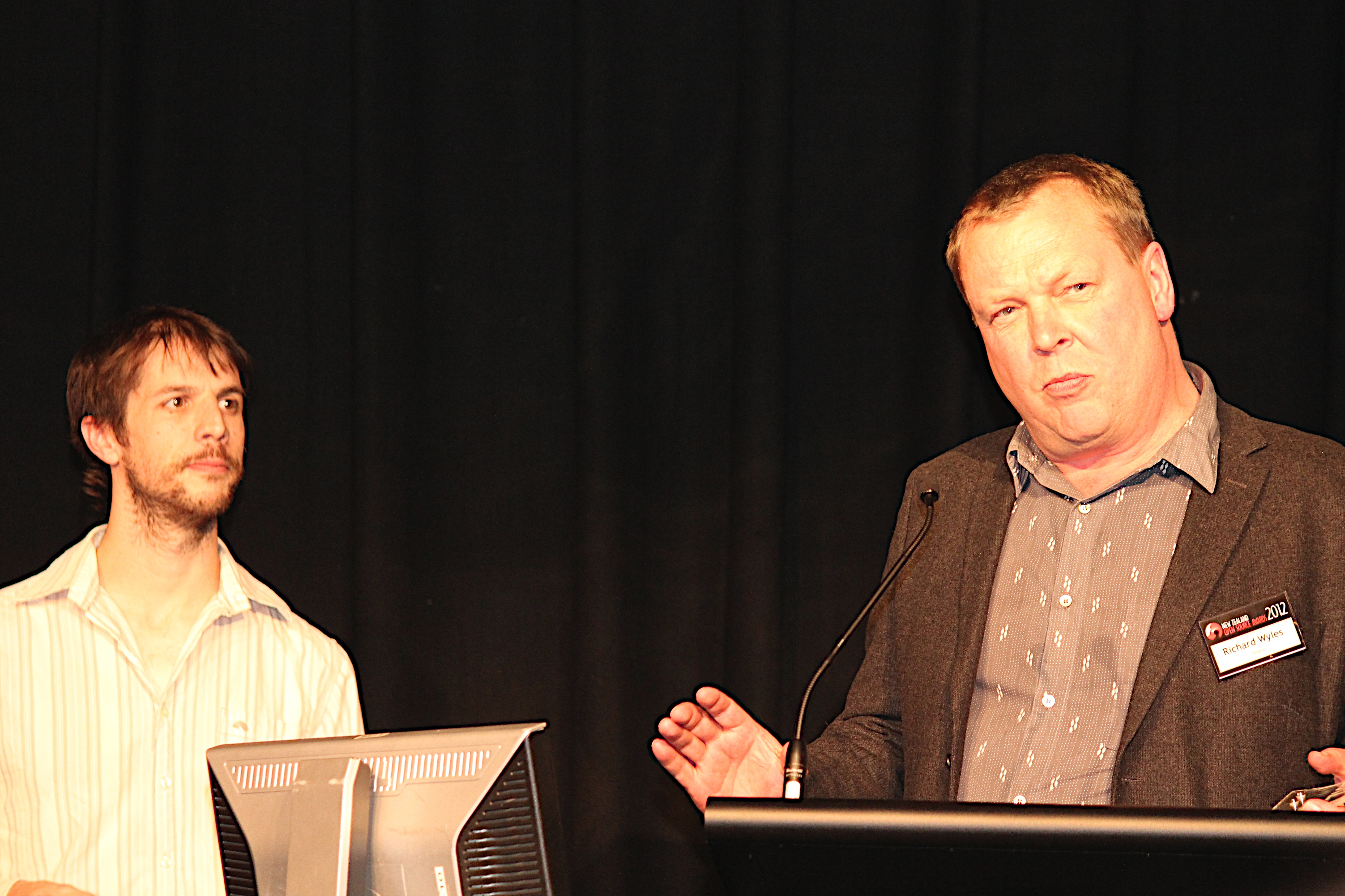

Even freedom has a maintenance release
Wyles became a public advocate for a commercially sustainable version of open source. His 2017 formulation drew a compact distinction between price and freedom. It carried a practical offer. Customers could gain access to code and flexibility; subscriptions would finance the ongoing work that made an enterprise product dependable.
“We don’t make software for free, we make it for freedom.”
Richard Wyles · 2017
His proposed bundle included research and development, maintenance, documentation and training. Partners could build businesses around hosting, implementation, integration and customisation. The shared product relieved each partner of the burden of developing an entire system alone. The customer could choose expertise suited to the job.
This arrangement asks the central company to accept that some revenue will belong elsewhere. It also asks customers to recognise value in recurring work they may never notice until it stops happening. Documentation has rarely brought an audience to its feet. Its absence can, however, bring a project to its knees.
He had explored the collaborative logic in 2015 using the Prisoner’s Dilemma. Software businesses could keep duplicating common components, or collaborate on foundations and compete through useful differences. His preference was for a network in which several businesses could prosper. A founder’s ambition, in this account, extended beyond the receipts at his own cash register.
The paperwork was part of the product
Wyles’s interests reached beyond code into the processes that decided which software got bought. In 2011, he argued that conventional procurement could disadvantage open source suppliers. Large tender responses and extensive unpaid demonstrations cost money. A business expecting substantial licence revenue could recover those costs differently from a company selling lower-cost services around open code.
He suggested changes including paid discovery work and explicit attention to exit costs, interoperability and the ability to retain code. These are unglamorous concerns with long consequences. The buying process can narrow a customer’s choices before anyone has opened the application.
The same attention to practical friction appeared in his 2019 comments on New Zealand’s changing research and development incentives. He preferred extending an existing grant arrangement while the tax-credit system settled down. He questioned how useful a tax credit would be to young companies that were not yet making taxable profits. Totara itself, he said, had taken five or six years to make a profit of note.
That is a useful corrective to the compressed chronology of a founder biography: founding, growth, investment, applause. Between those nouns are years of deciding what can be afforded. Wyles’s public comments kept returning to the machinery that makes an idea repeatable, whether the machinery was a subscription, a partner agreement or an application for support.
Twelve years, then a handover
In September 2022, Totara announced that Mark Ash would succeed Wyles as chief executive. Wyles was retiring from the CEO role after twelve years and would continue as executive chairman to support the transition and strategic initiatives. It was a change of responsibility after a long period of building the company.
A year later, Tenzing invested in Totara. The October 2023 transaction announcement described a business reaching around 20 million users across 140 countries, with more than 100 employees in offices in Britain, New Zealand and the United States. Those are figures from that moment, rather than a claim about the company today. They show how far the workplace experiment had travelled.
Wyles responded publicly to the investment by thanking Totara’s team, past and present, and its partners around the world. His attention remained on the people involved in the business. That was consistent with the model he had spent years arguing for: success depended on relationships outside the company as well as work inside it.
There is something pleasingly concrete about the aspiration behind all this. Better access to useful learning technology requires people who can build it, organisations willing to share it and customers willing to fund its care. Wyles put those interests into the same business. New Zealand could remain home. The work could travel.
Keep reading, keep listening
- Richard Wyles on LinkedIn ↗Public professional profile
- Totara ↗The company he co-founded
- Richard Wyles on Open Source Underdogs ↗Listen · 2019 · 41 minutes
- Richard Wyles on The Morgo Podcast ↗Listen · July 2022 · 23 minutes
- We don’t make software for free, we make it for freedom ↗His 2017 essay
- The open source model works for eLearning business ↗His 2015 essay
- Leveling the playing field for procurement of open source solutions ↗His 2011 essay
- Mahara’s beginnings ↗The project’s collaborative history
- Totara’s 2022 CEO handover ↗The leadership transition
- Tenzing’s 2023 investment ↗The next ownership chapter