A database and a beer label are unlikely dinner companions. One keeps records; the other persuades someone to pick up a bottle. Yet both appear in the public offering of Results, a technical communication firm associated with Ridgeland, Wisconsin. Its software capabilities include PHP and database systems. Its portfolio includes illustrated brewing labels. Somewhere between the server and the shelf, the company has found room for the person trying to understand what is in front of them.
- Results combines technical writing with web, database, and software development.
- Its work gallery ranges from Wisconsin websites to educational material and beer labels.
- The useful buying question: what must people understand after the system is built?
The pairing is more coherent than it first appears. A programmer describes a system in instructions a computer can execute. A technical writer describes it in instructions a person can follow. A designer arranges information so that a visitor knows where to look. Results advertises work in each of these territories. The interesting feature is the proximity: code, explanation, and presentation occupy the same service menu.
The manual at the other end of the wire
Results calls its work technical communication. On its solutions page, that phrase stretches well beyond a printed user guide. The list includes data security analysis and design; server-side e-commerce, PHP scripting, and HTML pages; database design and implementation; multimedia presentations; and electronic documentation. Training and sales manuals share space with reports, proposals, and policies and procedures.
Its company LinkedIn description extends the technical side further, listing embedded software, desktop software, and digital electronics. Read together, these descriptions position Results as a services supplier spanning software and the material that explains it. A buyer could approach the firm about a website, a database-backed application, or technical documentation. Each would require its own discussion of scope.
That breadth gives the offering a particular shape. A web agency is an obvious alternative for a public-facing site. A software consultancy is an alternative for application logic. A technical writing specialist is an alternative for a manual. Results places those capabilities close together. The potential advantage is a shorter conversation between the people building a thing and the people explaining it. Whether a particular project benefits depends on how closely those jobs are connected.
Database systems
Training materials
Print · CD-ROM
A village, a builder, and a very serious Viking
The products page is a gallery, and its variety is the best clue to the company’s range. There is a screenshot headed Dallas, Wisconsin, with navigation for history, businesses, events, and village services. There is a Builders Mart website about building materials. There is a Pondell Engineering page, a WordAlone website, and an educational cover titled Math and Music. Then the beer labels arrive.
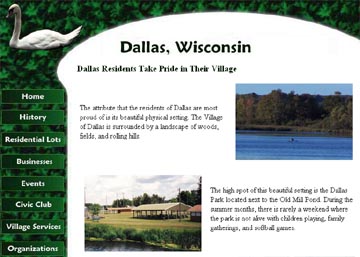
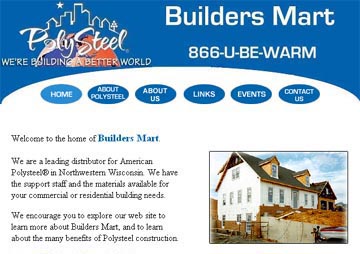
These samples identify the audiences visible in the portfolio: civic visitors, people investigating building products, readers of organizational information, and users of educational material. They demonstrate the kinds of presentation Results chooses to display. They are best read as work samples, without assuming a continuing customer relationship or assigning a project size to a screenshot.
The illustrated Big Swede label adds another audience entirely. Its central figure, pale blue background, and Swedish imperial stout wording have little visual resemblance to a municipal website. A bottle label has to introduce itself quickly. A village site lets someone move through several categories. A classroom resource must make its subject recognizable to an educator. Each format asks the maker to choose what the reader notices first.

That is the thread connecting the gallery. Results’s public examples suggest an interest in arranging information for a particular use. The medium changes; the need to make a message legible persists. It is a modest observation, but a helpful one when a supplier’s capabilities initially look like an overstuffed cupboard.
The job hiding between departments
Imagine commissioning a database-backed website. This is an illustrative buying situation, not a Results case study. Someone must decide how information is stored. Someone must make the pages behave correctly. Someone must explain how staff enter and maintain that information. If the instructions describe a different sequence from the screen, the user inherits the disagreement.
Results’s listed combination of database work, server-side development, and documentation addresses those adjacent needs. Its business-facing contact form asks for company information and the services of interest, which fits an enquiry-led professional services model. The buyer is bringing a problem and a set of deliverables to a supplier, rather than simply selecting a named software subscription.
The scope can therefore matter as much as the technology. A request for a website may include product descriptions, a presentation for salespeople, or a procedure for updating records. Results lists all of those kinds of work in one form or another. For an organization whose problem crosses documents and software, that is a useful starting point for a conversation.
A system has an audience even when its first reader is a machine.
An observation from the service mix
There is also a sensible boundary. A buyer seeking only a standard storefront could compare packaged commerce tools and a focused implementation agency. A project requiring deep expertise in a particular device would need a discussion about that device, beyond the phrase embedded software. Breadth helps when the tasks belong together; it does not remove the need to establish specific expertise.
Discretion before the first draft
The About page provides a more concrete statement than the usual promise of attentive service: Results says it will sign a nondisclosure agreement before beginning. The same page emphasizes discretion, trademarks, copyrights, and security. These are the company’s stated priorities, and they place confidentiality early in the relationship.
“Before we begin, we will sign a nondisclosure agreement with you.”
Results, About page
For technical communication work, that emphasis makes sense. Explaining a product can require access to information that has not yet been published. Documenting a procedure can expose details of how a business operates. The agreement is a concrete step a prospective buyer can discuss. The security language, meanwhile, should lead to questions about the actual project’s requirements and controls.
Another revealing detail is the delivery list: internet, CD-ROM, email, and hardcopy. The company’s pages carry a 2010 copyright notice, and the menu preserves that period’s mixture of formats. The enduring point is that a document needs a destination. An online reference and a printed manual impose different demands on navigation, distribution, and updates.
A brief worth borrowing
The most useful thing to copy from Results’s offering is a habit of scoping. Put the system, the explanation, and the delivery format in the same brief. Start with what the audience must accomplish. Then identify which parts require software, which require writing, and which require visual organization. A list of technologies is easier to evaluate once it has a job to do.
For cost discussions, turn that brief into deliverables: the application, the documents, the number of formats, and the work of keeping them aligned. Ask who approves technical accuracy and who owns future revisions. Those are practical questions for a services engagement; they are not claims about Results’s contract terms. They help make competing proposals comparable.
A company called Results invites attention to the finished thing. Its portfolio offers a quieter lesson about getting there. The database needs structure. The manual needs sequence. The label needs a glance. Before commissioning any of them, decide what another person should be able to understand. That decision gives the work somewhere useful to land.