In the autumn of 2019, Respondology's team watched the comments under a Serena Williams post curdle. The tennis star was playing the U.S. Open; anonymous accounts were supplying the racism and sexism. For a group of digital-advertising veterans, the spectacle was both familiar and newly intolerable. Their response was a tool called The Mod, built to hide abusive posts before an audience had time to absorb them. The first sales pitch was essentially a fire extinguisher: comment sections were burning, people were getting hurt, and social teams could not keep pace.
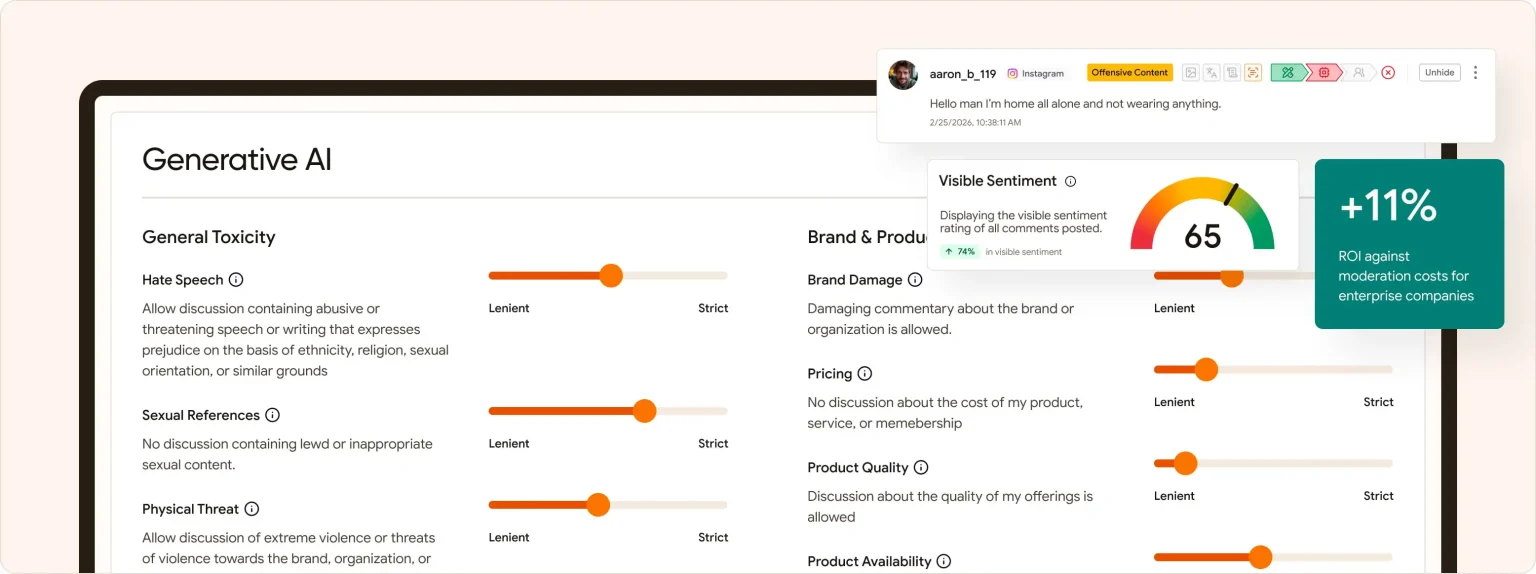
That origin explains the company's moral vocabulary, but not its current ambition. Respondology now calls itself an AI platform for social comments. Moderate still removes toxicity, spam, scams, bots, counterfeit links, and other brand damage. Discover reads what remains, grouping themes, emotion, sentiment, and competitor signals. Respond, launched in April 2026, drafts or publishes replies in a configured brand voice. The product suite has learned the oldest trick in enterprise software: solve the urgent problem, then expand into the adjacent work.
The first thing to fail was the human queue
The problem was never a shortage of caring community managers. It was arithmetic. A Respondology case study says the Denver Broncos faced more than 26,000 comments a day during busy periods, with game-season volume rising fourfold. The company's manual-moderation calculator translated that into 72 hours of review every day. Another athletic-apparel customer was seeing more than 5,000 daily comments, while a lingerie brand received more than 10,000. Staffing for the peak would be ruinous; staffing for the average would leave the worst moments exposed.
Keyword lists also break in predictable ways. They catch obvious slurs and miss sarcasm, coded insults, a newly fashionable scam, or a harmless word used in a hateful context. Pure automation has the inverse problem: it can be confidently wrong about a joke, reclaimed language, or local culture. Respondology's answer is layered. More than 30,000 categorized phrases and customer rules dispatch the obvious material in milliseconds. Generative models look for nuance. Human reviewers are available around the clock for the residue. Customers can tune the rules to their values and campaigns rather than accept one universal definition of bad speech.
“If the technology now exists to mute racism, anti-LGBTQ slurs and generally hateful abuse online, then we have a responsibility to do just that.”Erik Swain, CEO and co-founder
The pivot hiding in the survivors
Moderation produced a useful by-product: a structured view of millions of comments. The company says customers began asking for more than protection. What did fans actually like? Which athlete carried a Super Bowl ad? Was a backlash broad or merely loud? Did an influencer's audience believe the partnership? Respondology's own account of the shift is refreshingly plain: businesses had the budget to solve moderation, and the team realized that useful comments were valuable too. That demand changed the roadmap.
Moderate
Protect the thread. Hide abuse, spam, bots, scams, and custom brand violations across paid, organic, and creator content.
Discover
Understand the thread. Search themes, classify emotion and sentiment, compare accounts, and summarize the useful signal.
Respond
Act in the thread. Let brand-trained agents draft replies for approval or handle routine engagement automatically.
Discover is the middle rung. In one anonymized example, a sportswear brand drew more than 344,000 comments around a Super Bowl spot. The system identified 0.57 percent as especially valuable and showed which athletes and narrative beats resonated. In another, a professional sports franchise found that 2,100 of 15,800 comments concerned an immigration controversy and that 96 percent of those expressed anger or disapproval. The distinction matters. A generic engagement count tells a team that the room is noisy; the product tries to explain why.
Respond completes the loop. Instead of merely finding a pricing question or complaint, agents can answer it in Assist mode, where a human approves the draft, or Autopilot mode, where approved classes of replies go live under preset rules. Separate agents handle community praise, buying intent, listening, and support. Skin Laundry offers the neatest public demonstration: one social manager had spent four hours a day hunting comments and could not see conversations on paid ads. After adopting Respond, the brand says daily management time fell by half, response volume rose 175 percent, and visible sentiment improved 14.5 percent. Those figures come from a vendor case study, not a controlled experiment, but the workflow problem is easy to recognize.

What it costs, and what that reveals
Respondology finally publishes useful starting numbers. Moderate costs from $1,500 a month, Discover from $1,000, and Respond from $1,500, all billed annually. Pricing rises with the number and size of connected social assets or ad accounts and with the Standard, Plus, or Enterprise tier. It does not rise with comment, response, topic, or user-seat volume. That last choice is smart: the day a campaign goes viral is exactly when a customer should not fear a metered invoice.
The price also declares the target. This is not a creator's $29 dashboard. It is enterprise software for organizations where comment volume already creates labor cost, reputational exposure, wasted ad spend, or missed purchase intent. The roster spans consumer brands, agencies, sports, and entertainment. Respondology has named or displayed relationships with the Denver Broncos, Detroit Lions, Feyenoord Rotterdam, NASCAR, Boots, LIV Golf, Skin Laundry, and large agencies. It says it has served more than 450 brands whose audiences total over two billion followers each month.
The business has raised $16 million in two disclosed rounds: an $11 million Series A in April 2023 and a $5 million Series A-1 extension in April 2025. Iron Gate Capital, SJF Ventures, Zelkova Ventures, Boulder Heavy Industries, and RLB Holdings returned for the extension. The 2025 money was earmarked for product development, hiring, and a third flagship product. Respond arrived a year later. That is a pleasingly literal use of a funding announcement.
Where it sits - and where it does not
Respondology sits on top of the major platforms and alongside suites such as Sprout Social, Sprinklr, and Hootsuite. Those products organize publishing, monitoring, and broad social workflows; Respondology goes deeper into the replies attached to paid, organic, and creator posts. Its direct competition includes specialists such as BrandBastion, Crisp, Arwen, Bodyguard.ai, and Lasso Moderation, plus the stubborn default: platform filters, spreadsheets, an agency, and a tired person with administrator access.
Its differentiation is less about possessing AI than about product shape. Three products share the same raw material. Protection creates clean, labeled data. Intelligence turns that data into a decision. Engagement acts on the decision. SOC 2 Type II attestation, official platform authorization flows, single sign-on, multi-organization controls, and more than 100 languages make the pitch legible to enterprise buyers. The company says setup can happen within hours after a 30-minute onboarding session, though procurement at a large brand may be the slower machine.
Copy this
- Enter through an urgent, budgeted pain.
- Save the exhaust data and turn it into insight.
- Add action only after the classification layer works.
- Price around customer value, not viral volume.
Skip this when
- Your accounts attract little meaningful comment volume.
- A community needs open debate more than aggressive filtering.
- You cannot define escalation rules or a brand voice.
- The purchase costs more than the labor, risk, and demand it recovers.
The part worth stealing
The transferable lesson is not “put AI in social media.” It is sequence. Respondology began with a narrow queue that was painful, repetitive, and measurable. It blended cheap deterministic rules with flexible models and expensive humans instead of insisting on a single magical layer. Then it watched what customers did next. They wanted to understand the cleaned-up conversation, so the company built Discover. They wanted to act without hiring an overnight response team, so it built Respond. Each new product reused the integration, data, and trust earned by the one before it.
There are conditions where the approach will disappoint. Small accounts may not generate enough signal to justify four-figure monthly pricing; Respondology's free Discover trial even warns that low-comment accounts may yield little. Moderation can flatten legitimate criticism if rules are blunt or incentives favor prettier sentiment scores. Automated replies can sound uncanny, mishandle sensitive cases, or create new brand risk if Autopilot is switched on before Assist mode has earned confidence. And no software can make a company worthy of affection. A cleaner comment section is not evidence of a better product.
Still, Respondology has located a neglected piece of customer infrastructure in plain sight. Brands spend heavily to place a post, then treat the conversation beneath it as an afterparty nobody staffed. The Boulder company is wagering that the thread is simultaneously a safety surface, a focus group, a service desk, and a sales queue. The first version helped brands read fewer awful comments. The current one asks them to read the right comments - and answer while the customer is still there.