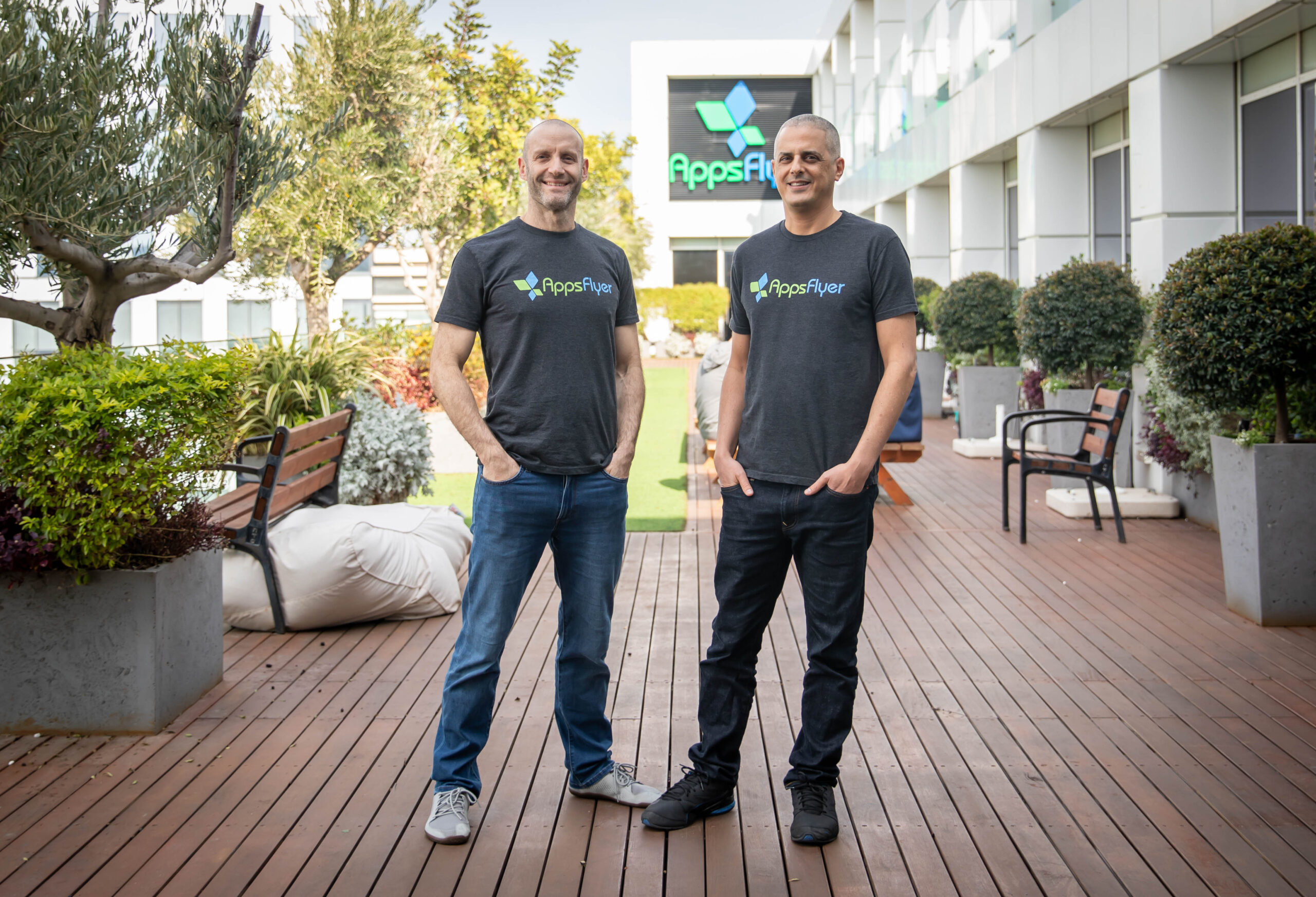
In the beginning, Reshef Mann wrote all the code. Oren Kaniel handled the business. AppsFlyer, the company they founded in 2011, could be described without an organization chart. Two old friends had divided the work, and Mann’s part was to turn an idea about mobile advertising into software that someone could actually use.
It is a pleasingly uncomplicated origin for a business devoted to untangling complicated events. A person sees an advertisement, installs an app, opens it, perhaps buys something. Somewhere along that route, a marketer wants to know which expenditure deserves the credit. The answer sounds as though it should fit on a receipt. Getting it right became the work of a company.
Mann is AppsFlyer’s CTO and co-founder, based in Israel. His career is easiest to understand through the things he has had to make reliable: software under growing load, access to customer information, and advertising results that may look considerably better than they are. The trouble with good numbers is that they can be terribly convincing.
A friendship older than the business
Mann and Kaniel knew each other well before either had a co-founder title. Kaniel dates their friendship to eighth grade. Both studied at the Technion, both worked at Intel as students, and after graduation they traveled in South America together. A shared journey preceded the more expensive journey of starting a company.
Kaniel has described their differences as complementary, and their partnership as one that holds together through difficult situations. That is his assessment of Mann, rather than a character invented from a photograph. The long acquaintance gives the partnership a particular texture: these were people who already had a history when they began asking customers to take a chance on their future.
Mann studied information systems at the Technion from 1999 to 2003. His professional background included Intel, SAP, Jajah and Xsights, with work on web technologies and distributed systems. At Xsights he was a system architect. Those jobs put technical experience behind the new title. AppsFlyer began with an engineer who had already worked inside other organizations.
The first hire knew the programmer
In 2012, Nir Rubinstein was looking for work as his previous startup wound down. Mann, a former colleague, told him that AppsFlyer had raised seed money. Rubinstein joined. His recollection of the decision includes a straightforward reason: he had liked working with Mann.
That detail belongs in the company’s origin story. An early hire has little settled machinery to inspect. The work is uncertain; the routines are being invented. A good experience with a colleague is evidence of a different kind. Mann had already given someone a reason to believe that another project together might be worth trying.
The first code was Python, chosen for the flexibility an early business needed. As traffic grew, a raw-reporting service began struggling with the volume it had to process. Mann and Rubinstein considered alternatives, including a different Python implementation, a C component and a new language. After evaluating functional languages, they selected Clojure.
The choice is revealing because it followed an actual constraint. A tool that helped them get started had encountered a new job. They had to preserve the ability to build while making room for the workload that their customers were bringing.
“When we transitioned from millions of daily events to billions, we knew that Clojure was the answer.”
Reshef Mann, CTO
A busy backend, made of smaller pieces
Rubinstein dates Mann’s initial coding to late 2011 and his own arrival to June 2012. Their backend was organized around separate services. When they needed a new language, they wanted a functional one to help with concurrent work. The evaluation took roughly two months, alongside the ordinary demands of running the product.
By around 2013, new services were being written in Clojure. The engineering team later described a pipeline of small services moving data through Kafka. Each service performed a task before passing information onward. It is a useful way to picture a measurement business: events arrive, receive attention, and move toward an answer a customer can inspect.
A founder who starts by writing everything eventually has to build something other people can work on. The separation into services supplied boundaries around the technical work. AppsFlyer’s engineers also described training colleagues in Clojure, including internal classes and rotations. The language choice came with the continuing work of helping people use it.
Even software needs someone at the door
In July 2015, Mann published an explanation of AppsFlyer’s authentication and authorization system. The analytics dashboard had originally been a single Python web application. As it evolved, that arrangement imposed restrictions on deployment, framework choices and the handling of access permissions.
The answer was a component called Bouncer. It checked whether a user was authenticated and authorized before forwarding a request to a backend service. The name did some useful explanatory work. A complicated architecture acquired an employee at the door, albeit one with fewer opinions about shoes.
The important distinction was between recognizing a user and deciding what that user could access. Those are separate questions. A system can know precisely who has arrived while still needing to keep a particular resource out of reach.
This was a practical account of engineering, down to the arrangement of components and the next planned improvement: more detailed permissions for users and groups. It also offers a window into Mann’s work. The product’s visible promise was insight. Behind that promise were quieter decisions about how information would be reached and protected.
The numbers learn to misbehave
Advertising introduces another complication: people can profit from making a measurement wrong. In a 2017 interview about AppsFlyer’s Protect360 fraud technology, Mann explained DeviceID Reset Fraud. A fresh identifier could conceal repeated activity behind clicks, installs and engagement that appeared legitimate.
He described fraudsters willing to reproduce the early retention that marketers watched, even staying engaged for three days before resetting and repeating. If the measurement rewards a particular behavior, an attacker can learn to perform it. The dashboard may be reporting an event accurately while the event itself has been staged.
Mann argued for combining machine learning with human analysts. Pattern detection at scale and human investigation had complementary jobs. That view gives his technical work a useful restraint: an automated system requires people who examine how its protections change and what its indicators mean.
The problem also explains why a count of installs is only the beginning of understanding a campaign. A customer’s later behavior can change the interpretation of the earlier result. An impressive total is an invitation to look more closely.
Which campaign looks better?
1,000 users spending $0.50 each, or 100 spending $10 each? Change the measure.
A brings more installs. Later spending tells another part of the story.
An explanatory example, not AppsFlyer customer results.Sometimes the answer arrives late
By July 2019, AppsFlyer was adding a post-attribution protection layer. The purpose was to uncover fraud that had escaped detection when an install was first credited. Its mobile-fraud report examined 2.5 billion marketing-driven installs across 9,500 apps during the first half of that year.
Mann described attackers moving from physical device farms toward emulators and sophisticated bots. The company’s new layer addressed the interval between an apparently acceptable event and the later evidence that changed its meaning. Reports could then help advertisers reconcile payments with their media partners.
There is an unglamorous virtue in being willing to revisit an answer. Real-time software carries an expectation of immediate certainty. Fraud detection can require a longer view. The first decision has to be useful, while the system remains capable of learning that something slipped through.
That is a different engineering challenge from simply processing more events per second. A measurement business has to manage volume and interpretation together. Mann’s public explanations keep returning to that obligation: a result should survive examination beyond the moment when it first looks plausible.
The referee acquires new shareholders
In June 2026, AppsFlyer announced a definitive agreement for investments from Moloco, Google, Meta and Unity. The announcement said the commitments were minority, non-controlling and non-exclusive. It also said investors would receive no preferential treatment in APIs, measurement signals, attribution logic or commercial terms. The transaction remained subject to closing conditions, including regulatory approvals.
Those conditions matter to a company whose usefulness depends on measuring activity across an advertising ecosystem. A platform participating in that ecosystem and a business judging its results have different responsibilities. Investment puts the relationship between those responsibilities under closer examination.
AppsFlyer said it served more than 15,000 brands worldwide and would use the backing to advance AI-powered measurement and cross-platform attribution. The scale is far removed from the original division of labor between two friends. Mann’s role now sits inside a business with customers and partners around the world.
Yet the early story supplies a useful way to understand the later one. Start with a question someone needs answered. Build the code. Notice where it struggles. Investigate the result that seems suspiciously good. Keep checking who gets through the door. For Reshef Mann, an advertising dashboard has always had a great deal of work behind it.
Keep reading, keep watching
- AppsFlyer website
- Reshef Mann on LinkedIn · X · Facebook
- Mann’s architecture essay: authentication and authorization
- Why Clojure? The early engineering story
- Mann’s 2017 interview on advertising fraud
- Watch MAMA Goa 2025 sessions · AppsFlyer on YouTube
- June 2026 investment announcement
- Kaniel on the friendship behind AppsFlyer