A product manager calls it a small change. A developer hears database migration, permissions logic, three edge cases, and a nervous weekend. By the time both sides discover they were imagining different products, the calendar has moved and the invoice has not been shy. ReqStudio exists for this particular species of corporate pain: the expensive distance between what a business person means and what a software team builds.
The San Diego company, founded in 2016 by Gerardo E. Saborío Molina, makes an online requirements-management platform. Its job begins before code. Teams write down what a system must do, invite review, record approval, connect related requirements, preserve versions, and estimate the time and cost of the work. ReqStudio’s current website adds AI-assisted checks for gaps, conflicts, ambiguity, and project risk. The artificial intelligence is the new marquee. The real product is still a paper trail with consequences.
The cheapest bug is the sentence everyone interprets the same way before anyone builds it.ReqStudio’s product logic, in plain English01 / The awkward handoff
The first thing to fail is usually shared meaning
Most teams do not wake up and choose chaos. They accumulate it. A request begins in a meeting, gains a caveat in email, loses an edge case in chat, and enters a backlog as a tidy sentence that conceals four unresolved decisions. General project tools can track that sentence beautifully. They are less interested in whether it is complete, testable, approved, or connected to the business rule that created it.
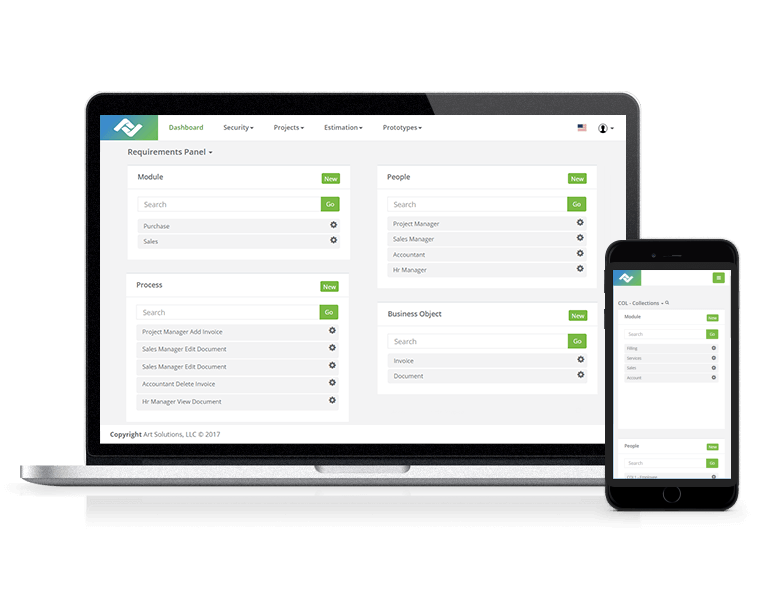
ReqStudio tries to make the requirement itself a managed object. The platform says it can document, analyze, prioritize, review, and approve requirements; notify people about important changes; show relationships between projects; and maintain version history. Its review center collects feedback and confirmation from team members. Its estimation tools let users classify complexity and type, then forecast cost, time, and resources. This is less glamorous than generating code from a prompt. It is also where many projects quietly acquire their future overruns.
A four-step operating system for fewer surprises
ReqStudio summarizes its method in four commands: Define, Analyze, Estimate, Deliver. Define means capturing requirements in natural language, now with AI suggestions. Analyze means looking for conflicts, ambiguity, and missing information. Estimate converts the clarified work into forecasts. Deliver keeps changes and traceability visible throughout development. Each command is ordinary. Their sequence is the point.
The rest of the feature list reinforces the same discipline: automated approval workflows, versioning and traceability, review tools, team collaboration, mind maps, and cost and time estimation. The Enterprise plan adds the furniture large organizations expect - SSO, custom integrations, compliance support, a dedicated account manager, and an on-premise option. The Professional plan is listed at $29 per user per month, while a free Starter plan covers up to three users and 50 requirements. That makes the initial experiment inexpensive: put one real project through the process and watch where the arguments surface.
This is what ReqStudio did, in concrete terms. It took consulting knowledge about elicitation, change control, traceability, and estimation and turned it into repeatable screens and gates. The software is not merely a database of wishes. It asks teams to make the wish legible, debatable, and accountable before it becomes a commitment.
The same approach changes meetings. Instead of asking whether everyone “feels good” about a feature, a team can inspect who requested it, which rule supports it, what acceptance looks like, who signed off, and which estimate moved after the latest edit. That does not eliminate disagreement. It gives disagreement an address. For managers, that record is useful when priorities change; for developers, it is protection against requirements that somehow become obvious only after the demo.

The case studies are specific about outcomes - and careful about customers
ReqStudio publishes two anonymized case studies. One concerns hospitals and insurers dealing with continuous software improvement under demanding quality standards. The company says its platform shortened requirements-analysis time by 50 percent and reduced specification costs through standardized, reusable data flows. The other describes software for state and local government management in Latin America. ReqStudio says the specification was completed in four weeks, the software arrived on the forecast schedule, and final cost was 5 percent below the estimate.
Those are vendor-reported results, not independently audited benchmarks, and the missing customer names limit what a reader can test. Still, the mechanics are believable: reusable patterns can reduce repeated analysis; an agreed specification can stabilize planning; and explicit changes can protect an estimate from silent expansion. The lesson worth copying is the mechanism, not the percentage.
04 / Market positionWedged between the spreadsheet and the enterprise suite
ReqStudio sits in an uncomfortable but useful middle. On one side are Word documents, spreadsheets, email, and general work trackers. They are familiar, flexible, and already paid for. On the other are dedicated lifecycle platforms such as Jama Connect, IBM DOORS Next, Visure, Modern Requirements4DevOps, and ReQtest. They offer deeper governance and integrations, but can bring procurement, configuration, and training overhead.
ReqStudio’s differentiation is not that no competitor can trace a requirement. Many can. The pitch is a simpler, cloud-first bundle that combines requirements work with estimation, natural-language methods, collaboration, and AI analysis. It is aimed at product managers, business analysts, project leaders, engineers, and the stakeholders who approve what those people build. Its public cases point to regulated healthcare and insurance work and government software, but the horizontal problem travels anywhere custom software meets multiple decision-makers.
The business model is straightforward subscription software. Public data about the company itself is less tidy. LinkedIn visibly shows one employee while placing ReqStudio in an 11-to-50 company-size band; Dealroom and Latka also list one person. A $250,000 Series A appears in LinkedIn’s Crunchbase-linked funding panel and Dealroom in 2020, with no investors named. Treat ReqStudio as founder-led and very small, and treat third-party revenue or valuation estimates as estimates, not accounts.
05 / What changedAI moved onto the sign. Discipline stayed underneath.
The live site now leads with “AI-Powered Requirements Management.” It promises real-time analysis, gap detection, improvement suggestions, conflict flags, intelligent routing, feedback summaries, downstream-impact predictions, and estimates informed by project data. The shift makes commercial sense: requirements are language, and language models are unusually comfortable inspecting language. A machine can point out that “fast,” “secure,” or “easy” is not a testable specification.
But AI does not know which tradeoff a chief financial officer will accept, whether a nurse can tolerate an extra click, or why an old system cannot change on quarter-end. ReqStudio works only if humans answer those questions and keep the record current. The AI layer can be a smoke alarm. It cannot decide whether the kitchen should exist.
Before a requirement enters a sprint, demand five things: an owner, a plain-language outcome, acceptance criteria, an estimate, and a list of affected systems. When it changes, record who approved the change and what downstream work moved with it. The ritual works in ReqStudio, another platform, or a disciplined spreadsheet.
Structure is useful until it becomes ceremony
ReqStudio will not fit every project. A two-day internal script does not need a parliament. A prototype built to learn may be damaged by pretending its unknowns are already requirements. Tiny teams with constant conversation can sometimes resolve ambiguity faster than they can document it. And any requirements system fails when people treat it as administrative compost - dumping in stale text, clicking approve, and continuing the real conversation elsewhere.
The method earns its keep when errors are costly, stakeholders are numerous, work crosses teams, approvals matter, or changes ripple through connected systems. It becomes especially valuable when the person requesting software is not the person building it. Under those conditions, “move fast” without shared meaning is not speed. It is deferred negotiation with developers on the clock.
ReqStudio’s quiet insight is that software planning is not chiefly a writing problem. It is a coordination problem wearing a document costume. The product gives the costume pockets: versions, links, approvals, feedback, estimates, and now machine-assisted critique. Whether a small company can win against familiar spreadsheets and much larger suites is an open commercial question. The operating idea is already useful. Make the disagreement visible while it is still a sentence.