Sheryl McDougal had a perfectly ordinary objection to moving work to Mexico: she worried people would misunderstand one another. The M6 chief executive describes her initial opposition in a testimonial published by Remote Team Solutions. A director persuaded her to try it. There were early bumps. Later, she reported that lower and middle management were based in La Laguna, with the Mexican and American offices working together.
The idea in three lines
- Dedicated employees in Mexico work for your business and report to your managers.
- RTS handles recruiting, payroll, benefits, office space, equipment, HR and IT.
- The monthly fee buys ongoing support; clients still own the quality of the work.
Her description of the result is wonderfully unglamorous: a satellite office. That phrase explains Remote Team Solutions better than the usual outsourcing vocabulary. You are buying the machinery needed to have colleagues elsewhere, while keeping the everyday business of deciding what those colleagues should do.
The office on the other side of the call
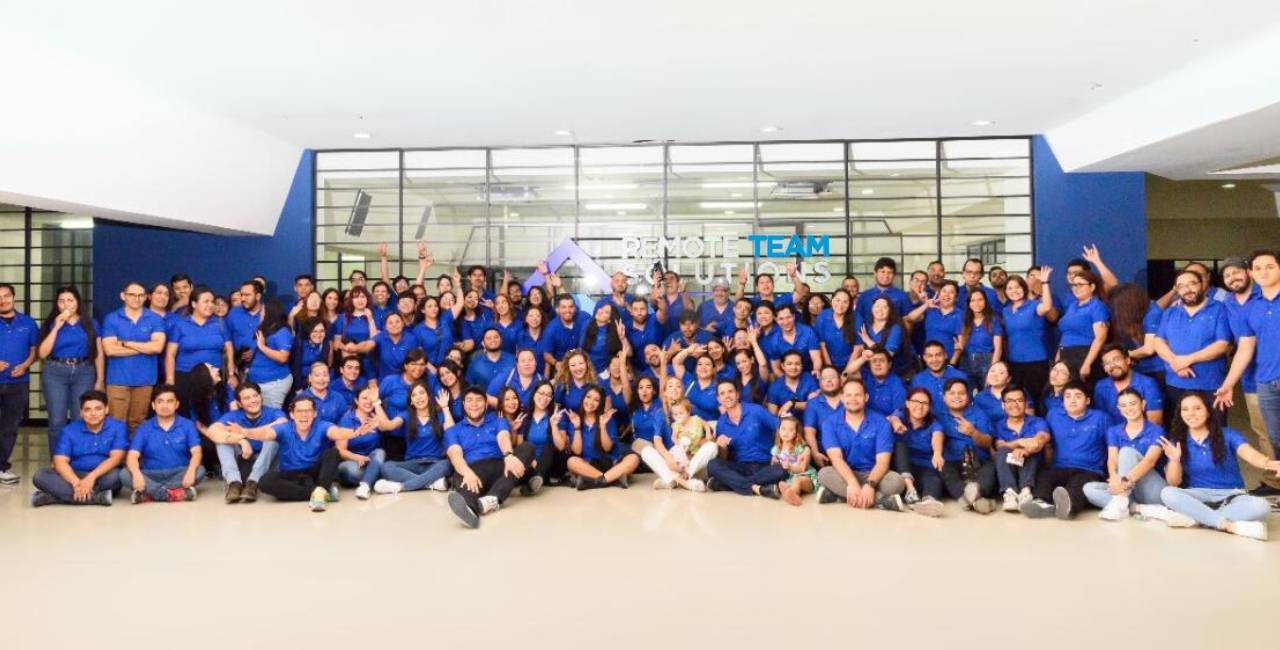
RTS builds dedicated teams in Mexico for American and Canadian companies. Its staff work remotely relative to the customer, but the core offer puts them in actual offices. Someone supplies the desk. Someone handles the employment paperwork. Someone is available when the computer refuses to cooperate.
The client interviews and approves candidates, then directs their work. RTS provides the employment and workplace support around them. This places it between a recruitment agency, which might leave after a placement, and an outsourced operation where a supplier manages a whole function. The distinction matters: adding people to your team requires you to remain a manager.
The role list stretches from customer service and executive assistance to software development, cybersecurity, business intelligence and engineering design. The common denominator is work that can travel digitally. A billing queue, a design file and a support conversation can cross a border rather more easily than a production line.
A client request became a business

In the company’s current telling, the idea began in 2012 while Pedro Barboglio was expanding Comal Foods in Austin. A client needed a team in Mexico. Barboglio could see the appeal of proximity and available talent, but could not find a provider that matched the requirements. He hosted the staff himself.
The same history places his departure from Comal Foods and the dedicated RTS launch in 2019. An accommodation for a customer became the business. That origin helps explain the offer: it starts with an employer’s practical difficulties and builds a service around removing them.
Geography is part of the product. RTS emphasizes bilingual English-Spanish staff, overlapping North American working hours and opportunities to visit the team. For a manager accustomed to sending a question into someone else’s night, a colleague who can answer during the same working day changes how a job feels.
What the monthly invoice buys
RTS charges a customized monthly fee for a dedicated employee. Its published package includes recruiting, payroll, benefits, employment administration, equipped office space, IT and development support. The pricing page describes a 45-hour working week and says long-term contracts are not required.
There is a historical dollar anchor. In a founder interview republished by RTS in September 2022, Barboglio described a minimum budget of $1,450 a month and a largest 2021 engagement of roughly $60,000 a month. Those figures describe that period. Today’s offer requires a role-specific quote.
What “up to 60%” looks like
Illustrative cost index, not dollar pricing. RTS’s claim compares fully loaded costs; actual savings vary by role, seniority and complexity.
The company advertises savings of up to 60% against local hiring costs. The meaningful comparison includes benefits, recruiting, payroll taxes and office overhead. Comparing the monthly invoice with a domestic salary alone would leave half the argument off the page. A buyer should ask for the complete calculation for the actual position.
Hiring is where the work starts
The published process begins with requirements and a strategic kickoff, then moves through sourcing, references, assessments and interviews. Clients can add their own tests and make the final selection. Onboarding, training and continuing support follow. RTS says it incorporates Geoff Smart and Randy Street’s A Method for Hiring.
Client reviews supply the necessary grit. On Clutch, one customer describes interviewing candidates who initially missed a particular customer-success brief before finding a suitable hire. Another wanted faster ramp-up. A separate account mentions slow communication at the beginning. These are useful reminders that a candidate pipeline is a search process, with revisions along the way.
For the buyer, the copyable move is a written division of responsibility. Specify the output, name the manager, agree on working hours and test the skills the job actually needs. Treat the first weeks as operational work: access permissions, examples of good work, feedback and a clear route for questions.
The expensive part is starting again
RTS’s other headline number is a claimed 2% turnover rate. Treat it as a provider-reported figure. Its argument is that people who stay accumulate knowledge, while repeated replacement consumes training time. The employment package includes development programs and employee events; careers materials also advertise in-office medical services.
“They are now a full satellite office”
Sheryl McDougal, CEO of M6 LLC
Company-published customer testimonial
Recognition has followed: Inc. lists RTS at No. 859 for 2025 and No. 1,690 for 2026, with 206% three-year growth shown for the latter. Rankings establish momentum. The customer still has to establish whether the working arrangement fits.
A business with recurring digital work and managers available to guide people has a plausible use for this model. A buyer seeking occasional tasks or complete delegation of management has a different requirement. McDougal’s satellite-office description is the useful test: would you know how to run another office if somebody else took care of opening it?