Twenty engineers in about two months. In a testimonial published by ALLSTARSIT, Imagry’s then VP of R&D, Lior Margalit, describes that recruiting result for the autonomous-driving software company. It sounds like a story about speed. Look closer, though, and there are two jobs hiding inside the number: finding people who can do the work, and arranging for those people to become a functioning team.
- Recruit technical specialists across borders, then keep directing their work.
- Buy employment administration alongside recruiting, or choose an outsourced function.
- Budget for integration and management as carefully as you budget for salaries.
A résumé can cross a border in a second. Employment takes longer. Someone must organize contracts, payroll, benefits and local requirements. Someone must answer the ordinary questions that become urgent on payday. ALLSTARSIT’s proposition is to take on that surrounding work, making international hiring less of a separate construction project for the client.
The org chart has a border crossing
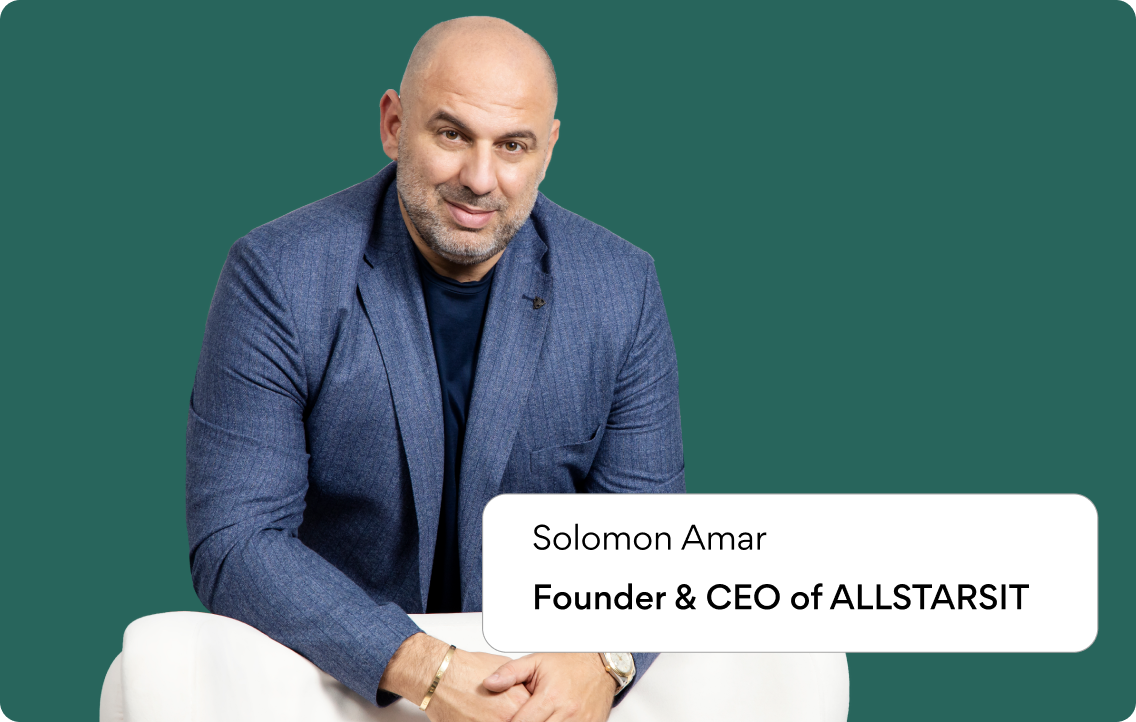
Solomon Amar founded the company in 2004. Its own history describes an Israeli beginning and US headquarters; today it is based in San Francisco and reports coverage in more than 25 countries. The geographic spread matters because the service begins with a simple objection to local hiring: the person you need may live somewhere your company has never employed anyone. That premise still anchors its business.
The division of labor is explicit. In its dedicated-team model, ALLSTARSIT sources candidates, onboards selected employees, conducts performance reviews and works on retention. The client incorporates the team into its development process, assigns daily work and leads the project. This arrangement suits a company that knows what it wants to build and needs more capacity to build it.
Product priorities
Daily assignments
Development process
Candidate sourcing
Onboarding
Retention support
The menu offers several ways into that arrangement. Staff augmentation adds specialists to an existing team. Dedicated teams assemble a larger unit. An employer-of-record engagement addresses the employment layer when a client lacks a local entity. Buyers can also commission customer-care or technical-support teams through business process outsourcing, or use its DevSecOps services for infrastructure, automation and security work.
The candidate is only the beginning
Yotpo, Windward, Authomize, Netafim, Juganu and Motiv8AI appear in the company’s published customer accounts. Their comments repeatedly return to fit, communication and ongoing support. Yotpo’s R&D group leader Yaniv Mazor puts the human requirement plainly: “How we work together as a team is very important for us going forward.” The sentence is less exciting than a hiring-speed statistic. It is also a better description of the work that follows recruiting. The customer accounts make that distinction visible.
ALLSTARSIT occupies a useful overlap between technical recruiting and employment administration. A buyer could assemble those capabilities separately. Deel, for example, offers international employment services. ALLSTARSIT’s pitch brings the search for technical people into the same commercial conversation. Whether that combination is valuable depends on which capabilities the buyer already has.
The price of making employment ordinary
Its Clutch listing shows an hourly range of $25-$49 and a minimum project size of $25,000. Treat those as directory indicators. A particular country, seniority level and engagement scope will change the proposal. The dedicated-team page describes a monthly fee. Comparing offers sensibly means checking what each includes: salary, employment costs, recruiting, ongoing support and any transition obligations.
Clutch listing · $25,000+ minimum project size
Indicative figures; scope-specific proposals vary.
Speed needs the same scrutiny. One annotation-services client told Clutch that ALLSTARSIT had promised 20 annotators within a month, but had supplied 13 at the time of the interview in early 2024. The client praised the recruits’ quality while describing a longer process than expected. One account cannot establish a general failure rate. It does establish a sensible buying habit: agree intermediate hiring milestones and a fallback before the deadline arrives.
There is a useful test for the proposal itself. Ask which decisions stay with your team, who owns each employment task, and what happens when a hire leaves. Compare the answers against the responsibility split in ALLSTARSIT’s dedicated-team description. A cheaper salary does not tell you whether the arrangement will work. Neither does a fast shortlist. The practical question is whether the service removes a task your organization struggles to perform, while leaving someone clearly responsible for the work that remains. That is an operating decision a purchasing spreadsheet can easily miss.
A benefit that had to change
The company’s culture becomes more concrete in an unusual benefits story. In 2021, it introduced a workation program at a corporate villa in Sri Lanka. By 2024, HR check-ins and mood tracking pointed to different needs among Ukrainian colleagues living with war. ALLSTARSIT adapted the program to include a dedicated retreat, with psychological support, physical activities and time together. Employee feedback changed the offer.
A benefit earns its keep when it changes with the people who need it.THE LESSON OF THE RETREAT
Ragan named the retreat a 2025 employee well-being award winner. The transferable practice is modest: ask people what is happening, notice when an existing benefit misses the problem, and revise it. For a company selling ongoing workforce support, that is a more revealing example than a list of values on a careers page.
Its 2025 CSR report announcement also describes mentorship, professional certifications, flexible benefits and community volunteering across the international workforce. These activities sit beside the employment service the customer buys. For a remote colleague, however, the distinction may be academic: learning opportunities and a person who notices a problem are part of the experience of staying with a team. That makes support after onboarding a reasonable subject for a buyer’s questions.
Before you hire the next ten
There is an interesting tension in the current product menu. ALLSTARSIT sells hiring capacity, but its Expert Health Check asks whether a team’s structure makes sense before it grows. The service reviews role composition, continuity risks, hiring priorities and geographic costs, then produces a 90-day plan. Its newer AI-augmented engineering offer likewise markets smaller senior teams supported by AI agents. These are vendor propositions, not proof of universal productivity gains.
A September 2026 article on overhiring carries the point further: headcount can grow while useful output stalls. Buyers can copy the underlying discipline without buying anything. Name the missing capability, assign an accountable manager, plan onboarding and check time-zone overlap. Staff augmentation requires someone capable of directing the staff. With that foundation, ALLSTARSIT offers a practical way to reach beyond a local hiring market. Without it, a bigger recruiting funnel merely delivers more people to an unresolved organizational problem.