A webtoon has an awkward relationship with time. The reader wants to know what happens next. The artist has to draw what happens next, along with the room, the street, the clothes and the same face from another angle. Realdraw Inc has built its business around the distance between those two appetites. The Seoul company’s proposition is that an ambitious comic should depend less on how many hands a studio can afford, and more on what those hands can decide.
- The work: webtoon production using artist-specific AI and Unreal Engine 3D scenes.
- The bet: smaller crews can leave creators more time for story and direction.
- The next stage: original content for Japan, with a subsidiary established in March 2026.
The expensive part is Tuesday
Founder and CEO Choi Sang-gyu previously led webtoon production and development at Watcha. Reporting on Realdraw’s early team also describes experience at NCSoft. That combination matters: one side understands episodic storytelling; the other understands building and managing digital worlds. Realdraw, founded in 2023, brings those skills into a studio that develops its own production technology.
Its customer proposition concerns the work between a promising story and a finished episode. Creators need drawings; platforms need dependable delivery; IP owners need adaptations that justify their properties. Realdraw positions itself as a production collaborator. Its intended commercial circle includes studios, platforms and rights holders, rather than simply anyone who wants an attractive image.
The expense is substantial. A 2026 Korea Startup Forum introduction describes its target, high-value webtoon production, as taking more than five weeks and costing over KRW 5 million per episode. Those figures describe the market it wants to improve. They are not Realdraw’s invoice.
Realdraw’s website describes a three-person system. This is a company claim about its workflow, not a staffing rule for every comic.
The wager makes sense when a story asks for more than a small team can comfortably draw. A crowded setting or elaborate environment can turn a creative decision into a staffing decision. Realdraw wants its software to change that calculation. The promised benefit is room for ambition within a manageable production schedule, while the audience still gets an episode worth reading.
A game world, taught to behave like ink
Realdraw combines AI trained around an artist’s drawing style with Unreal Engine scenes. The engine supplies a controllable world; the artist supplies a visual identity. A 2024 founder interview describes artists, engineers and AI developers producing webtoons together. The distinction from a general image generator is the coordination required to make a continuing story.
The team’s March 2026 technical account offers a telling obstacle. Realistic lighting introduced noise into cartoon shading. Turning it off cleaned the image but left buildings looking disconnected from their surroundings. The team added simulated reflections and adjusted the treatment of outlines. Better realism had become the wrong objective.
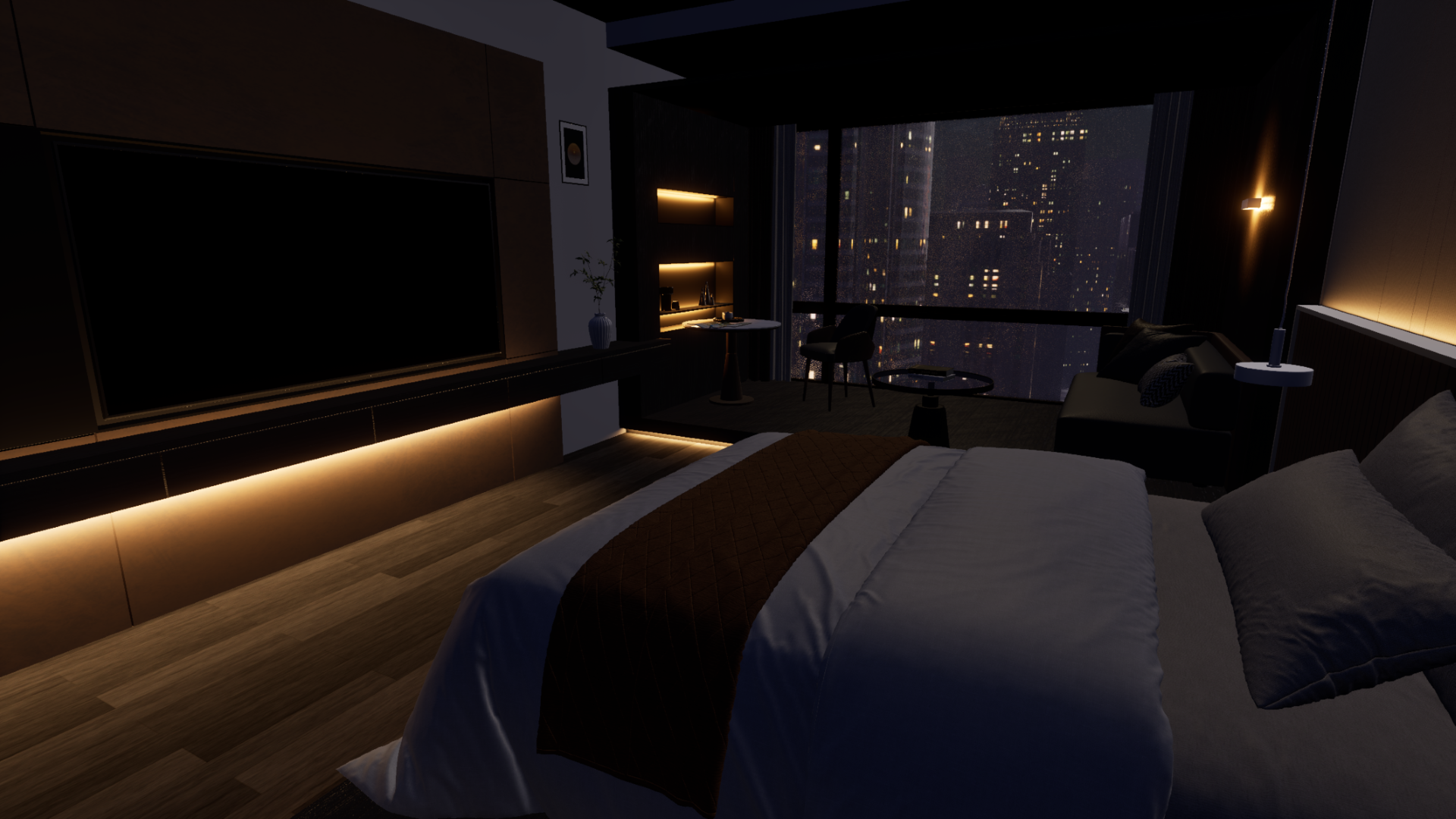 01 / Cinematic render
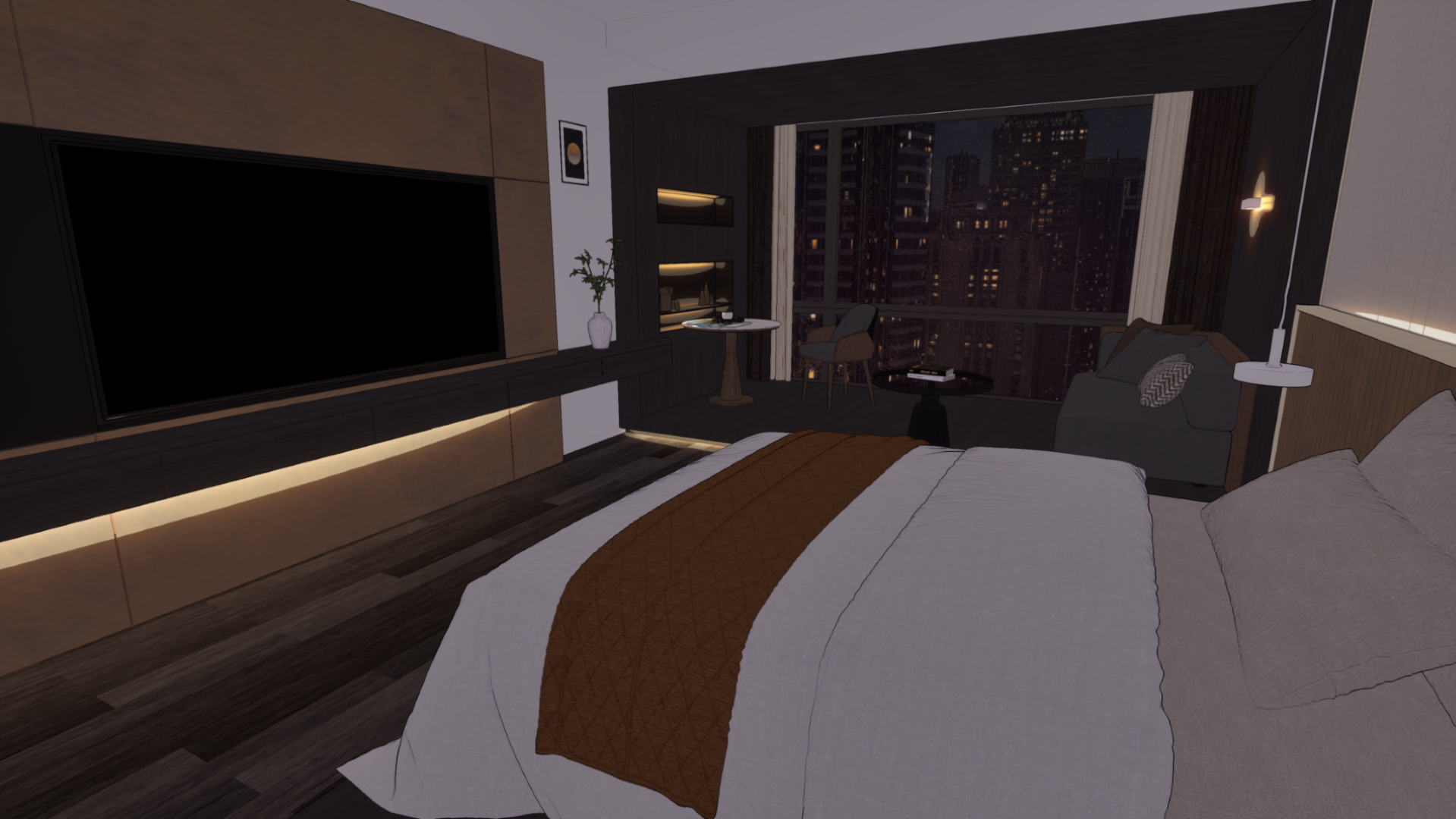 02 / Comic treatment
The useful lesson is aesthetic: a background must belong in the comic. Photorealistic source textures still posed problems, the team reported. Technical sophistication can therefore create more cleanup if its output argues with the artwork.
KRW 2.2 billion buys room to experiment
In December 2023, Realdraw announced approximately KRW 2.2 billion in pre-Series A funding, led by Altos Ventures, with the Yoonmin foundation participating. Springcamp’s additional investment completed the round, according to March 2024 reporting. The extension amount was not disclosed in that announcement.
The money supported an ambition to develop production technology and make substantial works, including adaptations of established IP. Funding is a different number from the cost of making a comic. It pays for the possibility of a production business; readers eventually decide whether the resulting stories deserve one.
“Storytelling Meets Technology”
Realdraw’s stated proposition
External support followed. Realdraw was selected for the 2024 AWS Generative AI Accelerator, one of three Korean companies in the reported 80-startup cohort. Its history also records NVIDIA’s N-Up program and Deep Tech TIPS. These selections help explain the company’s technical development network. They should be read separately from commercial readership.
The business takes shape as a content and IP studio with proprietary software inside it. In a June 2026 interview, Choi described an ambition to sell compelling content made with its technology. That puts the competitive test on the finished story, where conventional studios remain perfectly capable opponents.
For a prospective collaborator, the relevant conversation is about a particular property, visual style and production task. Realdraw’s studio model suggests a working relationship built around making content together. The sensible comparison is the effort required to deliver an acceptable episode through each available method, including revisions. An impressive isolated image answers only a small part of that question.
Japan began with homework
The international plan acquired an unusually ordinary first step: language lessons. In a public post shared by the company, Choi recalled worrying about Korea’s webtoon market in August 2023 and starting Japanese tuition. He visited Tokyo in February 2024 and described completing his Japanese residence arrangements in November 2025.
That sequence makes overseas expansion look less like an announcement and more like preparation. By December 2025, COMEUP coverage reported that Realdraw had completed an original webtoon targeting Japan and submitted its first work. Submission is a concrete production milestone. A successful publication and a devoted audience are further tests.
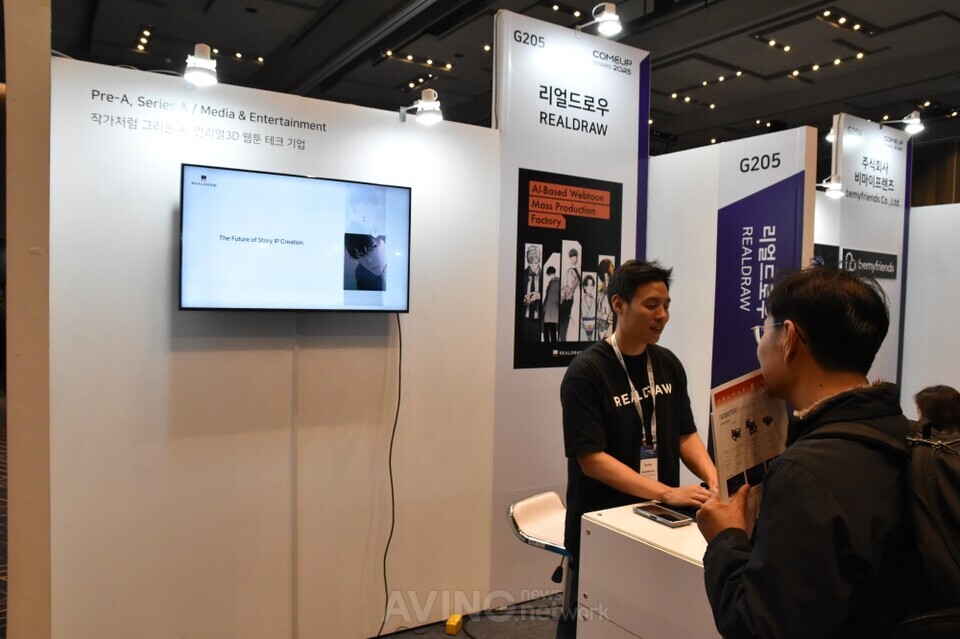
The company’s history records REALDRAW JAPAN’s establishment in March 2026. A June recruiting notice also describes AI-assisted web novel production, editing and serialized operations. The ambition is broadening from drawing comics toward making and managing stories in several forms.
The useful bits are small enough to borrow
Other teams can borrow something more practical than the pitch. Realdraw’s public Unreal plugins help place guide characters to check scene proportions and automate mesh naming and folder organization. The blog specifies Unreal Engine 5.4 or later. An orderly folder is unlikely to thrill an investor. It may delight the person opening it tomorrow.
That attention to repeated chores fits the company’s stated culture: transparent communication, teamwork, professional responsibility and learning from failure logs. These are recruiting principles, but the published engineering accounts give the learning part some substance. There is an obstacle, an adjustment and a record another team can inspect.
The method still needs suitable artwork, permission to use it, editorial judgment and readers who like the result. Training around an artist’s style does not settle every rights question. Realdraw’s most transferable idea is to give the creator a clearer, more manageable production process. The comic still has to make somebody want the next episode.