The rain arrived at an inconvenient moment. In 1963, Dave Ritchie was about to sell equipment when the weather threatened the proceedings. The brothers moved bidders beneath a shop’s eaves and drove the machines past them. Customers stayed dry. The equipment kept moving. The arrangement became the ramp-and-stage method, an auction fixture born from a very ordinary problem.
- The business: find new owners for used equipment, vehicles and agricultural assets.
- The advantage: combine bidding with pricing data, inspections, financing and transport.
- The catch: the winning bid is only part of the buyer’s bill.
The rain came first
Ritchie Bros. had begun in 1958 with surplus furniture and a bank note to pay. Dave, Ken and John Ritchie discovered a business in helping things change hands. Decades later, their successor, RB Global, owns Ritchie Bros., vehicle marketplace IAA and a collection of businesses that handle the complications surrounding a sale.
Consider an excavator sitting idle after a construction project. Its owner wants cash. Somewhere else, a contractor wants a machine. Between them lie questions about condition, price, payment and delivery. A listing puts them in sight of each other. Completing the transaction takes considerably more work.
A price is only the beginning
RB Global’s customers include rental companies rotating fleets, dealers selling trade-ins, contractors retiring equipment, governments disposing of surplus and insurers handling written-off vehicles. Their motivations differ. A fleet manager cares about replacement timing. An insurer wants an efficient recovery process. A buyer needs enough information to decide whether someone else’s problem can become a useful asset.
Ritchie Bros. supplies auctions and other selling routes for machinery and trucks. IAA specializes in total-loss, damaged and low-value vehicles. GovPlanet handles government surplus. The company’s reach crosses asset classes, but specialist brands preserve the vocabulary and expertise each market requires. A combine and a collision-damaged sedan invite rather different questions.
Then there is Rouse, which tracks more than $115 billion in fleet value across over 400 companies. Its appraisals and rental benchmarks help owners judge an asset before selling it. SmartEquip connects parts procurement with manufacturers and dealers. VeriTread helps arrange heavy-equipment transport. These businesses give RB Global a role before the auction and after the bidding stops.
The distinction matters when comparing alternatives. Copart competes for salvage vehicles; Euro Auctions competes for heavy equipment. Dealers and private sales offer other routes. RB Global’s proposition is the combination of an audience, physical infrastructure and surrounding services. Its expertise lives partly in software and partly in people who understand the machine in the yard.
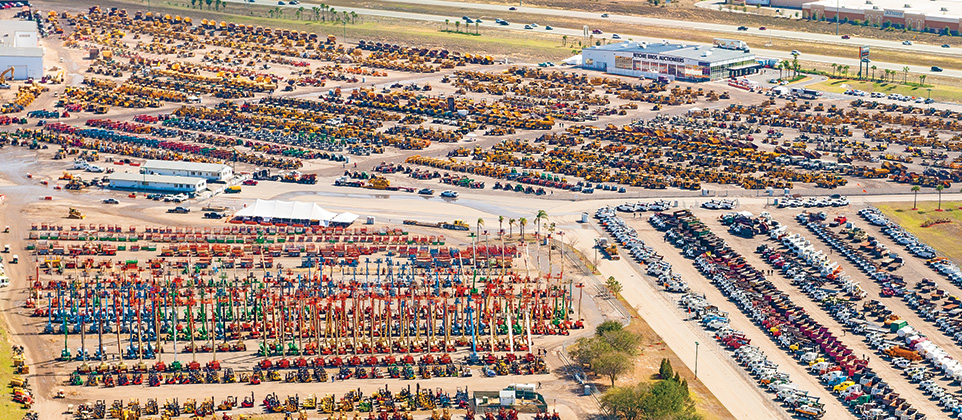
Distance changes the calculation. A local yard limits the people who can turn up; online bidding makes the audience less dependent on geography. Yet the asset remains stubbornly physical. Someone must describe it, keep it somewhere and release it to the right person. The useful combination is a digital market with a place to stand, inspect and collect. For machinery buyers, that last mile can require a very large trailer.
Follow the fee, not the hammer
In 2025, RB Global reported $16.2 billion in gross transaction value, or GTV. That measures assets sold through its channels. Revenue was $4.59 billion: about $3.50 billion in service revenue and $1.09 billion from inventory sales. Revenue from owned inventory includes the sale price; commissions record a different slice of a transaction. Dividing revenue by GTV does not produce a simple auction commission.
For a customer, costs are more immediate. Under Ritchie Bros.’ standard US fee schedule effective August 1, 2026, a $20,000 winning bid attracts a $2,000 transaction fee. That makes $22,000 before applicable taxes, transport or repairs. Fees vary by region and event. The useful habit is to set a ceiling on the complete acquisition cost before the auction starts.
The deal that did not happen
Expansion has required more than persuading bidders. In 2022, Ritchie Bros. abandoned its planned purchase of Euro Auctions after Britain’s competition regulator referred it for deeper investigation. The regulator worried about combining two major heavy-equipment auction providers. The companies remained competitors. Scale, it turned out, could also be an obstacle.
The following year brought IAA. The transaction had been announced at approximately $7.3 billion, including net debt, in November 2022. Terms changed after shareholder feedback: the January amendment increased cash consideration and reduced the equity component. Starboard committed $500 million through preferred and common shares. The acquisition closed in March 2023. Those details show the negotiation behind the corporate transformation.
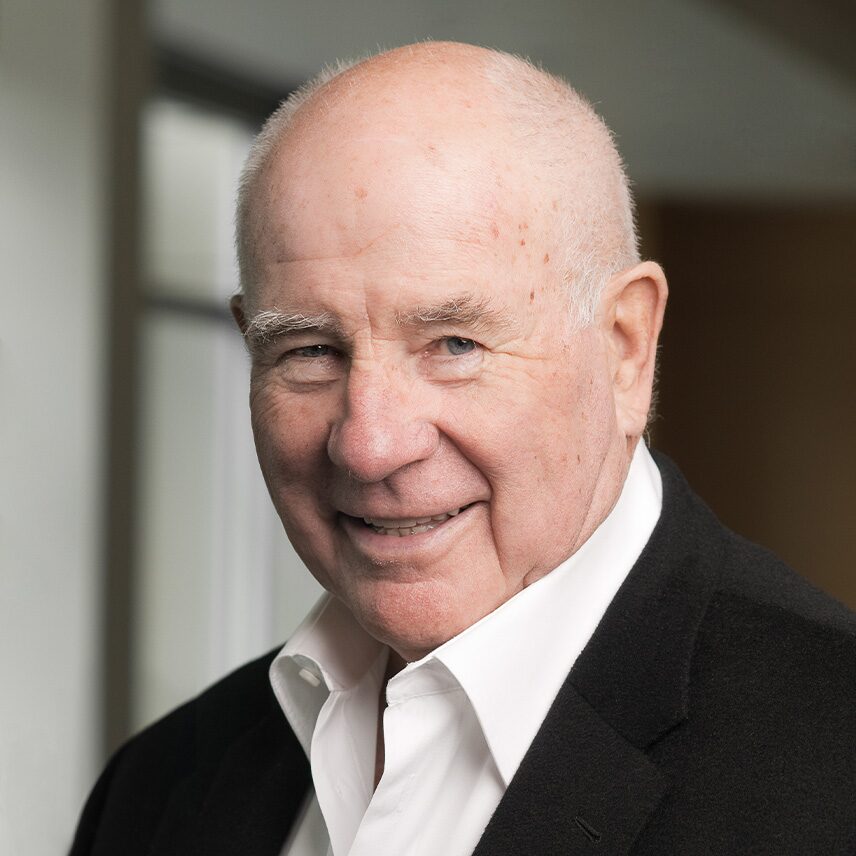
“Treat your customers like your friends, and they will always be your customers.”
The quoted deal value describes the original announcement, rather than a final cash bill. The broader lesson is practical: assembling a marketplace involves financing, regulatory limits and shareholder negotiation as well as technology. Each acquisition adds customers and capabilities, alongside the work of making the businesses function together.
Orlando offers a glimpse of the resulting business. At its February 2026 auction, Ritchie Bros. sold more than 14,500 assets for over $265 million. Participants came from more than 80 countries. Nevertheless, approximately 86% of assets went to US buyers. A global audience can coexist with overwhelmingly domestic sales. The value of international participation is access to another bidder, rather than a requirement that every machine cross an ocean.
The next owner is the point
In May 2026, RB Global completed its purchase of BigIron, extending its agricultural equipment and real-estate business. Second-quarter GTV subsequently reached $4.67 billion, up 11% year over year; excluding recent acquisitions, growth was 7%. The company also reported softer underlying heavy-equipment transaction volumes in a cautious customer environment. More categories do not remove economic cycles.
Look at the steps a customer must complete to make the advertised product useful. Which require another supplier, another phone call or another uncertain price? RB Global has built around those steps. The test is whether a customer will pay to hand over the task.
For sellers, the choice of format remains consequential. An unreserved auction suits someone willing to accept the market’s price on a deadline. An owner requiring a minimum price may prefer a reserved or negotiated route. For buyers, inspection, eligibility and transport still matter. RB Global can organize the exchange. The customer must decide whether the asset, at its full cost, has another useful working life.