An excavator does not retire gracefully. It sits in a yard, occupying space and tying up money while its owner wonders whether to sell it now or squeeze out another job. Somewhere else, a contractor needs exactly that machine. Pickles Auctions earns its place between those two decisions: assessing what is being sold, finding an audience and getting a transaction over the line.
The Australian company’s catalogue reads like an inventory of a working country. Government cars share its marketplace with trucks, earthmoving equipment, damaged vehicles and office goods. To a casual visitor, it is a place to hunt for a purchase. To an organisation replacing equipment, it is a way to recover money from yesterday’s tools. That second customer explains much of the business.
Pickles calls the work asset remarketing. The plain-English version is selling something again, with enough knowledge and organisation to make the sale worthwhile. Its institutional customers include governments, councils, insurers, banks and fleet operators. Those relationships feed a marketplace where dealers, business owners and private buyers can shop for assets they might never encounter in an ordinary retail showroom.
The digger has another appointment
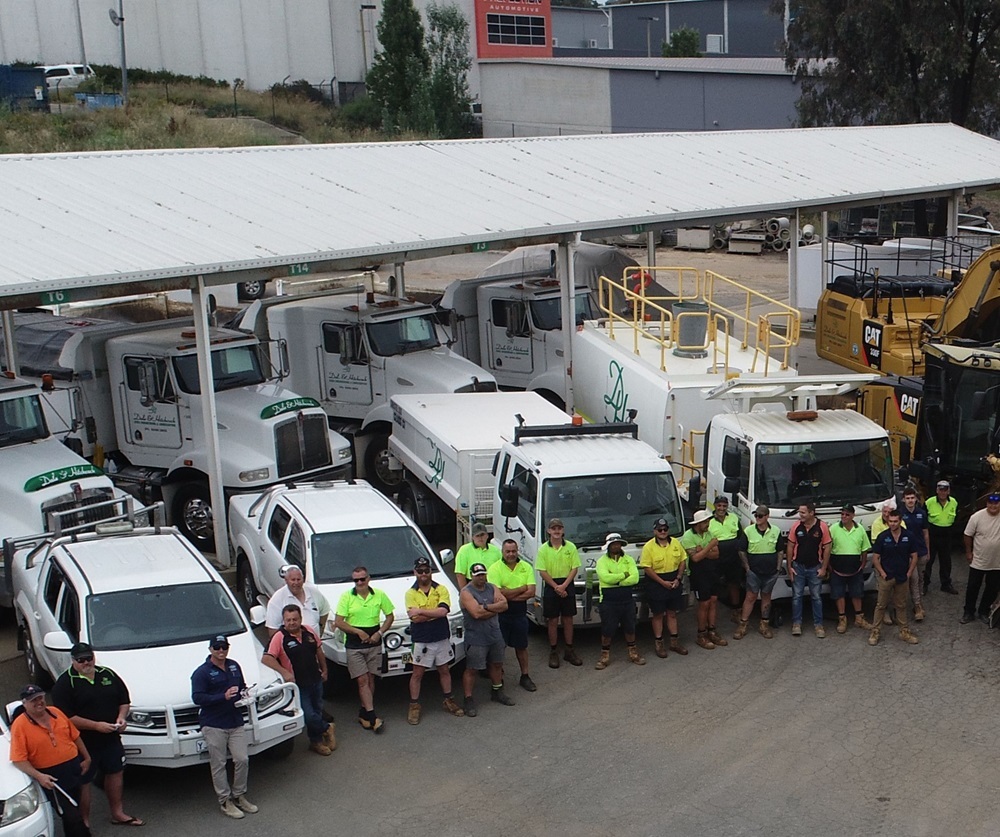
Consider Dale & Hitchcock, the ACT civil construction and landscaping business. In a July 2024 account of the relationship, Pickles described a customer renewing equipment at around 6,000 operating hours and needing remarketing services every quarter. This is a repeat operational task, with a rhythm of its own. The next sale belongs in the replacement plan.
Pickles said the process typically put funds in Dale & Hitchcock’s account within 14 to 21 days. Those are figures from one customer story, rather than a universal settlement promise. Still, they reveal what the seller is buying: a manageable interval between having surplus machinery and having money to put towards its replacement.
“They use data and always sell everything we bring them”
Asher Trounce, Dale & Hitchcock · July 2024
The same account describes a Pickles representative visiting regularly and valuing equipment in person. A familiar face knows the machines and the operation. For a buyer, the corresponding benefit should be a clearer account of what is on offer. The marketplace depends on both sides finding that work useful enough to return.
Before the browser, there was Moree
Peter Pickles established the business as a stock and station agent in Moree in 1964. It moved to Sydney in 1973, conducting antique, fine-art and damaged-vehicle auctions. Truck, earthmoving and plant auctions followed in 1985. Its expansion was rooted in tangible things that needed new owners.
The company’s history also makes clear that its digital work predates the pandemic. Pickles.com.au launched in 1996; fixed-price selling arrived in 2000; remote bidding followed in 2002. Malaysia joined the story in 2017, and the acquisition of Hassalls Auctions in 2018 added to its industrial interests. By then, the auctioneer had spent years building ways to connect dispersed stock and buyers.
That combination still defines its position. Manheim Australia also offers vehicle, salvage and machinery auctions, alongside online and immediate-purchase channels. Digital bidding alone is hardly a distinction. Pickles’ case rests on the combination of recurring institutional supply, specialists across asset categories, physical facilities and advice around the sale. Buyers can compare the stock and charges; sellers can judge the likely audience and service.
- 01AssessAsset & market
- 02PresentPhotos & condition
- 03SellAuction or fixed price
- 04ReleasePayment & collection
What broke was the visit
In March 2020, COVID-19 restrictions cancelled Pickles’ auction viewings. Customers could no longer get close to the cars in the usual way. The obstacle was concrete: the asset was still there, but the buyer’s opportunity to examine it had disappeared.
Pickles’ innovation, IT, operations and marketing teams responded by shooting, uploading and linking 60 vehicle videos to its asset database in a couple of days. The company’s contemporary account described 360-degree footage and narrated walk-arounds for a Sydney luxury auction, including views inside and outside the cars. Staff pointed out visible imperfections as well as features.
There is a useful instruction here for anyone selling used goods online: show the detail a nervous buyer wants to inspect. A glossy photograph can attract attention; a clear view of a blemish can help someone make a decision. Video cannot establish every aspect of mechanical condition, but it can answer some questions that a closed viewing yard leaves hanging.
The family let someone else bid in
In July 2022, Pickles announced an agreement to sell a majority stake to funds advised by Apax Partners. The family would retain a minority interest, and the executive leadership team would remain. The announcement framed outside investment as a way to accelerate growth and digitisation, bringing capital and experience from other online marketplaces.
“This has not been an easy decision for our family,” chairman Tim Pickles said. He pointed to Apax’s digital marketplace experience and capacity to support expansion. That is the documented explanation for the family’s change: after considering potential buyers over the years, it saw a partner that fitted the next phase of the business.
Ownership matters here because replacing systems and changing how customers transact requires patience as well as money. The practical lesson is to choose experience relevant to the work ahead. For Pickles, the stated attraction was an investor familiar with marketplaces. The company’s physical assets, staff and long-standing vendor relationships remained part of the job.
The hammer price has company
Pickles offers several doors into the same used-asset economy. Customers can bid at auctions, buy selected assets at fixed prices or use advisory and valuation services. The latter serve clients such as banks and restructuring professionals, who need a considered view of an asset and a suitable sale strategy. Finance, warranty and transport services sit alongside the core transaction.
Its business model includes fees attached to purchases. Under the standard motor-vehicle schedule checked in September 2026, a purchase of A$2,000 or more attracts A$650 plus 1.65% of the hammer price. A A$20,000 bid therefore produces a A$980 processing fee. The schedule says fees include GST; different sale categories and government vehicles can have different arrangements.
Illustrative non-EV purchase. Before transport, registration and other applicable charges. Fee schedule checked 9 September 2026.
The useful habit is to set a total budget before setting a bid limit. A cheap-looking asset can lose its appeal when collection, repairs or other applicable costs are added. Auction turnover also needs careful reading: the value of cars and machinery sold belongs to the transaction story. It should not be mistaken for the auction company’s own revenue.
A battery gets its own report card
Used electric vehicles bring a particularly awkward information problem. The paintwork is visible. The condition of the battery requires another kind of inspection. Pickles launched its national Battery State of Health certificate program in July 2025, working with testing provider AVILOO. The aim is to put battery information in front of bidders while they are still deciding.
In its August 2026 anniversary update, Pickles reported testing more than 2,500 vehicles, with an average battery-health score of 96%. It reported 93% for vehicles five years or older and 89% for those with more than 120,000 kilometres. These are observations from its tested vehicles, with potentially overlapping groups. They are useful context, not a prediction for every used EV.
On tested listings, buyers can inspect a certificate preview and access the full document through a QR code or attachment. Pickles’ battery-testing guidance says the program excludes salvage vehicles and that some older or newly released models may lack certificates. It also distinguishes AVILOO’s assessment from the manufacturer’s own measure. Buyers should read the individual report, rather than borrow confidence from a fleet average.
The next owner still has homework
Better information cannot manufacture demand. Pickles’ Q2 2026 automotive report described more selective buyers and a used-EV market adjusting to greater supply. It reported that EVs sold in May and June averaged about 51,000 kilometres, compared with around 29,000 earlier in the year. A changing stock mix can change the meaning of a price trend. The catalogue deserves a closer look than a headline number.
For sellers, the approach works best when there is a plausible buyer audience and realistic expectations about condition and price. For buyers, it rewards preparation: read the listing, study the available inspection material, calculate charges and organise collection. Someone needing a particular machine immediately may find a fixed-price route easier to plan around than waiting for the right auction lot.
Pickles’ stated workplace commitments emphasise relationships, integrity and employee development. Those words get their most useful test at the asset itself: whether its description helps, whether the valuation is grounded and whether a customer can get an answer. The company can keep adding digital tools. Each tool still has to help somebody decide what a used thing is worth.
A seller wants the excavator gone. A buyer wants to know whether it can do the next job. Between them sits the less theatrical part of an auction business: observation, pricing, paperwork and follow-through. Pickles has spent decades making that interval its business. The bidding is the part everybody watches.