A sewer cleaner is an unlikely place to look for a theory of business. It is large, expensive and usually noticed when something has gone wrong. Yet consider the problem it solves. A city can postpone a ceremony. Postponing a blocked sewer is a more complicated negotiation. Federal Signal has spent decades assembling businesses around that distinction: work that somebody eventually has to do.
- Makes sewer cleaners, vacuum excavators, street sweepers and warning equipment.
- Sells to municipalities, contractors, industrial operators and emergency services.
- Recorded $2.18 billion in 2025 sales; parts, service and rentals help keep customers returning.
The name suggests a siren company. The accounts tell a different story. In the second quarter of 2026, Environmental Solutions generated $577.7 million of sales, against $92.5 million for Safety and Security Systems. Roughly 86 cents of every sales dollar came from the environmental side. The warning business remains substantial. It simply no longer explains most of Federal Signal.
A city has two kinds of emergencies
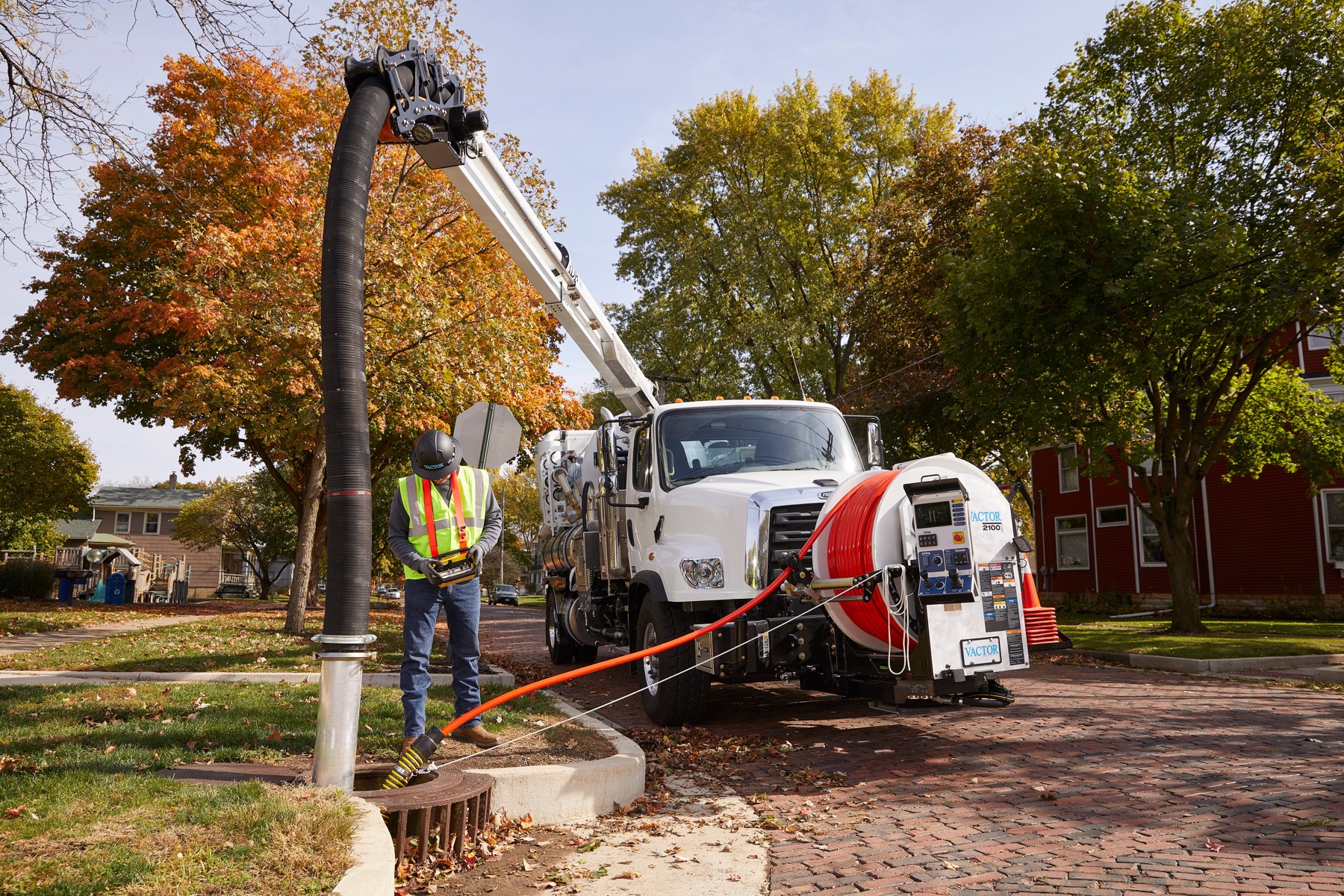
One announces itself with flashing lights. The other begins with debris in a pipe. Federal Signal supplies equipment for both. Vactor combination sewer cleaners clear and collect material from underground networks. Elgin sweepers pick up what accumulates above them. TRUVAC machines use pressurized water or air and vacuum extraction to expose buried utilities, giving crews an alternative to approaching a hidden pipe with a mechanical bucket.
These are different purchases with a shared calculation: how much disruption can an operator avoid? A contractor needs access to a utility. A public works department needs a catch basin cleared. A police fleet needs warning lights and sirens. Federal Signal sells specialized tools for those tasks, through dealers, distributors and its own operations, rather than selling a general promise to make cities smarter.
The siren came second
The company began in Chicago in 1901 making electric signs. John and James Gilchrist founded it with John Goehst. It bought electric-siren patents in 1915. Later came the acquisitions that made the modern portfolio recognizable: Elgin in 1982, Guzzler in 1993 and the business renamed Vactor in 1994. Its expansion followed equipment, engineering and customers that already existed.
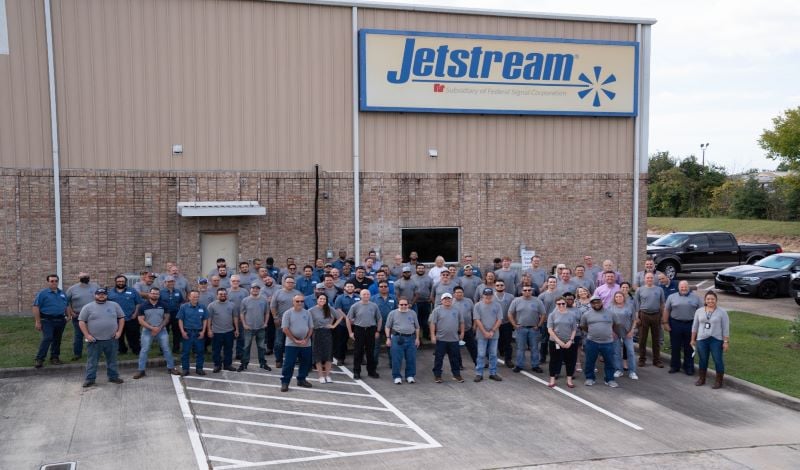
That history matters because acquiring a useful brand is different from persuading a town to trust an unfamiliar machine. Federal Signal could add manufacturing resources and related products while preserving established names. Today, its portfolio stretches from Jetstream industrial waterblasting equipment to dump bodies, road-marking systems and New Way refuse trucks. The common thread is material being moved, removed or collected.
“why” is the most important question of allFederal Signal’s published core values
The trouble with useful machines
Essential work does not guarantee steady orders. In February 2016, newly appointed chief executive Jennifer Sherman described healthy municipal markets alongside weakness in industrial demand. The oil and gas downturn was expected to cut operating income by $12 million to $14 million. Used equipment offered buyers a cheaper alternative, adding pressure on new-machine demand. The vulnerability appeared in customers’ willingness to buy, even while the equipment remained useful.
Management’s response was explicit: seek new markets, introduce products and control costs. The following year, Federal Signal bought Truck Bodies and Equipment International for $270 million. Its investor presentation described diversification beyond oil and gas as a strategic benefit. That does not establish one private moment when management changed its mind. It does show the problem management identified and the kind of business it bought afterward.
The sale after the sale
A machine leaves the factory. Its owner then needs parts, repairs, technical advice and sometimes rental equipment. Federal Signal has built around that second relationship. Its 2025 shareholder letter describes aftermarket offerings as recurring revenue that complements new equipment sales. That wording deserves care: repairs are repeat business, but they do not behave like a guaranteed software subscription.
The infrastructure is tangible. Federal Signal reports more than 40 directly managed service centers, alongside thousands of dealer and distributor locations. Its published training catalog includes classroom instruction and hands-on work for operators and mechanics. Expertise here includes hydraulics, pumps, vacuum systems and troubleshooting. A truck that cannot get back to work is an expensive advertisement for another supplier.
A $426 million bet on the next collection
New Way extended the idea into refuse collection. Federal Signal completed the purchase in November 2025 for an initial $396 million, plus $30 million for manufacturing facilities and property rights. The agreement also allowed up to $54 million in contingent consideration. Customers include municipal fleets and private waste haulers. The acquisition added a new category of vehicle to the company’s environmental business.
The financial promise came with a timetable. At announcement, management expected the transaction to be neutral to earnings per share in 2026, reflecting investment, integration, financing and purchase-accounting costs. It projected $15 million to $20 million in annual synergies by the end of 2028. Those are management expectations, not savings already delivered. Buying the factory is the visible event; improving its economics takes longer.
Copy the connection, check the conditions
Federal Signal occupies the space between focused equipment makers and diversified industrial groups. Alternatives depend on the job: Alamo Group’s brands include Schwarze sweepers and Vacall equipment; Whelen offers emergency warning products. Federal Signal’s argument rests on its combination of specialized brands, manufacturing knowledge and support channels. That breadth helps explain its position without proving that every product wins every comparison.
The useful lesson is to follow a customer’s working day beyond the initial purchase. Training, repair access and replacement parts can make a product relationship more durable. The conditions matter. Municipal budgets can delay orders. Chassis shortages can hold up deliveries. Acquisitions can disappoint. An electric sweeper needs charging arrangements that suit its route and shift. A good catalog cannot solve those constraints by itself.
Elgin’s electric and hybrid sweepers illustrate the practical approach. Its hybrid Broom Bear was developed with Odyne; the all-electric model carries a 400-kWh battery. Buyers can compare power systems against their own work rather than accept one answer for every fleet. Federal Signal’s most interesting proposition is similarly concrete: find a necessary job, build the machine, then stay close enough to help when it stops.
See the machines. Follow the business.
Explore the company website, investor updates, safety-product news and Elgin’s electric sweepers.
LinkedIn ↗X ↗Instagram ↗Facebook ↗
Watch product demonstrations on Vactor’s YouTube channel, TRUVAC’s channel and Elgin’s channel.