In Kirby’s account of its own history, the revealing detail is an Oklahoma oilfield. During the early 1980s, the company drilled extensively in the Fletcher Field. The results disappointed. To support the oil operation, Kirby relied on cash from Dixie Carriers, its marine transportation business, and the value of its insurance holding. Somewhere inside a company preoccupied with finding oil was another company quietly earning money by moving things.
- The cargo: chemicals, refined fuels and other bulk liquids moving between industrial facilities.
- The second business: engines, parts, repairs, rentals and power systems.
- The lesson: pay attention to the operation that keeps financing your ambitions.
By 1987, the board had decided to concentrate on marine transportation and related activities. The oil and gas assets went the following year. The name became Kirby Corporation in 1990. That sequence offers an unusually plain explanation of corporate reinvention: eventually, the reliable sideline gets the keys.
The taxi, the bus and the chemical plant
Kirby traces its roots to John Henry Kirby’s petroleum company, formed in 1921. It entered marine transportation by acquiring Dixie Carriers in 1969. Its present work is easier to understand if you forget container ships and delivery vans. Think instead about a chemical producer needing to move a large volume of liquid from one waterside facility to another.
Kirby’s inland network serves the Mississippi River system and Gulf Intracoastal Waterway. Its cargo includes petrochemical feedstocks, agricultural chemicals, refined products and black oil, a category encompassing materials such as asphalt and residual fuel oil. These are shipments for which tanks, transfer procedures and trained crews matter as much as a departure time.
The company explains its service with a pleasingly ordinary comparison. A unit tow is a taxi: a towboat and assigned barges serve one customer, with routing flexibility and continuous transit. Linehaul is a bus: several customers share a towboat on a predetermined route, with barges collected and dropped along the way. On a river, that shared tow can contain 10 to 25 barges.
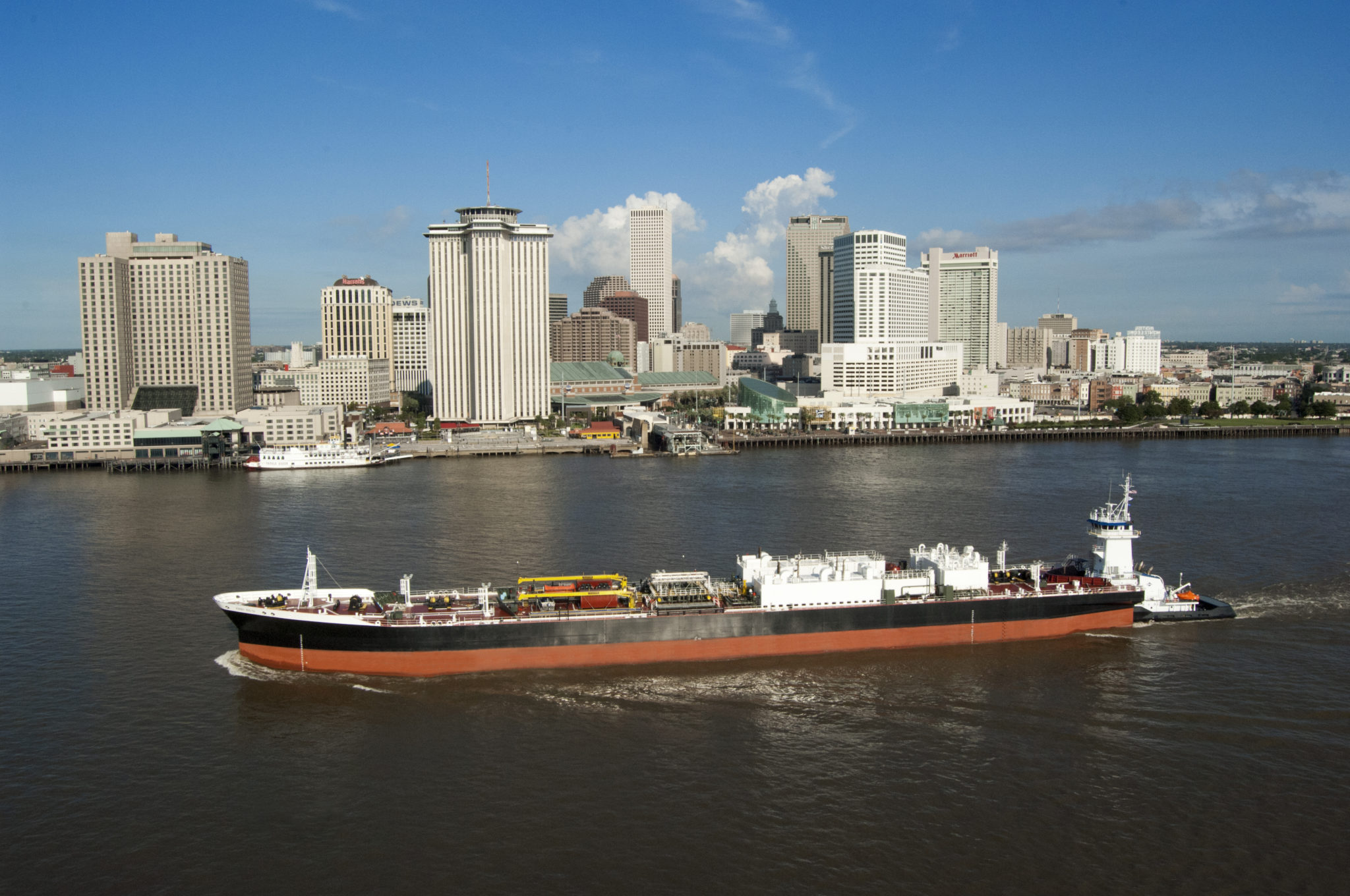
For a shipper, the choice is practical. Does the cargo need dedicated movement, or can it share the journey? Kirby sells those transportation services, alongside coastal tank-barge operations. Its ocean transportation business also carries dry bulk. The buyer is generally an industrial organization managing a supply chain, rather than a consumer buying a shipping label.
The machine has a second business attached
A barge operator needs working engines. Kirby entered engine services in 1982 by buying Marine Systems. Today, Distribution and Services sells equipment and replacement parts, rebuilds engines and transmissions, rents machinery, and manufactures specialized systems. The common problem is downtime. A broken engine, missing component or inadequate power supply can interrupt work far beyond the machine itself.
The expansion required real money. In June 2017, Kirby agreed to acquire Stewart & Stevenson for approximately $710 million before adjustments and fees, with the announced consideration split equally between cash and stock. The rationale included a broader distribution network and more industrial customers outside oil and gas. This was a purchase of capabilities and customer access, with an acquisition bill attached.
The current service network spans 62 branches across 17 states and Colombia. Its brands offer OEM parts and technicians, while DieselDash sells replacement parts online. Rental options include generators, compressors and refrigerated trailers. A marine operator can seek an overhaul; an industrial customer can arrange power equipment. The transaction may begin with a sale and continue through maintenance, parts and repair.
A $56.3 million reminder
Equipment expertise does not make inventory immune to change. In late 2024, Kirby recorded a $56.3 million pretax noncash impairment, primarily associated with conventional diesel fracturing equipment inventory. Customers were shifting toward electric fracturing equipment. Certain inventory had limited commercial opportunity. The market’s preference changed before the stock on hand could justify its recorded cost.
That episode complicates any tidy story about dependable industrial businesses. Customer requirements move, even when the machinery looks permanent. By the second quarter of 2026, power generation represented about 40% of Distribution and Services revenue. Orders reflected demand from data centers and industrial customers for backup and behind-the-meter power. OEM supply constraints still affected execution. Demand alone does not deliver an engine.
The boat that plugs into the dock
Green Diamond brings Kirby’s two businesses together in one small vessel. Christened in August 2023, the hybrid towboat was built by Kirby’s San Jac Marine shipyard. Stewart & Stevenson designed and installed its power management, control and propulsion systems. Shell Trading became its charter customer for work around Houston’s port.
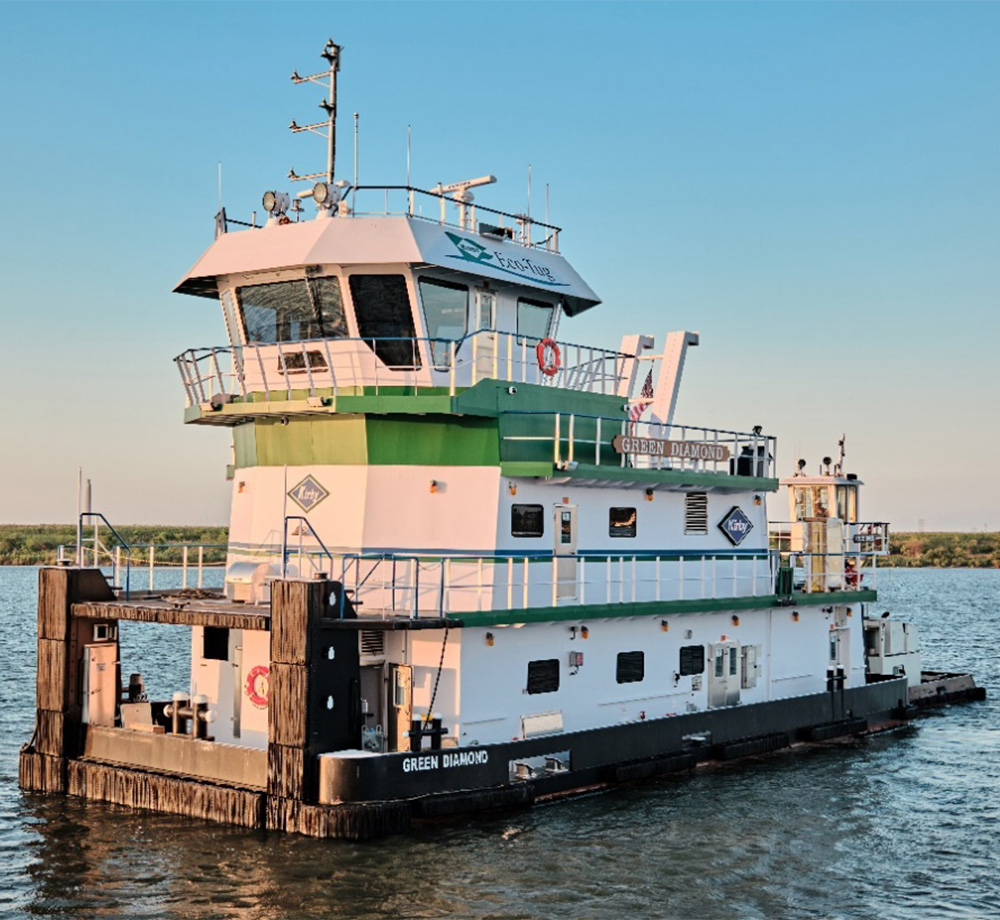
Corvus supplied a 1,243-kilowatt-hour battery system. Dockside charging allows battery operation, while onboard generators provide another power source. Shell’s account says the vessel entered service in April 2024 and estimates emissions about 60% below a conventional towing vessel, using reported engine runtime comparisons. That is a specific operating claim about a specific boat, rather than a promise for every river journey.
“This solution is available today.”
CHRISTIAN O’NEIL · GREEN DIAMOND CHRISTENING, 2023
The conditions matter. Corvus identifies short routes, proximity to shore and limited power demands as reasons harbor tugs suit batteries. Remove convenient charging or change the duty cycle, and the economics and emissions benefit change. The transferable idea is to start with the route and workload, then select equipment that fits them. Buying a battery is only part of the job.
The advantage is in the repetition
Kirby competes with other tank-barge operators, including Canal Barge and American Commercial Barge Line. Its scale, service network and training help explain its position, but customers still have choices. A water route must connect useful places. Timing, weather, fuel costs and industrial demand remain constraints. For some movements, another carrier or transportation mode will make more sense.
Training is one detail worth lingering over. Kirby runs a center with a full-mission bridge simulator and a progression from deckhand toward captain. In 2025, its training facility issued more than 2,000 course-completion certificates. Here, expertise means practicing repeatable decisions about navigation, equipment and liquid cargo. The habits are part of what the customer buys.
In the second quarter of 2026, Kirby reported $922.4 million in revenue: $537.0 million from marine transportation and $385.4 million from Distribution and Services. The next earnings release is scheduled for October 28. Behind the financial calendar sits the older question raised by that Oklahoma field: which work actually earns its place? Kirby’s answer still travels by water, with a growing equipment business alongside it.