At a tissue mill in the southern United States, the water was available. Reusing it was the problem. Fiber in the mill’s water stream clogged downstream sieves, so water that might have gone back into production went to the sewer instead. The mill used river process water for its showers. Along with the discarded water went useful fiber. A recycling problem had become a plumbing problem.
- Kadant sells the equipment, parts, and expertise that keep industrial processes moving.
- Aftermarket parts supplied 71% of its fiscal 2025 revenue.
- Its customer proposition: recover more material, consume fewer resources, and keep production running.
The water nobody could reuse
Kadant’s answer was a RotoFlex resource recovery strainer. Its published case study describes reusing approximately 500 gallons per minute of white water in place of river process water. The projected annual savings were $203,576, combining recovered fiber, water savings, and improved machine operations. Projected payback: 19.75 months.
These are the supplier’s projections for one mill, using a water cost of $0.25 per thousand gallons. They are useful precisely because they come with assumptions. Change the water price, production schedule, or fiber value and the calculation changes. The interesting part is the method: identify something the customer repeatedly throws away, then make recovering it economically practical.
Projected total: $203,576 / year. Vendor case study; site-specific assumptions.
The sale that keeps coming back
Kadant occupies the working interior of industry. Its rotary joints transfer steam, water, oil, and other media between stationary piping and rotating equipment. Its doctor blades clean roll surfaces. Its systems prepare recycled fiber, process wood, filter water, and move bulk material. Customers include paper and packaging mills, engineered-wood producers, recyclers, miners, and food processors. These are businesses where an apparently modest component can affect a much larger production line.
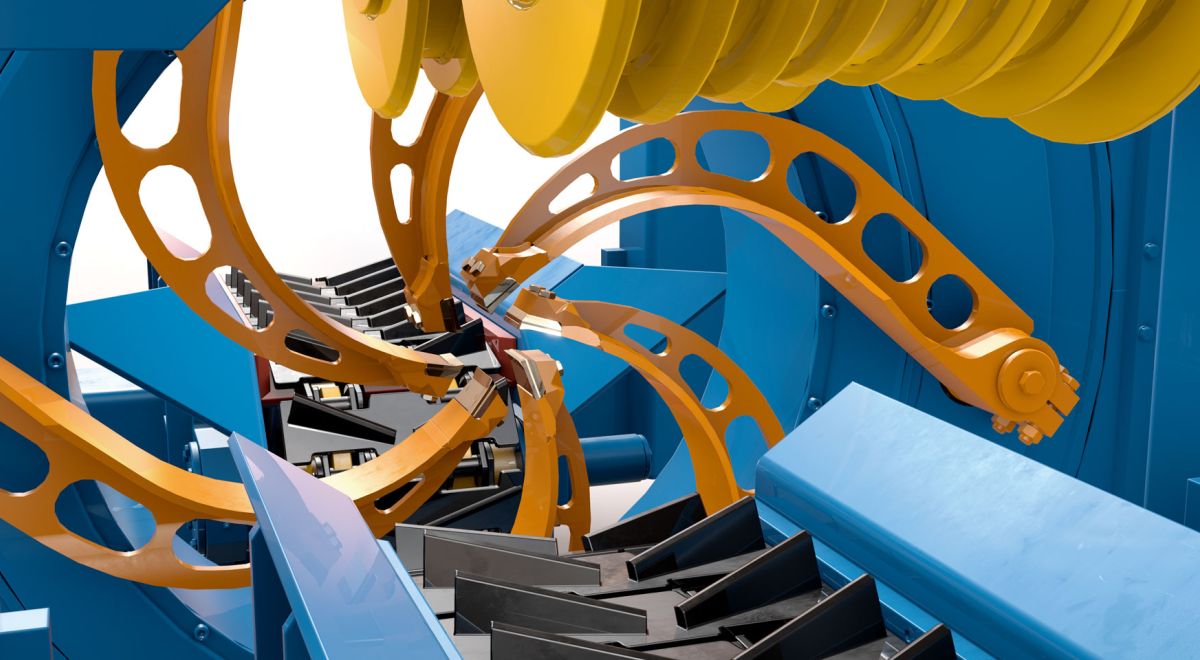
The company divides its operations into Flow Control, Industrial Processing, and Material Handling. That breadth makes it difficult to explain with a single machine. A better organizing idea is the recurring production problem: heat must transfer, water must circulate, fiber must be separated, and material must arrive where it belongs. Kadant sells equipment and the continuing ability to make it work.
Fiscal 2025 revenue was approximately $1.052 billion. Aftermarket parts represented 71% of the total. An installation therefore creates opportunities long after commissioning, as parts wear and customers need replacements. This is recurring demand tied to use. A mill that stops operating will need fewer consumables, however attractive the installed base looks on a presentation slide.
Aftermarket parts / FY2025
Alternatives depend on the application. Voith, ANDRITZ, and Valmet overlap in paper-process equipment and services; specialist suppliers compete in individual components. Kadant’s case rests on application knowledge and support across its collection of businesses. For a buyer, the useful comparison is whether a component performs reliably in the actual process, including its maintenance demands and operating cost.
The expertise increasingly includes software. Through Cogent, FrontWay, and Vayeron, Kadant offers industrial analytics, paper-process simulation, and wireless equipment monitoring. PaperFront lets engineers model a change before trying it on the plant floor. Vayeron monitors conveyor equipment condition. These tools extend the same practical question from hardware into data: can the operator spot a problem early enough to act? They also make clear why buying industrial equipment requires more than reading a catalogue. The installation belongs to a system, and the system has to be understood.
Buying the relationship
The corporate family began as Thermo Fibertek, incorporated under Thermo Electron in 1991. A partial public offering followed in 1992; independence and the Kadant name arrived in 2001. Several operating brands are much older. Black Clawson dates to 1873. Kadant’s age and the age of its expertise are different numbers.
Acquisitions extend that accumulated knowledge. In October 2025, Kadant bought Clyde Industries for $175 million in cash, primarily financed through revolving-credit borrowings. Clyde supplied boiler-efficiency and cleaning technologies and had reported $92 million in annual revenue. The purchase added another industrial specialty and an existing equipment population to support.
“Critical components with a high cost of failure”
From Kadant’s published acquisition criteria
Kadant gives acquired companies local decision-making, backed by group capital and shared resources. Its stated culture emphasizes responsiveness, learning, and employee development. The relationships can precede ownership by years: Babbini and GPS collaborated with Kadant from 2019 before their 2025 acquisition. BÖHLER Profil had supplied Kadant for more than 30 years before joining in April 2026 as Kadant Profil. Buying a familiar supplier brings a different kind of evidence from buying an unfamiliar growth forecast.
The deck boards that shrank
The history also contains an uncomfortable experiment. Kadant once made composite building products. Its filings describe decking boards that contracted and excessive oxidation that damaged the plastic’s integrity. Warranty expense reached approximately $6.7 million in 2004; another $5.5 million warranty provision followed in 2005. Products intended to turn recycled materials into useful building products had created expensive obligations.
Management decided in 2004 that the business no longer fit its long-term strategy. Kadant sold it in October 2005, retaining earlier warranty obligations. The record supports a strategic exit alongside product trouble. It does not establish a private moment when executives changed their minds. What it does show is that selling a business does not necessarily finish paying for its mistakes.
Start with the drain
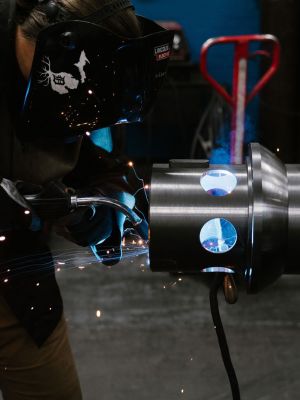
The sparks get the photograph.
The tolerances get the job done.
There is a practical lesson here for plant managers and business builders. Start with a recurring loss. Measure it. Compare a proposed fix with the full cost of ownership, including installation and maintenance. Kadant’s filtration example is compelling where recoverable resources and operating hours justify the investment. Low utilization, cheap inputs, or a poor technical fit can undo the payback. A sensible purchasing discussion therefore begins with the plant’s own operating data. Ask which losses were measured, which benefits were estimated, and how the proposal accounts for downtime during installation. A precise-looking payback deserves an equally precise set of assumptions.
The wider business still has cycles. Second-quarter 2026 revenue rose 23% to $312.9 million, with organic growth of 8%; acquisitions and currency supplied the rest. Gross margin fell from 45.9% to 43.8%. Growth brought tradeoffs. Kadant’s enduring proposition remains easy to understand at the mill: something useful is escaping, wearing out, or slowing down. Find it, put a number on it, and engineer a better result.