On May 3, 2025, a railroad merger reached a place most passengers and investors would never think to look: the databases. Canadian Pacific and Kansas City Southern had become CPKC. Railinc still had to bring their identities into agreement across 27 applications. More than 21,000 critical files needed updating. A corporate combination had become a formidable exercise in getting the details right.
The story in three points
- Railinc maintains shared equipment records and exchanges information across North American freight rail.
- Its TransmetriQ brand helps shippers and fleet owners turn those records into operational decisions.
- The useful lesson: agree on identities, definitions and permissions before expecting data to solve anything.
A merger, counted in records
Railinc’s account of the cutover describes years of coordination with CPKC, data verification and checks after the switch. Routes, junctions and stations were among the records affected. That is a good introduction to the company: its work becomes visible when organizations need their systems to agree.
Freight rail has a peculiar organizational problem. A car can move across a network of businesses while remaining the same physical object. Its dimensions do not change at the interchange. Its owner may be someone other than the railroad moving it. A useful record must survive those handoffs. The train has wheels; the information needs continuity.
Railinc began inside the Association of American Railroads as an information technology department. Its current company history dates its establishment as a wholly owned, for-profit subsidiary to 1999. The origin helps explain the business. Railinc supplies the common machinery for an industry whose participants have separate operations and commercial interests.
“The rail system connects everything; its rhythms mirror the broader economy.”
Michael Aguilar, Duke University · March 2026
Calling Railinc a software vendor is accurate, but leaves out its position in the market. Its products sit inside the exchange of equipment, operating information and money. Buyers include railroads, equipment owners, shippers and repair shops. Their needs differ. Their records often concern the same car.
A passport made of measurements
Umler is where the idea becomes concrete. The registry holds critical information for more than two million pieces of North American rail, steamship and highway equipment. A railcar record can include dimensions, capacity, weight, ownership history and inspections. These are the facts logistics partners need when placing, moving and interchanging equipment.
There is something pleasingly unromantic about this. Before anyone predicts an arrival or optimizes a fleet, somebody must know what the equipment actually is. Umler supplies a base file for other industry reference and management systems. A sophisticated application still needs a reliable answer to a basic question.
One car · several conversations
Dimensions / capacity / ownership
Routing & interchange
Health & inspections
Billing & settlement
Conceptual illustration of shared records, not a system architecture diagram.
Umler also has conflict management: invalid equipment data produces errors that users must resolve. It can clone records when registering similar equipment and preserve lineage as ownership or characteristics change. The glamorous word is interoperability. The everyday work is spotting a bad record and correcting it.
Railinc’s health and repair products carry the same logic into maintenance. The Equipment Health Management System shares equipment-condition information and alerts responsible parties when repairs are needed. Damaged and Defective Car Tracking handles the corresponding damaged-car workflows. A fault matters beyond the company that happens to discover it.
When a location becomes a decision
TransmetriQ is Railinc’s commercial brand for shipment and fleet management. Its audience includes shippers, private car owners and railroads. The offering combines software, reporting, consulting and managed services. Railinc provides the underlying industry data; TransmetriQ gives an operations team ways to use it.
A shipper can track equipment, set alerts and examine terminal activity. A fleet owner can bring maintenance, leases and equipment health into view. The platform is modular, so a customer’s available functions depend on the shipment or asset data purchased. A dashboard is only useful when it answers the question the person at the desk actually has.
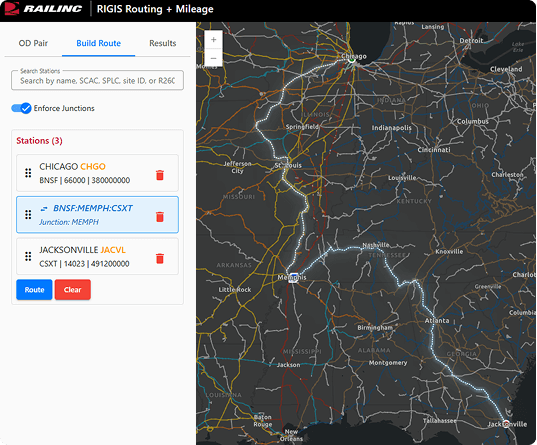
RIGIS Routing + Mileage illustrates the importance of the data underneath the screen. Its routing network uses railroad-supplied information, updated quarterly. Users can inspect carriers and mileage, specify preferred carriers and include required interchange junctions. Here, the useful map contains the operational relationships as well as the geography.
TransmetriQ’s 2025 additions address places where visibility alone leaves work unfinished. Ocean Tracing extends the view into maritime movements. Detention brings contracts and free-day rules into the same working picture. Managed Services supplies experts to handle problems such as shipment delays, repair billing and fleet-health monitoring.
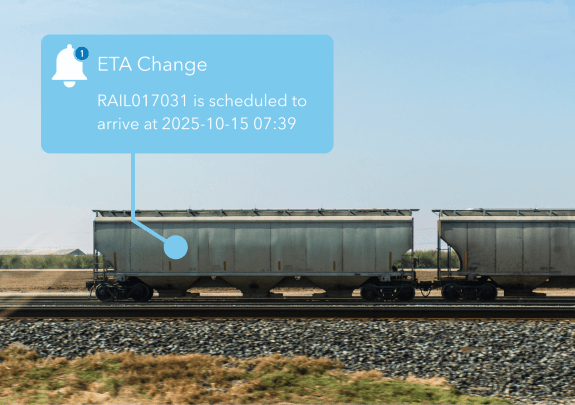
Railinc reports more than four billion TransmetriQ shipment and equipment updates in 2025, and an average three minutes for automatic equipment identification scans to appear on dashboards. Those are company-reported measures of information delivery. The business value comes later, when a team uses the information to change a decision.
Commercial alternatives include IntelliTrans Rail TMS and RSI Logistics’ Rail Command. They also offer rail tracking and management workflows. Railinc’s distinctive position is its combination of shared industry systems and its own commercial applications. Buyers comparing management tools should distinguish that choice from the industry registry those tools may depend on.
The price of keeping records straight
The business model is as particular as the industry. Railinc sells subscriptions, transactions, equipment-based services, data access and setup work. Its 2026 list prices Umler registration for a fleet of one to 81 units at $100 every six months. Umler web-service setup and testing support is listed at $2,500, including ten hours of support.
Fleet of 1-81 units
Includes 10 support hours
TransmetriQ’s shipment and asset module subscriptions, setup, pilots and per-car charges require quotes. This is a procurement conversation about the fleet and the workflow. The list also excludes implementation, labor, customization and taxes, and executed contracts take precedence. A registration charge is one part of a bill.
Cost also explains Railinc’s modernization of interline settlement. Enhanced ISS lets railroads retire legacy applications and use a common platform while retaining confidential waybills and configurable settlement procedures. Messaging options include EDI and JSON. The attractive proposition is sharing the maintenance burden without demanding identical commercial practices.
The app at the edge of an emergency
AskRail takes shared information into a very different setting. Launched in 2014 by industry and emergency-response partners, the free application lets qualified responders look up a railcar’s contents, including hazardous-material information. The audience here is someone arriving at an incident who needs an informed starting point.
The user guide is precise about the limits. AskRail displays last-known information, which can be affected by data quality or transmission delays. Responders should secure the train consist or waybill before an offensive approach; the paper consist takes precedence if car sequencing differs. The tool belongs within a trained response, with authorized access to sensitive information.
That distinction applies more widely. An event feed reflects reported events. A shared record depends on maintenance. Permissions determine who can see confidential information. Better software can make information easier to use, but the people and processes producing it remain part of the product.
The people behind the common language
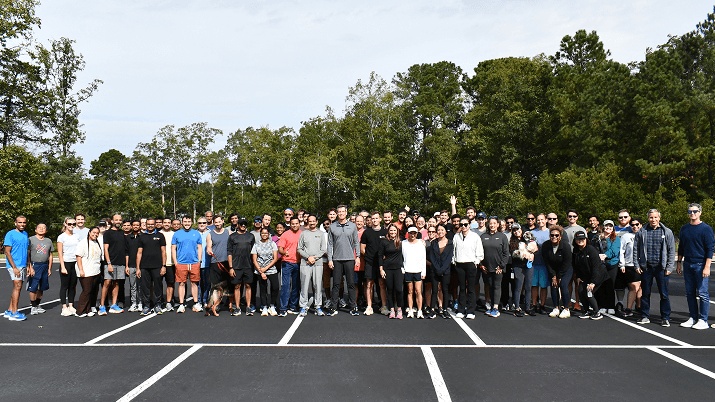
The company’s culture has some tangible evidence. Its 2025 office move brought more collaborative space and fitness facilities. Its wellness program drew participation above 90%, according to Railinc. TransmetriQ also describes a customer development program in which shippers and asset owners test proposed solutions and influence how they work.
In April 2026, Railinc promoted longtime technology leader Joan Smemoe to President and announced a transition to the CEO role after Allen West’s planned July retirement. A March announcement expanded analytics research with Duke’s Fuqua School of Business, examining how transportation data might illuminate economic activity. Those are further uses for information gathered to keep freight moving.
For anyone building software across company boundaries, the transferable lesson is straightforward: choose a shared identity, define the record, establish who may access it, and check what happens after a change. Give someone responsibility for correcting conflicts. Railinc’s appeal lies in how closely those mundane tasks touch the physical world. A freight car can travel a very long way. An unresolved disagreement about it travels too.