The first Terminal office was a walk-in closet in an apartment on Queen Street West. This is less cinematic than a garage, but more honest. Garages suggest prototypes under dramatic strip lights. Closets suggest two founders with laptops, a landing page and the suspicion that an expensive industry had quietly accepted an absurd amount of busywork.
Raghav Midha and Connor Giles had worked together at NorthOne, a Toronto fintech company. Their days included the connective tissue of modern software: middleware APIs such as Plaid and Stripe, tools that let one system understand another without every company rebuilding the same bridge. Giles also knew trucking through his family's logistics business. Midha had seen fleet operations through his family's HVAC company in San Francisco, which ran 13 commercial vehicles. The pattern was waiting in plain sight.
Commercial vehicles produce streams of location, speed, driver hours, fuel, fault codes and safety events. Yet those streams arrive through hundreds of telematics providers, each with its own formats, authentication, permissions and peculiarities. A software company might want to build a better insurance product or dispatch tool. Before it could do the interesting part, it had to become an unwilling collector of integrations.
The tax nobody puts on the roadmap
Terminal's original Y Combinator pitch put a number on the drag: transportation and fleet-management companies could spend 30 to 40 percent of engineering capacity on integrations. The work was essential, undifferentiated and never finished. Providers changed. Tokens expired. Historical data came back incomplete. One more customer request meant one more connector to build and nurse.
Midha and Giles did what founders are forever advised to do and only occasionally endure: they spoke with hundreds of people. They stayed up late, tested the proposition with a landing page and followed the recurring complaint. The resulting product was conceptually spare. Connect once to Terminal. Let Terminal connect to the telematics providers, normalize their data into common models and keep it moving.
The translation layer
provider APIs
normalizes + syncs
and logistics apps
The clever part was not adding another dashboard to an industry already blinking with them. Terminal would stay in the background. Its customers would keep their fleet relationships; fleets would control what they shared and could disconnect. The company would be the data subprocessor, the plumber with no desire to own the house.
Good infrastructure has a peculiar ambition: to make its hardest work look ordinary.
A founder assembled from useful contradictions
Midha's education reads like a compact preview of the job. At Western University he studied economics and computer science, then completed an HBA at Ivey Business School. Markets and machines. After university came product and growth work, including a run as NorthOne's director of product and growth from 2020 to 2022. Terminal demands all three instincts: understand the market, understand the system, and find distribution without confusing attention for traction.
Former colleagues describe him publicly as empathetic and intentional, a manager able to move from product strategy into the minute design of a user experience. His own recruiting notes add a harder edge: detail, craft, customer impact and a bias toward action. The combination matters. Infrastructure punishes both carelessness and dithering. A location field mapped incorrectly is not a philosophical error. It is simply wrong, repeatedly, at scale.
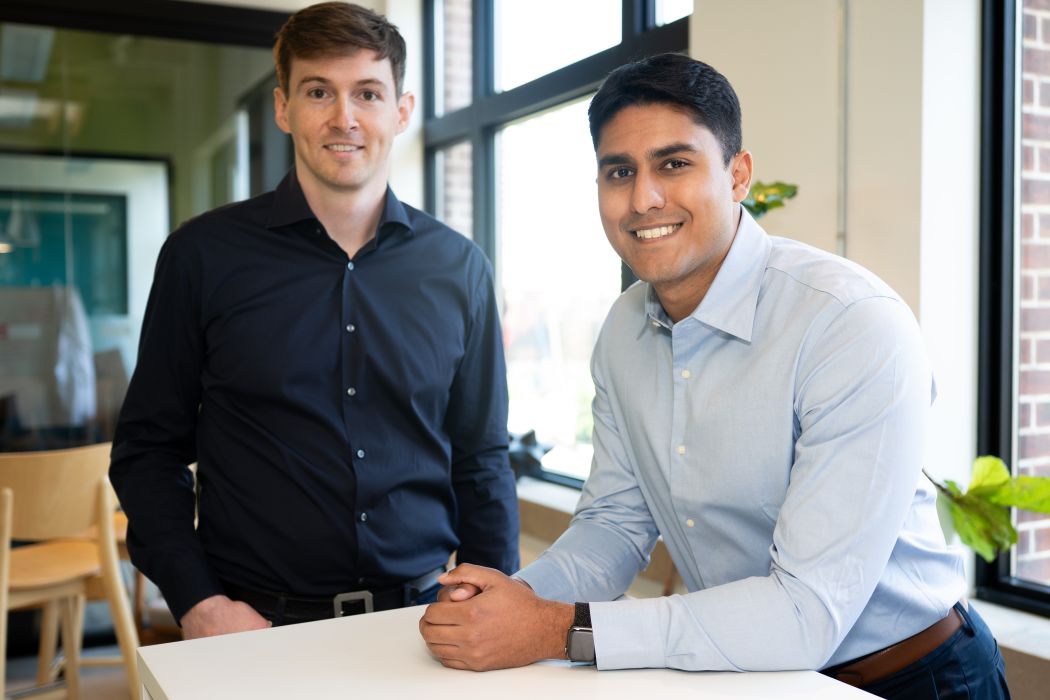
Terminal joined Y Combinator's Summer 2023 batch and announced a $3.1 million seed round that December. The shorthand was “Plaid for trucking,” a phrase that made the idea legible in four words. But analogies are invitations, not operating manuals. Banking accounts are not trucks. Telematics can mean a GPS point every second, a dash-camera clip, a fault code, duty status or years of location history. It can arrive through REST, SOAP, webhooks or file exports. The shared grammar has to respect the odd nouns.
The quiet company gets loud results
For its first years after Y Combinator, Midha concentrated on the product and the customers rather than constructing a large growth machine. The result produced one of those details that makes a founder story snap into focus: by mid-2026 Terminal had only one salesperson. It had nevertheless landed publicly traded and Fortune 500 customers, with most customers approaching Terminal first.
There is no magic in inbound demand. It is usually the visible tip of unphotogenic work: a connector survives another provider change; a sync finishes; a customer sees the same field in the same place again. Trust accumulates in the absence of incidents. Midha's product-first approach matched the category. In data infrastructure, reliability is the sales collateral people discover after signing.
Commercial auto insurance grew to roughly half of Terminal's revenue. Here the data problem becomes unusually tangible. Insurers want grounded evidence of how a vehicle is driven, but fleets use different devices and hardware. No insurer wants to build hundreds of connections and then staff the supporting data machinery forever. Terminal turns that fragmentation into one relationship.
Midha summarized the early restraint in a wonderfully plain sentence: “We only have one salesperson.” It was not a rejection of sales. It was a sequencing choice. By late 2025, the company judged that it had reached an inflection point, recruited former BenchSci executive Eran Ben-Ari as its first chief operating officer, and prepared to turn accumulated product pull into a broader commercial operation.
Fintech pattern recognition
Midha works in product and growth at NorthOne, where middleware integrations are part of building financial software.
The closet, then Y Combinator
Midha and Giles found Terminal, join the S23 batch and announce a seed round in December.
An inflection point
Terminal adds its first COO as a small team serves major enterprise customers and prepares to scale.
The next gear
A $20 million Series A funds broader integrations, data-quality work and expansion of the Toronto team.
Two terabytes before lunch
By July 2026, Terminal supported more than 325 telematics integrations and processed about two terabytes of data every day. It had ingested more than five billion kilometres of historical driving activity. These numbers are not decorative scale. Each additional kilometre can inform a workflow: underwriting risk, checking a vehicle's location, monitoring safety, predicting maintenance or coordinating a shipment.
Scale also makes the translation problem more exacting. A field called speed is only useful when its unit, timestamp and relationship to a vehicle are dependable. Historical data has to meet live data without creating two versions of the road. A provider's special capability should survive normalization instead of being sanded away. Terminal publishes a provider explorer so customers can check available models, history and sample rates before they connect. The catalogue turns integration coverage from a boast into something inspectable.
The network has two sides. Customers want broad access, while telematics platforms want their particular advantages to come through clearly. Terminal says its role is to connect rather than disintermediate: the provider and customer retain the commercial relationship and data ownership. It is a small but important boundary. A neutral pipe can work with competitors precisely because it is not trying to become the destination at either end.
That month Terminal announced a $20 million Series A led by Battery Ventures. Intact Private Capital and Penske Transportation Solutions joined as strategic investors; Y Combinator and Wayfinder Ventures returned. Marcus Ryu, the former Guidewire co-founder and CEO, joined Terminal's board. The company reported that the round brought its total funding since launch to $26 million.
The plan is pointed rather than poetic: cover more providers, strengthen data-quality monitoring, build the next platform layers and hire. Midha expected the research-and-development-heavy team to grow from 17 people to 30 by the end of 2026, with a larger Toronto office under consideration. He argues that the city offers both engineering and commercial talent while remaining one flight from the customers Terminal serves across Canada and the United States.
The business began by removing repeated work. Its next test is growing without recreating that work inside itself.
What to steal from the closet
Midha's story offers no theatrical epiphany. It offers a sequence. Learn an integration pattern in one industry. Notice the same burden in another. Add firsthand context from family fleets. Conduct enough conversations to separate a widespread complaint from a passing annoyance. Prototype the smallest possible door. Then stay close to customers while the invisible work earns permission to expand.
He has spoken about trusting instinct, staying customer-obsessed and remembering to “never waste a crisis.” The last phrase suits integration work particularly well. Every upstream failure reveals what the platform still assumes. Every odd schema expands the common model. Every emergency can become a permanent guardrail, provided the team is willing to inspect the wreckage.
The ambition now is for Terminal to become the default telematics data infrastructure for the commercial fleet economy and to move from terabyte-scale processing toward petabytes. That is an enormous sentence attached to a company born in a very small room. Yet the geometry makes sense. Shared infrastructure becomes valuable by concentrating complexity. The room shrinks; the map grows.
There will always be another provider, another field and another format that appears to have been named during a fire drill. Terminal's bet is that customers should not each have to learn its dialect. Midha is building the interpreter, one unglamorous connection at a time.