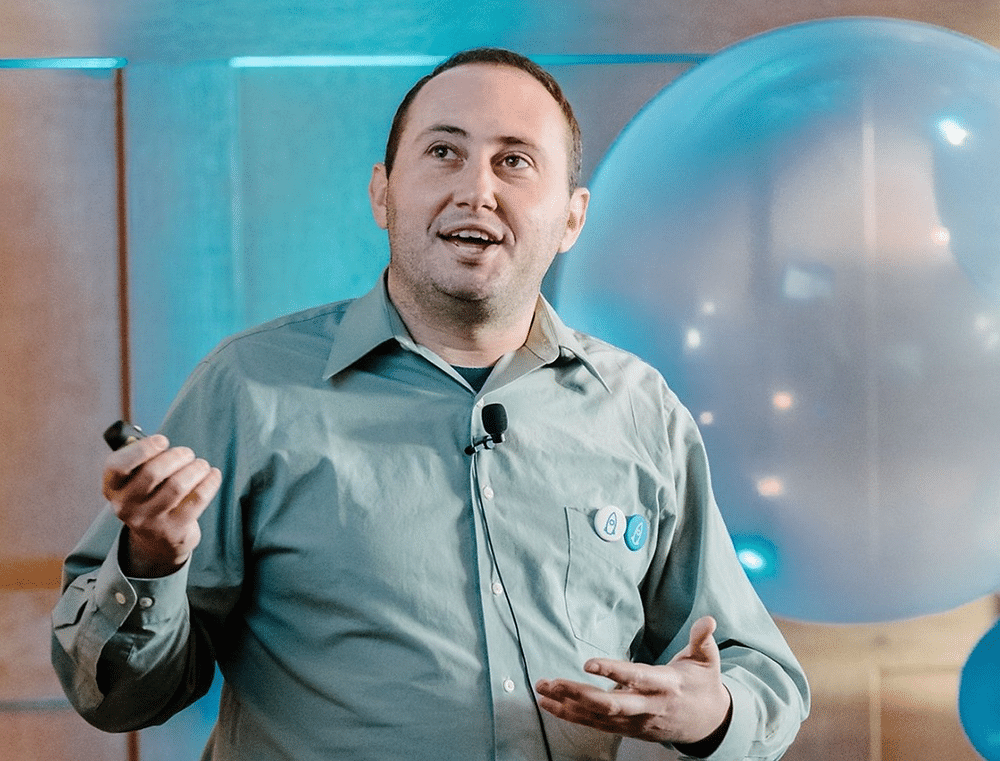
At most companies, getting clean, analysis-ready data is a months-long project that starts with hiring someone expensive. Peter Fishman spent fifteen years being that expensive someone - and concluded the whole arrangement was absurd. Mozart Data, the company he co-founded with Dan Silberman in 2020, exists to make the modern data stack something you switch on, not something you staff up for. Consolidate, organize, and prep your data in under an hour, no engineer required. That is the pitch, and it is also a quiet rebuke of how he spent his own career.
The company is backed by Y Combinator and has raised roughly $39 million, including a $15 million Series A. It plugs into the tools data teams already reach for - Snowflake for the warehouse, Fivetran-style connectors for ingestion, dbt for transformation - and wraps them in something a marketer or a finance lead can actually operate. The name is deliberate. Mozart composed order out of noise. So, in theory, does the product.
What makes Fishman worth reading about is not the cap table. It is the route he took to get there.
Before the warehouse, the gridiron
In 2008, fresh out of a Berkeley economics PhD, Fishman took a job in the front office of the Philadelphia Eagles. He was a statistician for an NFL team - applying regression and probability to fourth-down decisions and roster math years before "sports analytics" became a Brad Pitt movie's worth of cultural shorthand. It is the kind of first job that tells you something: he was always more interested in what the numbers could decide than in the numbers themselves.
From there the path reads like a tour of the 2010s tech boom. A senior economist seat at The Parthenon Group, the strategy consultancy, where he learned to turn analysis into decisions other people would actually act on. A monetization role at Playdom, the social-gaming company Disney later swallowed - a crash course in the unglamorous art of figuring out where the money in a product hides. Then, in 2011, Yammer.
Yammer is the chapter that mattered most. As Director of Analytics he arrived when it was a scrappy enterprise-social startup and stayed while it became a billion-dollar business that Microsoft acquired. Growth like that is where analytics either earns its keep or quietly fails, and Fishman was in the room for the whole climb - watching which numbers predicted retention, which features actually moved usage, and which "insights" were just noise dressed up in a chart. He kept climbing afterward: VP of Analytics and Growth at Zenefits, Head of Analytics at Opendoor, and Chief Strategy Officer at Eaze, the cannabis-delivery platform, where the title finally caught up with what he had been doing all along - setting direction, not just measuring it.
Not every business gets value out of their data. But every business can.
- Peter Fishman
Notice the pattern. Each of those companies handed him the same chore: stand up the data infrastructure, wire the connectors, build the pipelines, make the dashboards trustworthy. He did it at Yammer. He did it again at Zenefits. Again at Opendoor. Again at Eaze. By the fifth time, the repetition had stopped feeling like work and started feeling like a bug in the market.
The idea that was really an itch
"He realized he was building the same modern data stack at each company," is how interviewers tend to summarize the origin. Fishman took the broader view: if he was rebuilding it every time, so was everyone else. Thousands of companies were paying smart people to reinvent the same plumbing. That redundancy - not a flash of inspiration, just a stubborn inefficiency he kept tripping over - became Mozart Data.
His operating philosophy is unfashionably narrow. In interviews he keeps returning to a line that sounds like a warning to himself: when you build for everybody, you build for nobody. Trying to be good at everything, he argues, is "almost the kiss of death," because customers don't want good - they want the best at the specific thing they came for. For a founder whose product touches everything from ingestion to visualization, that is a useful discipline. Sprawl is the natural state of a data platform; resisting it is the job.
That discipline shows up in the product itself. Mozart Data is, in plain terms, a managed bundle of the modern data stack - a Snowflake warehouse, the connectors that pull data in, and a SQL-and-dbt transformation layer for cleaning it up - stitched together so a non-engineer can run the whole thing from one place. The radical part is not any single piece; each of those tools exists on its own. The radical part is refusing to make the customer assemble them, configure them, and babysit them. Fishman's fifteen years of doing exactly that assembly is the reason he knows which corners can be smoothed and which cannot.
How Mozart actually grows
The go-to-market matches the temperament. Fishman favors landing small and expanding - a modest first contract that grows as the customer grows and as the product proves it is pulling weight. "As you're helpful," he says, "that sort of growth within the company ends up being a no-brainer." It is a patient model in an industry addicted to splashy logos, and it tracks with someone who spent a career watching which metrics actually compound.
On hiring, his theory is equally plain: great people want to work with great people, so the founder's real task is convincing talented folks that the team and the practices around them are worth their time. He competes for that talent against the very giants he used to work for, plus well-funded rivals like Fivetran, and he is candid about watching the competition closely rather than pretending it doesn't exist. Running a roughly sixteen-person company against names that size is itself an argument for focus - you cannot out-feature a behemoth, so you out-specialize it.
There is a throughline from the football job to all of this. Sports analytics, enterprise growth, and a data platform for small companies are the same problem wearing different jerseys: somebody has a pile of numbers and a decision to make, and the gap between the two is where careers and companies are won or lost. Fishman has spent his whole working life standing in that gap. Mozart Data is his attempt to widen the doorway so more people can walk through it without his particular resume.
The part that doesn't fit the resume
Somewhere between the analytics jobs, Fishman founded a bacon hot sauce company and appointed himself Chief Bacon Officer. It is the detail people remember, and it is not just a gag. It is a tell. A man who will start a condiment business as a side quest is a man who treats "what if we just built it" as a default setting rather than a leap. The hot sauce and the data company come from the same impulse: see a thing that should exist, make it, give it a slightly absurd amount of personality.
Known in data circles simply as "Fish," he carries that lightness into a field not famous for it. Data infrastructure is, by reputation, the dental work of software - necessary, dreary, easy to neglect. Fishman's bet is partly that it doesn't have to feel that way. Order can be pleasant. Pipelines can be boring in the good sense - quiet, reliable, out of your way - which frees everyone else to do the interesting part.
What he's really after
Strip away the funding rounds and the product roadmap and the aspiration is almost civic. Fishman wants data competence to stop being a privilege of companies rich enough to hire for it. The same insight that made him useful at a billion-dollar Yammer should be available to a sixteen-person startup or a finance team that has never met a data engineer. He spent fifteen years proving that good data work creates value. Mozart Data is his argument that the work should be cheap, fast, and available to anyone who asks - and that the asking shouldn't require a degree like his.
It is a fitting destination for someone who started by telling a football team which plays the math favored. Fishman has always believed the answer was sitting in the data, waiting. His whole career has been a campaign to make more people able to go and get it.