The quiet West Coast operator turning overlooked buildings into hotels people actually remember - eleven of them, and counting.
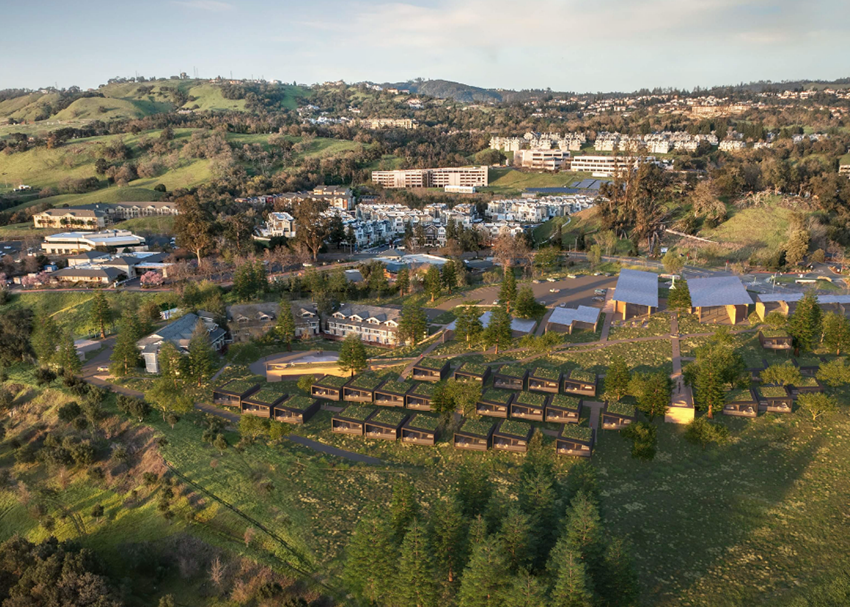
ABOVE: One of the family's properties at golden hour. Yes, it photographs better than your last vacation. No, they won't tell you which suite is best - they'd rather you find out.
It is a Tuesday on Industrial Avenue, and somewhere across the West Coast 988 hotel rooms are being turned over, checked into, and quietly perfected. Radiate Hospitality does not own a skyline. It does not run a thousand-key megaresort. It runs eleven hotels - in Portland, Berkeley, Menlo Park, Santa Cruz, Petaluma, Palo Alto - and it runs them with the unfashionable conviction that hospitality is a relationship, not a transaction.
The company is headquartered in Palo Alto, a town better known for shipping software than making beds. That contrast is the whole story. In a region obsessed with scale, Radiate Hospitality built a portfolio on the opposite premise: do fewer things, do them with people who care, and let the guest feel the difference.
“Passionately creating a sense of belonging.”
The modern hotel industry is very good at efficiency and very bad at memory. Consolidation turned check-in into a queue, lobbies into waiting rooms, and the word “guest” into a row in a revenue spreadsheet. You can stay a hundred nights at a chain and never once feel like anyone noticed.
Radiate Hospitality exists because somebody noticed that nobody was noticing. The premise is almost contrarian: that a hotel's job is to make a stranger feel like they belong, and that this is nearly impossible to do at industrial scale with interchangeable staff. The problem, in other words, isn't real estate. It's distance - between owner and operator, between brand and bed, between the person at the desk and the person who walks in tired.
“Quality over quantity. Relationships over transactions.”
Radiate Hospitality dates to 2005, but its roots reach back to a single family-owned hotel in 1973 - the kind of operation where the family knew the regulars and the regulars knew the family. The bet was simple, and slightly out of step with the times: that this intimacy could survive growth, if you refused to outgrow it on purpose.
Leading the company today is Perry Patel, a partner since 2005 and President & CEO since September 2022. He holds a Master of Management in Hospitality from Cornell and a degree from UC Berkeley - credentials that, charmingly, the company seems to mention less than the fact that every single member of its executive team started in an entry-level hospitality job. No exceptions. The people setting strategy have, at some point, folded the towels.
“Be Authentic. Be Humble. Be Committed.”
The wager that humility scales is a strange one in business, where most companies treat humility as a phase you grow out of. Radiate Hospitality treats it as the operating system. The result is a leadership team with more than 200 years of combined hospitality experience and, apparently, no interest in forgetting where it came from.
The story begins with a single family-owned hotel - the seed of everything that follows, and the source of the company's stubborn intimacy.
The modern company takes shape as BPR Properties, formalizing decades of operating instinct into a real-estate development and management firm.
A rebrand built for the next chapter - new name, same family ethos, a portfolio positioned to grow without losing the plot.
The Cornell-trained, Berkeley-grounded partner steps into the top role, carrying the front-desk-first culture into the company's expansion.
New properties planned for Mountain View, Santa Rosa, and Sunnyvale - growth measured in relationships, not just keys.
What Radiate Hospitality actually does is run buildings full of beds - but that description undersells it the way “a restaurant serves food” undersells dinner. The company develops, renovates, designs, and operates hotels, and it does so across an unusually wide brand spectrum: Marriott's Autograph Collection, IHG's Crowne Plaza, Hilton's Hampton and Homewood lines, plus Best Western and independent flags.
The flagship is the Hi-Lo Hotel in Portland, an Autograph Collection property - the kind of design-forward boutique hotel Marriott reserves for operators it trusts to have taste. Closer to home, the Crowne Plaza Cabana anchors Palo Alto, while Hotel Shattuck Plaza brings century-old character to downtown Berkeley. The through-line isn't a logo. It's a feeling the company insists on regardless of which brand is on the door.
Above: a portfolio that refuses to pick a lane - boutique to budget-plus, Portland to Santa Cruz. The unifying thread is who's running it, not what's on the sign.
Sentiment is easy to claim and hard to scale, so here is the structural evidence. Radiate Hospitality partners with four major hotel brands - the sort of relationships that don't survive on charm alone. Marriott, IHG, Hilton, and Best Western all hand it keys, which is its own quiet endorsement.
Bars scaled to hotel count. The point isn't that 11 is a big number - it's that the company keeps the count low on purpose, and grows it one relationship at a time.
“The executive team has 200+ years of combined experience - and every one of them started by clocking in, not cashing out.”
Most mission statements are written to be framed and then ignored. Radiate Hospitality's is written to be done. “Passionately creating a sense of belonging” is, when you sit with it, an oddly demanding promise - because belonging can't be automated, discounted, or printed on a key card. It has to be produced by a person, on a Tuesday, for a stranger.
That's the company's wager restated as a purpose. The three house rules - authentic, humble, committed - aren't branding. They're the minimum viable conditions for a stranger to feel at home. And the insistence that leaders start at the bottom isn't nostalgia. It's quality control for empathy.
“Since 2005, committed to its team, its community, and making a positive difference.”
Three new hotels are on the way - Mountain View, Santa Rosa, Sunnyvale. Growth is the real test of any philosophy that claims to value intimacy, because intimacy is the first thing that breaks when you scale. The interesting question about Radiate Hospitality isn't whether it can add keys. It's whether it can add keys without adding distance.
So far, the answer has been to grow the way you'd grow a family business that happens to run hotels: slowly, deliberately, and only with people who already fold the towels. In an industry sprinting toward automation and anonymity, that is either quaintly behind the times or quietly ahead of them.
Back on Industrial Avenue, it is still Tuesday, and across the West Coast 988 rooms are still being turned over. The difference is what happens at the desk when you walk in tired - whether you're a line in a spreadsheet or someone who was, however briefly, expected. Radiate Hospitality has spent five decades betting on the second one. The beds are made. The lobby is warm. Someone, somewhere, noticed you came in.
Figures - 11 hotels, 988 rooms, ~510 employees, four brand partners - are drawn from public company sources and third-party business directories and may be approximate. Revenue estimates are unverified third-party figures. Radiate Hospitality was formerly known as BPR Properties; some social handles still carry the old name.