A tuition reimbursement policy makes a small, rather consequential assumption: you have the tuition money. The employer promises to pay you back. First, however, you must find the cash, choose a course, get through the paperwork and arrange a life in which class and work can coexist. For someone on an hourly wage, the generous benefit can arrive with an entrance fee.
Rachel Romer built a company around that awkward little sequence. With Brittany Stich, she co-founded Guild Education in 2015 to connect employers, working adults and education providers. The proposition involved software and contracts, but its appeal was easy to understand. Let the employer and the school sort out the payment. Give the employee some help getting through school.
The idea eventually reached the payrolls of Walmart, Chipotle, Disney and Target. Yet the revealing details of Romer’s story are smaller than those names: a LinkedIn message, a decision to leave the Bay Area, a grandmother’s advice about where to put a crib. Her business began with a question that also runs through her family life. What would the arrangement look like if it made room for the person using it?
A family with education on the menu
Romer grew up in Colorado in a family where education was an ordinary subject of dinner conversation. Her grandfather Roy Romer served as governor and helped establish Western Governors University. Her father, Chris, served in the state senate and co-founded American Honors, which worked with community college students. Public service and education were close enough to watch from the kitchen table.
Her own education took her to Stanford. She earned a bachelor’s degree in political science, followed by graduate degrees in business and education. Before Guild, she worked on Barack Obama’s 2008 campaign and in the White House, and served as CEO of Student Blueprint. She had experience with both the machinery of government and the much smaller machinery of a young business.
Those credentials put her at a considerable distance from the workers she would later serve. A Stanford graduate has already passed through doors that remain difficult for many adults to approach. Guild’s premise required paying attention to the practical barriers outside those doors: money due now, a shift due tomorrow, an application whose questions seem written for somebody else.
Her co-founder brought another perspective. Stich was a first-generation college student and a Teach For America alumna. Their early company joined three constituencies with different needs. Workers wanted useful qualifications. Colleges wanted students. Employers wanted people to join, stay and advance. Finding agreement among all three would become the work.
The burrito connection
An early Chipotle relationship began with something considerably less elaborate than an enterprise sales strategy. Guild contacted someone who had written about the restaurant company’s education program, sending a message through LinkedIn. A conversation became a partnership. Somewhere in the history of corporate procurement, a cold message deserves its own modest plaque.
By 2017, Romer was explaining a model that combined a choice of learning programs with coaching. Employees could explore options ranging from school completion and English classes to college degrees. An adviser helped them decide what suited their circumstances, then checked in as they studied. Signing up was only one of the moments at which somebody might need help.
She also had an answer to an employer’s predictable worry: what if a newly qualified employee left? Some frontline roles were never going to occupy a person’s entire career. Supporting that person for several useful years could still make business sense. An employer could benefit while someone studied, even if the eventual next chapter happened elsewhere.
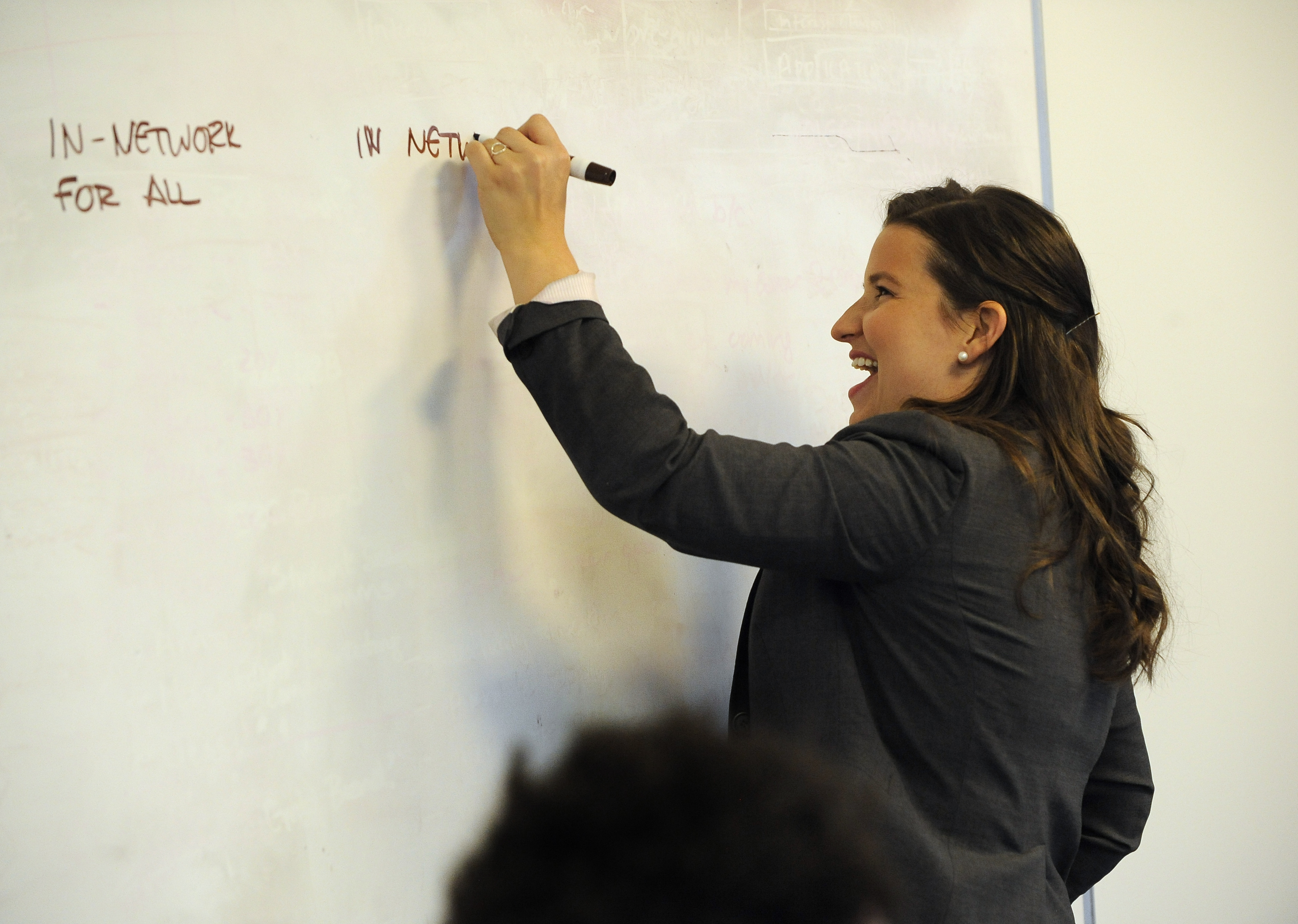
In October 2019, Chipotle expanded its program to cover tuition upfront for 75 types of business and technology degrees through Guild. Eligible crew members were included. The change made the payment question concrete: an employee pursuing one of the covered degrees no longer had to assemble the tuition first and wait for reimbursement later.
One crew member, Brice Widger, described being able to take evening classes while working toward a degree. That detail carries more weight than a glossy promise about ambition. Evening exists on a real clock. A program that fits there has a chance of fitting into a working adult’s week.
Denver, with room for a life
Romer’s choice of a home for Guild followed a similar attention to practicalities. Moving the business from the Bay Area to Denver in 2015 met resistance. She wanted coaches, engineers and product colleagues in the same place, and questioned whether hiring a large coaching team made sense in expensive San Francisco. She also wanted a company in which parents could build careers.
The geography was part of the operating model. Coaches were central to the service, so where they could afford to live mattered to the business. Denver was her hometown, but the argument extended beyond affection. A company selling support to working people needed to think carefully about the working lives of its own staff.
Motherhood gave those considerations a more immediate form. In 2018, Guild closed a $41 million funding round shortly before her twin daughters arrived. She also addressed her staff about parental leave, making clear that her own appearances at the office should not become an expectation for other parents. A founder’s habits can quietly turn into everybody else’s instructions.
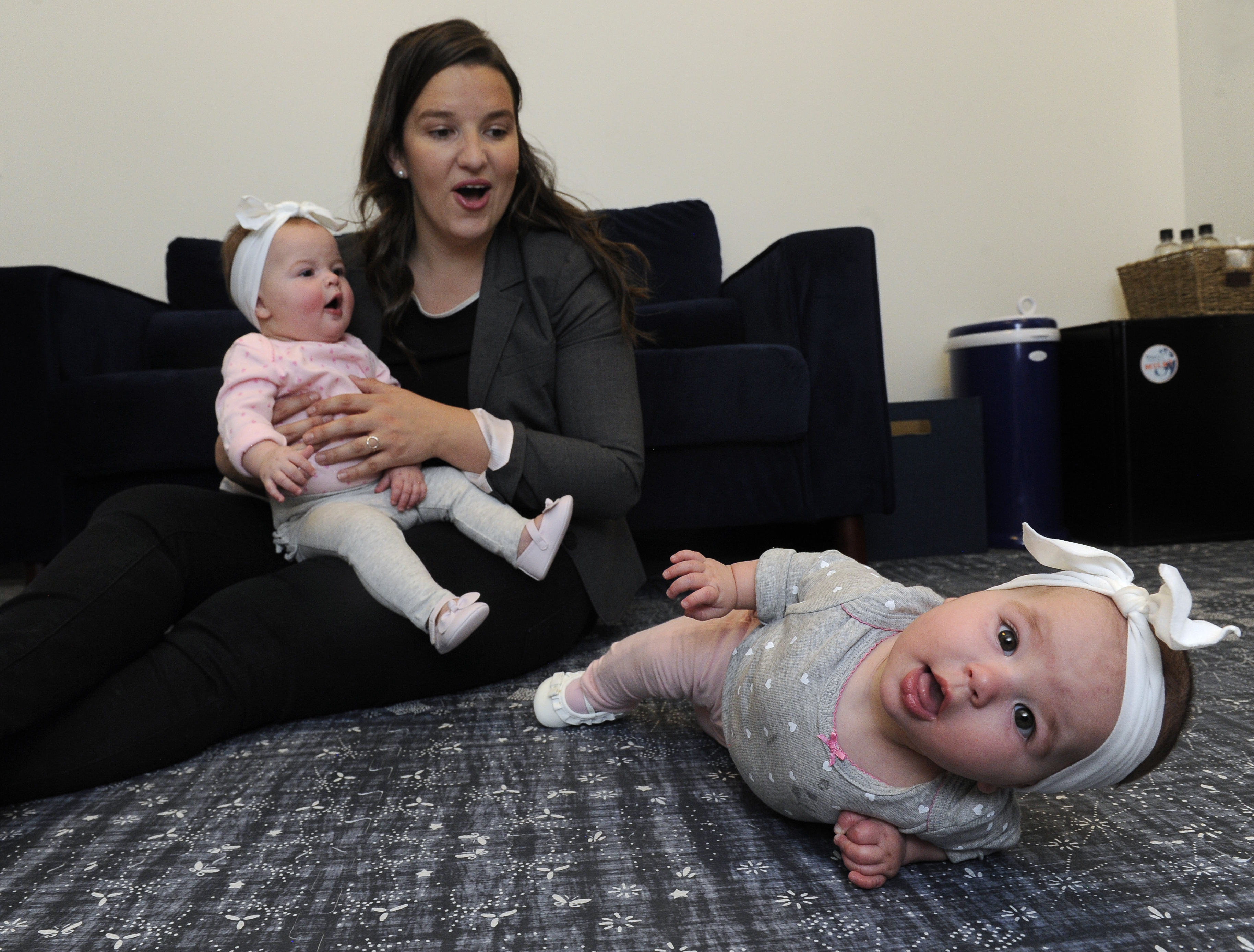
Her grandmother Bea offered a less corporate way to think about combining work and children. Romer recalled asking for advice about managing a growing family alongside a growing business. Bea’s answer was to put a crib wherever she worked. Having run a preschool while raising children herself, she was speaking from practice.
Romer later brainstormed Guild’s workplace preschool with her grandmother. An early placeholder name, the Bea School, developed into the Beehive. It adopted the play-based approach Bea loved. On a visit, her grandmother wanted to explore the toys, blocks, instruments and sand table. The family connection had become a physical place, complete with things to knock over.
When the idea reached the payroll
The scale changed quickly. Guild reached a billion-dollar valuation in 2019. In June 2022, it announced a $175 million Series F round led by Wellington Management. A company once introducing itself to employers through messages was now raising capital to expand across industries. The underlying proposition still depended on persuading businesses to invest in the people already working for them.
Walmart’s July 2021 announcement showed what that could mean. Its Live Better U program would cover all tuition and book costs for participating associates, removing the earlier dollar-a-day charge. The announced reach was approximately 1.5 million U.S. Walmart and Sam’s Club associates. That figure described access to the benefit, rather than the number enrolled.
Walmart also supplied a different pair of numbers: more than 52,000 associates had participated since the program launched in 2018, and 8,000 had graduated by the announcement. Keeping those measures separate matters. Eligibility describes an open door. Participation means somebody has walked through. Graduation records a later achievement, after the shifts, assignments and ordinary interruptions.
Target followed with its own announcement in August 2021. Working with Guild, it planned an education benefit for more than 340,000 frontline employees, with eligibility from the first day of employment. Its initial offering included 250 business-aligned programs from more than 40 institutions, with selected undergraduate courses and other qualifications covered without out-of-pocket costs.
The particulars were the point: books, fees, eligibility dates and which courses counted. Romer’s work had brought those particulars into conversations about recruitment and retention. A benefit could have a stirring name and still fail at the first invoice. The useful questions were often the dull ones.
A career beyond the first course
Romer kept widening the question from education to opportunity. At Guild’s 2022 Opportunity Summit, she discussed workers’ interest in moving into new roles, often within the company that already employed them. A course needed somewhere to lead. Employers had to think about pathways as well as catalogs.
That interest also ran through Opportunity Divide, the podcast she hosted. Its opening episode brought in organizational psychologist Adam Grant to discuss the distance between talent and access. Romer put her aspiration plainly:
“We want a world where opportunity is as abundant as talent.”Rachel Romer · Opportunity Divide
By April 2024, Bijal Shah had become Guild’s CEO. Romer remains listed by the company as co-founder and board member, alongside directors including Ken Chenault, Byron Deeter and Annie Kadavy. The distinction matters in a founder’s profile: the business now has another chief executive, while the person who helped start it continues at board level.
In May 2025, Romer marked Guild’s tenth anniversary and her Stanford business-school reunion in a public post. She thanked colleagues who continued to lead and nurture the company. A decade after founding, her account of the milestone made room for the many people involved in keeping the enterprise going.
Her story returns, finally, to that first invoice. Tuition reimbursement sounds generous until someone needs money they do not have. A workplace can welcome parents until a founder’s example makes leave feel risky. Romer has spent much of her career working on the space between an offer and its use. Sometimes that requires a payment system. Sometimes a coach. And, in her grandmother’s version, sometimes a place to put the crib.