The business had acquired a website and business cards before its founders quite registered what had happened. Rachel Mays Ayotte was freelancing in Los Angeles. Her friend Meredith Vachon was doing the same in Austin. Then came Vachon’s text, acknowledging the obvious: they had started a company. Entrepreneurship sometimes arrives wearing a lanyard. This time, it appears to have arrived with the stationery.
That company was bread & Butter, founded in 2007. Its early circumstances were modest: two living rooms, two publicists and a little more than $1,000. The idea that would give the business its shape was equally understandable. Hospitality depended on knowing people and places. A communications agency could organize itself around that knowledge.
Ayotte’s subsequent career offers an interesting way to think about size. A business can become larger while trying to make the distance between itself and its customers smaller. For bread & Butter, that meant building teams in different cities. Later, it would mean adding capabilities and creating a publication. Each move changed where the conversation could happen.
Two living rooms, one business
Ayotte and Vachon had met at Wagstaff Worldwide in Los Angeles in 2004. Both were Southerners; both owned Chihuahuas. Friendship had several available starting points. Their professional affinity mattered too. They shared a dissatisfaction with formulaic public relations and wanted to work with a more personal approach.
Vachon later described their ambition as an agency whose conduct reflected hospitality. The publicist should listen, use judgment and make the relationship feel human. Anyone who has received a pitch that could have been addressed to several thousand other people will appreciate the appeal. Personal attention sounds inexpensive until someone actually has to provide it.
The partnership gave them someone with whom to make those choices. Starting a business brings an abundance of advice, much of it offered by people spared the task of following it. Ayotte valued having a partner who understood the daily work. There is a particular usefulness to a colleague who knows why a seemingly small problem has occupied the entire morning.
Vachon’s move to Austin also placed the partners in different restaurant economies. In 2013, she recalled sensing that Austin’s food scene was about to change. Publicity was becoming a more familiar consideration for restaurants there, amid growing competition and the influence of food television and celebrity chefs. A publicist could help a place explain why it deserved a visit.
That is a wonderfully concrete assignment. Beyond the meeting, the announcement and the coverage sits an empty chair that somebody hopes to fill. Hospitality gives communications a destination. An idea has to travel far enough to become an evening out.
A company measured in cities
By October 2013, bread & Butter had six offices, 25 staff and more than 50 clients. Its locations included Los Angeles, San Francisco, New York and three Texas cities. Las Vegas was planned next. The co-founders preferred hiring people who understood a local market to repeatedly flying in publicists from headquarters.
It was a choice with costs on both sides. More offices meant more overhead; local presence could mean less travel. More subtly, it made familiarity part of the service. A city is an accumulation of habits, reputations and conversations. Some of that can be researched. Some is acquired by continuing to show up.
Consider the difference between arriving for an opening and knowing what preceded it. A local publicist has a chance to understand the surrounding businesses, the people who write about them and the guests they hope to reach. The value lies in context. Even a very good announcement has to land somewhere.
The distributed idea remains visible in the agency’s current description of itself. It pairs a central group of specialists with people who know local markets. Its listed locations stretch from Portland and San Diego to New York and Washington, D.C., with Charleston, Newport, Park City and other cities in between.
Ayotte’s own public profile now places her in Charleston. Her company’s work travels further. The 2024 business included relationships with Whole Foods Market, Wynn Las Vegas, Pret a Manger and Badrutt’s Palace, the hotel in Switzerland. The mix makes the task clear: understand the particular place while helping its story move beyond the neighborhood.
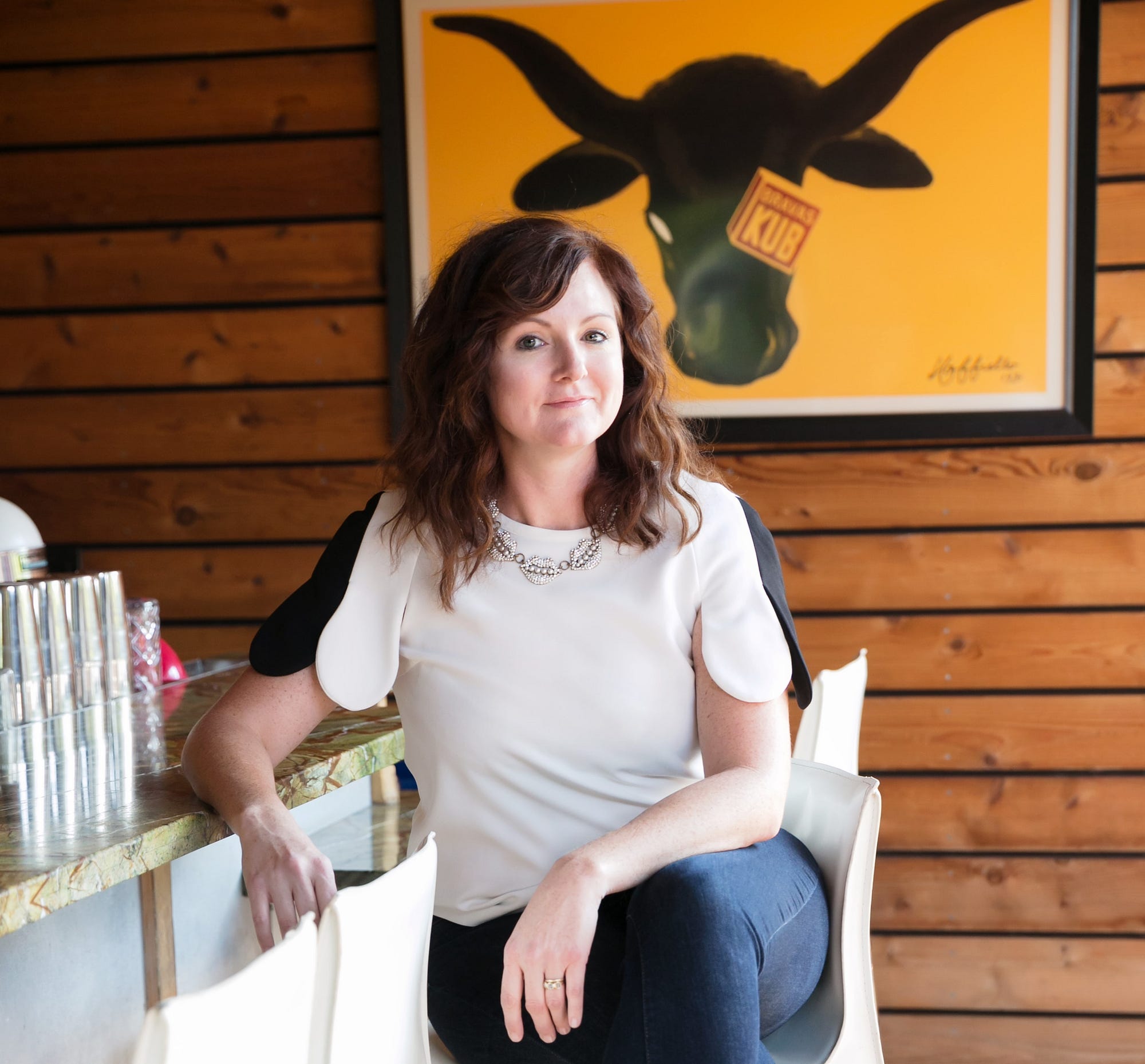
The invitation has to travel
Before the agency, Ayotte had worked in fashion and art galleries. Restaurant work gave her a route into publicity. At Union Square Cafe, a weekly open interview led to an assistant position with the chef, and work helping promote a cookbook and Danny Meyer’s forthcoming Blue Smoke. She discovered a profession close to two pleasures she already understood: eating and talking.
Those pleasures make a cheerful beginning, but running an agency requires less decorative decisions. What does a client need? Which audience matters? How will anyone know whether the work helped? A communications business has to turn curiosity into a service somebody can use.
In 2024, bread & Butter’s range of assignments included restaurant and hotel openings, a cookbook launch and event work. Its leadership included president Jennifer Cornet and chief digital officer Samantha Markiewicz alongside Ayotte. At that stage, the collective was described as more than 80 employees across 20 locations. The living-room business had become a team with several kinds of expertise.
The agency’s present services include public relations, social media, digital and email marketing, websites, photography, creative work and brand partnerships. For a guest, these activities can be different encounters with the same place. A photograph prompts interest. A website answers a question. A recommendation supplies a reason to go.
One assignment brought together Lady M Confections, Netflix and Pearl Studio around the animated film Over the Moon. Lady M created a mooncake lantern. Ayotte’s team shared the partnership and samples with media and creators. She reported more than 1.7 million impressions and 19,804 social engagements, together with an increase in sales.
Campaign results reported by Ayotte. Attention and engagement are separate measures; neither number represents purchases.
The lantern gave the collaboration a physical form. It could be photographed, received and shared. There is a small lesson in the object: a partnership becomes easier to understand when its audience can see what the partners made together. A dessert also has the useful advantage of being dessert.
Ayotte has stressed the practical details that help turn interest into a visit: accessible restaurant websites, current information, menus, hours and reservations. These are humble requirements. They are also the point at which a promising evening can collapse into a search for somewhere else. Good manners online include telling people when the kitchen is open.
A publicist makes room for readers
Late Checkout gives Ayotte another place to put her curiosity. The publication grew from a LinkedIn feature shaped by Markiewicz into a newsletter and standalone website. Its subjects include food, drink, travel, design and culture. The project gives a communications team an editorial destination of its own.
The name borrows a familiar request from hotel life: a little more time before leaving. Its promise is similarly accommodating. Readers can find city guides, restaurant and hotel ideas, design inspiration and packing suggestions. Side Dish supplies a weekly roundup. The invitation is to remain informed without turning leisure into a research assignment.
Behind that lightness is a different working relationship with attention. A publicist proposes a story and waits for another organization to decide whether to run it. A publisher has to make the selection, offer it to readers and persuade them to return. The freedom comes with a fresh obligation: the next edition must deserve its place in someone’s day.
“I hate waiting.”
Rachel Ayotte, on trying new approaches
The phrase suits this particular career move. She has built a business helping clients reach audiences, then helped create somewhere an audience can gather directly. The sequence follows an appetite for a closer relationship with the people at the other end of the message.
There is room for amusement in that relationship. Ayotte’s LinkedIn activity includes a self-description as “Chief Snack Officer” and delight in a Charleston client’s golden retriever gathering. Hospitality makes space for small occasions that would seem rather excessive in a quarterly presentation. Sometimes people simply enjoy being invited somewhere with dogs.
Her first podcast appearance, on The Cheap Seats in November 2023, looked back at the path from an apartment living room to an agency operating across more than 20 locations. By her October 2025 conversation about Late Checkout, the story had acquired another room: a publication for readers deciding what to notice next.
The geography and the formats have changed. The underlying work still asks for attention to a particular person: the client with a story, the reader with a few spare minutes, the guest considering a table. Ayotte’s business began at home and spread across a map. Its usefulness continues to depend on what happens when the distance closes.