The first developer did not work out. In a 2020 client account, Catalina Seven Ventures described hiring Protonshub Technologies after months of slow progress on a mobile application. The initial assignment fell short. Tushar, the team lead, replaced the developer with a senior engineer. For a company selling technical competence, it is an unexpectedly useful opening scene.
- Custom software, mobile apps, and developers for hire.
- A delivery business built around other companies’ products.
- The buying question: how does the team respond when the work stalls?
Software procurement usually begins with a portfolio. Here is an attractive screen. Here is a recognizable customer. Here is a list of frameworks long enough to occupy a small restaurant menu. The Catalina account suggests another starting point: watch the handoff after something disappoints. That is where a service business begins to reveal its operating habits.
A beta needed to get out the door
Catalina was developing a planner-like application with an unusual graphical interface. A beta release would let it gather feedback and meet investor conditions for further funding. It already had user stories and wireframes. Protonshub joined an existing React Native effort rather than inventing the product from scratch. The client needed execution against a reasonably concrete brief.
The founder reported that the replacement engineer completed a difficult task in under two weeks. The engagement, listed at less than $10,000, ran from March to June 2020. One review cannot predict another customer’s outcome. It does, however, describe a mechanism: identify the mismatch, change the assignment, and judge the replacement by completed work.
“I was most impressed by the operational flexibility of Protonshub Technologies.”Founder & CEO, Catalina Seven Ventures · 2020 client review
The factory behind the interface
Founded in 2018, Protonshub operates in the crowded market for outsourced software development. Rakshit Khandelwal leads it as CEO, Tushar Pal as president, and Sachin Mishra as COO. Its public footprint connects Indore with Mountain View and other international operations. The basic transaction is familiar: a business needs software, and Protonshub supplies people and delivery services.

A startup can hire it to develop a first product. An established company can commission an application, redesign an interface, or add developers to an existing team. Its services extend through consulting, integration, testing, and maintenance. That range matters because software projects have awkward seams: the designer leaves, the developer interprets, the maintenance team inherits. Each seam creates another opportunity for intent to disappear.
The website lists React Native, Flutter, Ruby on Rails, Python, and Node.js among its technologies. Current positioning also emphasizes AI and blockchain work. These capabilities widen the service menu; buyers should still ask which named engineers have delivered the particular kind of system they need. A company’s vocabulary and an assigned team’s experience are different things to evaluate.
Regional language becomes an engineering problem
Consider Stage, the regional entertainment platform featured in Protonshub’s own case study. The brief concerned audiences in Haryana and Rajasthan, including people with limited technical experience. The company describes a ten-month development effort using Figma, React Native, and Ruby on Rails. Its account identifies server synchronization, ease of use, and cultural relevance as challenges.
The response included collaboration with local experts and features for discovering, watching, and downloading content. This is an instructive detail. Localization reaches beyond translating labels. It affects what people recognize, which choices make sense, and whether a screen feels inviting. The case study describes Protonshub’s contribution; the broader interpretation is that understanding an audience can shape engineering decisions as much as choosing a framework.
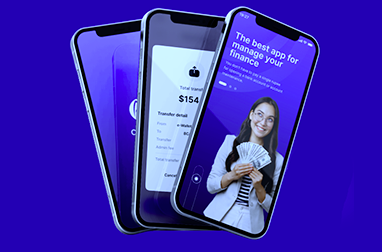
The portfolio also showcases CoinPro, a digital payments concept, and 2Nite, a ticket-booking app. Alongside the company’s published client names, including Colgate, Mahindra, and Manyavar, these examples place Protonshub across consumer interfaces and business technology. A portfolio image establishes what an agency chooses to show. Buyers still need to ask about the scope of its involvement.
What the badge buys
Protonshub puts CMMI Level 5 into its public identity. It announced that appraisal in October 2021. The CMMI Institute describes Level 5 around continuous improvement and the capacity to respond to change. The useful distinction is that maturity concerns organizational processes. It does not settle whether your proposed app has an audience or whether a particular interface is good.
For a buyer, that makes the badge a prompt for questions. How are estimates revised? Who reviews defects? When does the team escalate a staffing problem? What changes after a missed milestone? The Catalina story is valuable because it describes one such change. The company’s stated mission, to digitally enable 500 businesses by 2030, makes repeatable delivery a central concern.
The invoice is only the opening number
Protonshub’s Clutch listing advertises a $5,000 minimum project size and hourly rates of $25 to $49. Those are purchasing signals, not a completed budget. Discovery, integrations, revisions, testing, and support can change the scope. An inexpensive hour that leaves the release stuck is a different purchase from an hour that removes the obstruction.
The transferable lesson is practical: arrive with user stories, define a small piece of demonstrable work, and agree who can change the staffing. Review progress through a working product. This arrangement depends on a client willing to make decisions and provide feedback. If a standard storefront already meets the need, a custom build may add unnecessary work. If requirements stay unresolved, additional engineers cannot resolve the underlying product choice.
That leaves Protonshub in a recognizable position: an engineering partner for businesses that need software built and supported, with process maturity as part of its pitch. The interesting test comes after the proposal. Ask what happens when the first attempt misses. Then ask to see the next attempt.