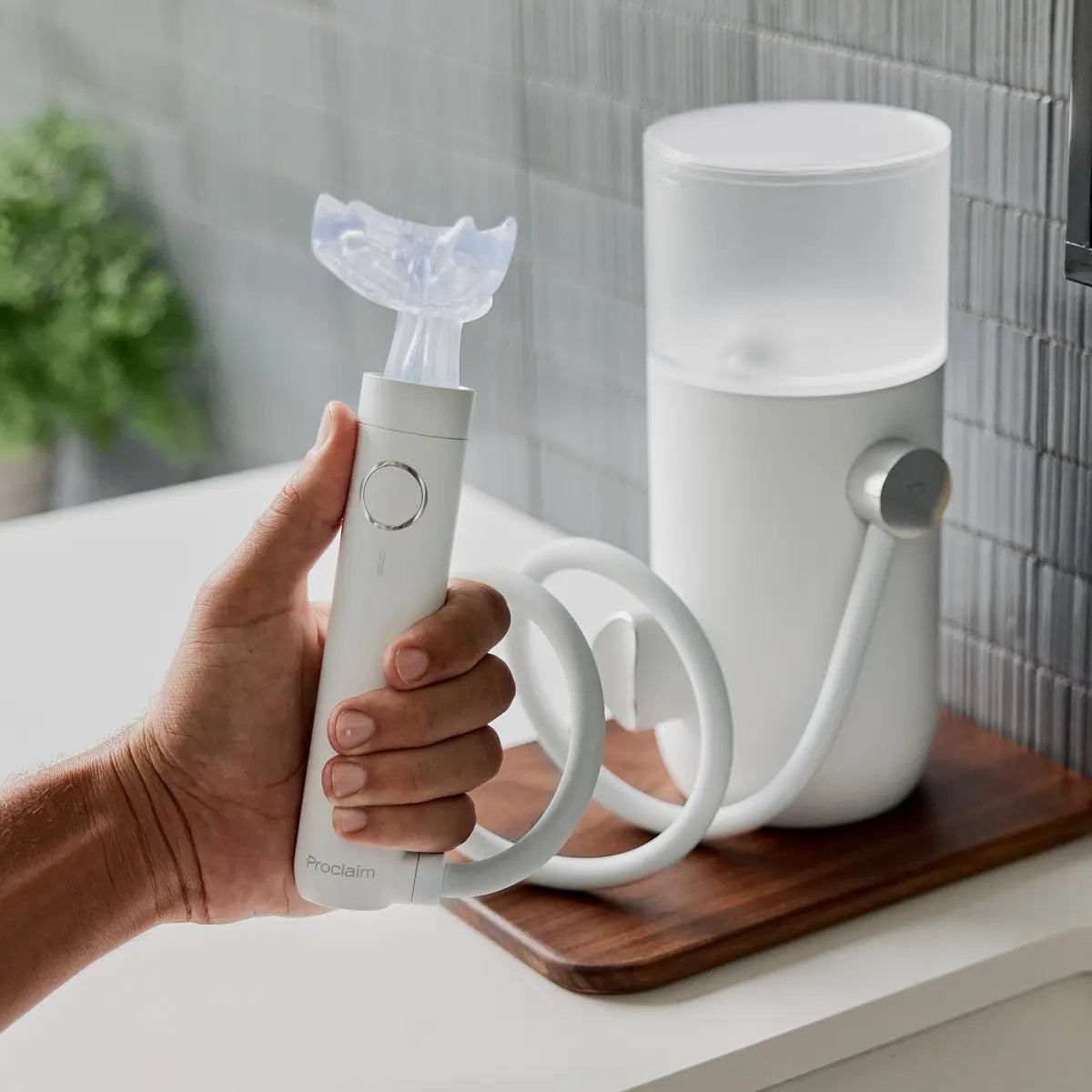
The toothbrush has a reliable place by the sink. Floss has a more complicated relationship with the bathroom cabinet. It asks for two hands, patience and a willingness to repeat a fiddly task tomorrow. Proclaim, the oral-health company operated by Fresh Health Inc., decided to move the fiddly part earlier in the process. Have a professional scan your mouth once. Let software and a 3D printer make a mouthpiece just for you. Then press a button.
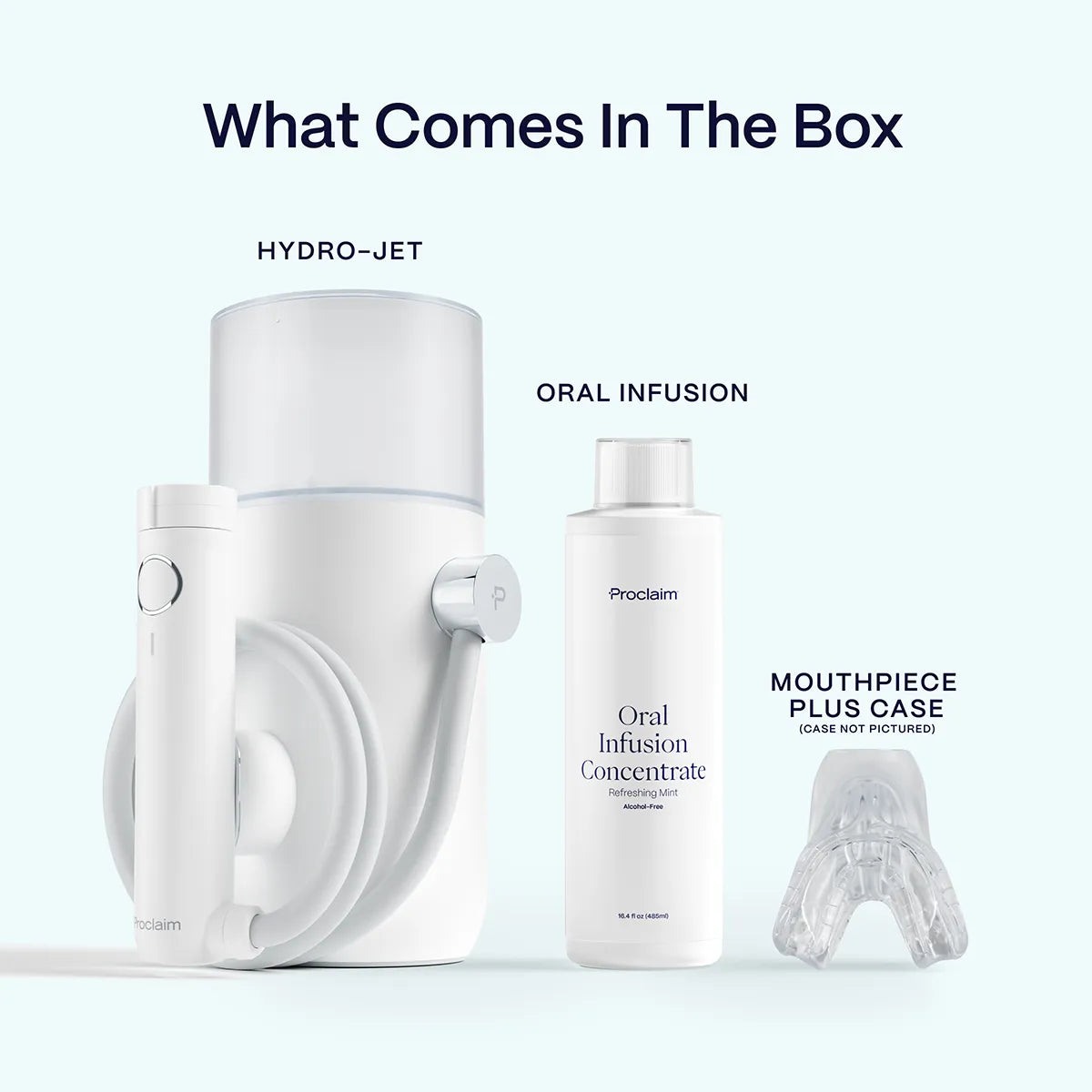
The resulting Custom-Jet Oral Health System sends water through as many as 60 jets positioned for a particular set of teeth and gums. The active cycle lasts seven seconds. It is a neat consumer pitch, but the more revealing part of Proclaim's story came afterward. In August 2026, the company launched a program that pairs daily cleaning with salivary testing, retesting and adjustments. A gadget meant to shorten a chore had become one piece of a longer care loop.
In a minute
- Proclaim sells a custom-fit oral irrigator for at-home cleaning alongside normal brushing.
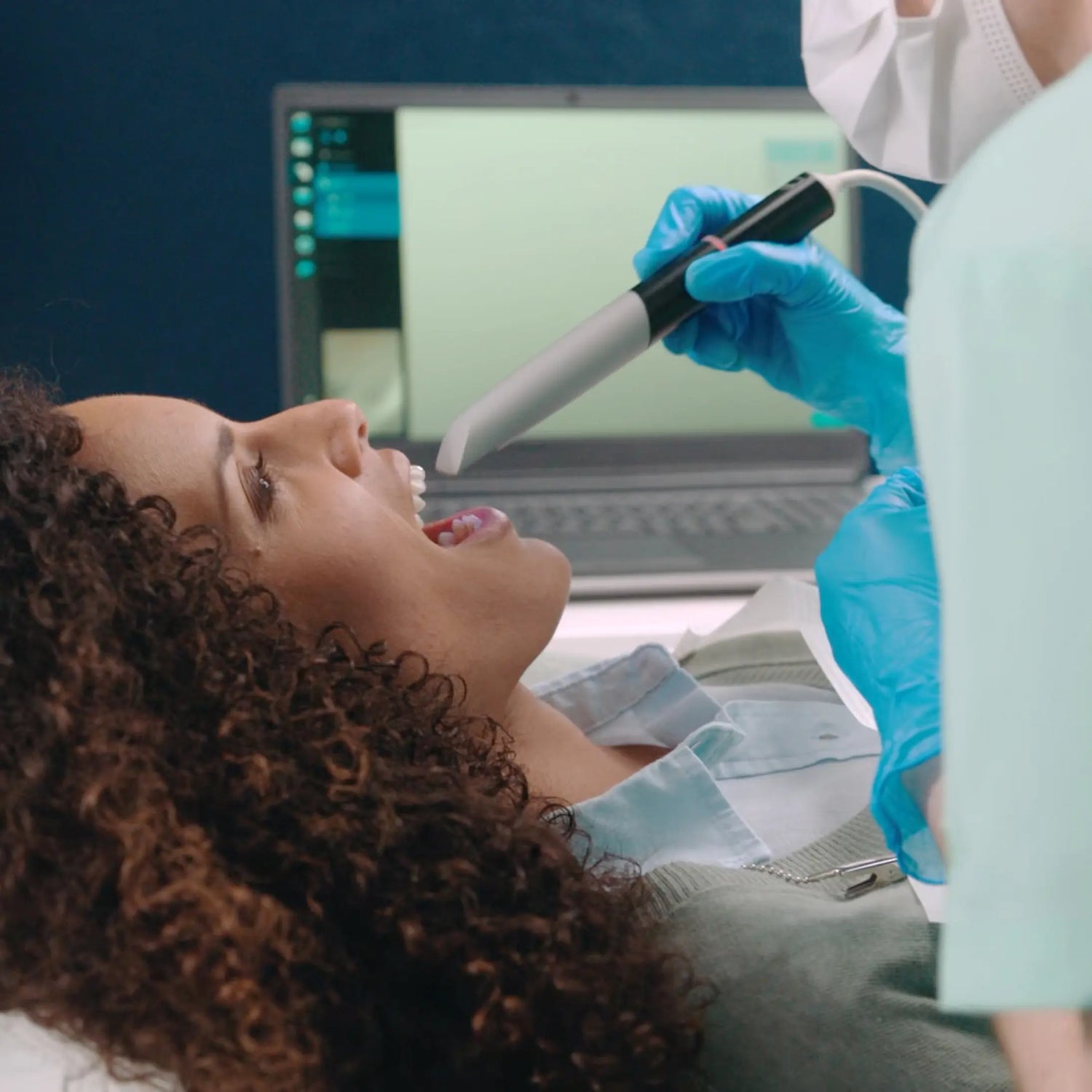
- A dental partner takes a roughly 20-minute intraoral scan; a tailored mouthpiece arrives later.
- A 192-person, 30-day trial measured better gum-health outcomes with brushing plus the device.
- The newer Perio Pathway adds pathogen testing and follow-up through providers.
The seven seconds cost about twenty minutes
The daily routine is short because the setup is unusually specific. Proclaim says a scanning partner uses a light-based intraoral scanner to capture a 3D model; the appointment takes about 20 minutes. It does not accept a home impression kit or an old scan made for another dental treatment. Technicians then position the water jets in a mouthpiece designed for that person's anatomy. The base station supplies the water, and the custom piece directs it between teeth and below the gumline.
This is the useful distinction from a conventional water flosser. A standard handheld nozzle depends on the user's aim and time. Proclaim tries to encode the aim into the hardware. Its design partner Certain Measures describes building a software configurator that combines dental geometry, fluid paths and fabrication constraints so individually shaped devices can be produced at scale. It is an industrial answer to a very domestic problem: the small spaces are different in every mouth.
The device was not tested as a replacement for brushing. In the randomized, examiner-blinded study published in Compendium in 2023, all 192 participants brushed twice daily. One group added Proclaim, another added string floss, and a third brushed alone. After 30 days, the Proclaim group had better measured gingivitis, bleeding, plaque and pocket-depth results than the comparison groups. That is meaningful evidence for gum care over a month. It does not, on its own, show that seven seconds prevents heart disease, dementia or other systemic conditions.
“Home is where most health decisions get made ... the space between dental visits ... has almost no clinically validated interventions in it.”Mariya Filipova, CEO, on Proclaim's website
The customer buys a routine, then a network
Proclaim's first commercial path was direct to the consumer, with dental practices handling the scan. The company took preorders in late 2023 and began shipping in early 2024. At launch, reports put the planned price at $899 and the introductory price at $799. By the end of 2024 Proclaim had cut the system price to $599. Its February 2025 announcement said it had sold thousands of units and worked with more than 700 dental practices nationwide.
That price cut is worth more attention than another brochure full of water droplets. A customized device needs a paid production process and a nearby scanning partner before anyone uses it. The company cannot simply promise convenience; it must make acquisition and setup convenient too. The online shop also sells additional personalized mouthpieces for $399 and an oral infusion concentrate. Different family members can share one hydro station, provided each has a separate fitted mouthpiece. The model blends a consumer hardware purchase, accessory sales and a professional service network.
Founder Mike Hanuschick had worked in product development at Intuitive Surgical. Former CEO Heberto Calves said Hanuschick's interest in the link between oral and general health grew from his grandmother's health issues. That origin led the team toward a device, but the conditions of sale taught a broader lesson. An effective mouthpiece matters only if people can get scanned, afford it and keep using it. In 2025, Proclaim added former Philips Personal Health chief Egbert van Acht to its board and announced fresh capital from existing and new backers. The amount of that financing was not disclosed. Its earlier $15 million Series B in 2023 helped fund the commercial launch.
From a clean mouth to a feedback loop
The 2026 Perio Pathway extends Proclaim's original logic. OralDNA Labs provides salivary testing that identifies and quantifies periodontal pathogens. A clinician can use the test, recommend an at-home protocol, retest and adjust. Proclaim's launch announcement named Delta Dental of Colorado and HPU Health, High Point University's dental clinic network, as founding partners. It described availability through more than 10,000 provider partners. The company now presents itself to practices and health plans as an oral-systemic platform, not merely a bathroom appliance.
The logic is attractive: the dental office sees a snapshot, while most cleaning happens elsewhere. Testing before and after could give clinicians more than a patient's recollection of flossing. Yet the new pathway is an announced program, and public material does not establish that it lowers medical claims or prevents systemic disease. Proclaim's site presents figures for gum inflammation and health-plan return on investment; those are company-reported platform figures, separate from the published 30-day device trial. Keeping the two kinds of evidence apart makes the company's real progress easier to judge.
It also shows where the business now sits. Waterpik and string floss compete for minutes at the sink. Proclaim competes there too, but its customized scan, fabrication workflow and provider relationships make it closer to a small piece of dental infrastructure. For a person who already has easy access to a scanner and is willing to pay for a fitted device, automation could remove some of the daily technique burden. For someone without a partner practice nearby, or whose budget favors a simple floss pick, the same design adds friction before the first use.
What the rest of healthcare can borrow
Proclaim's most portable idea is not the seven-second number. It is the decision to spend expert attention once so an ordinary person has less to remember each day. A scan captures the hard geometry. Software turns it into a fitted tool. The user gets a one-button routine. The clinician gets a chance to check whether the routine changed anything. Preventive care often asks people to become unusually diligent; this model asks the product and the care team to carry more of that work.
That bargain still has to earn its way through price, access and durable outcomes. A month's improvement in gum measures is a start, and the August 2026 pathway is a new experiment in measuring what comes next. In the meantime, Proclaim has made a wonderfully precise observation about human nature: if a task is awkward enough to skip, redesigning the task may do more than repeating the lecture.