For nine years, ProbablyMonsters had one of the games industry's most expensive invisible products: a theory. The theory said that veteran developers could escape the hire-crunch-ship-layoff cycle if several autonomous studios shared one corporate backbone. Finance, recruiting, security and technology would live in the middle. Creative teams would get room to build original AAA games. Publishers would finance the enormous journey to market.
It was a smart-looking machine with one loose cable. The publishers were outside the building.
Harold Ryan, the former Bungie CEO associated with Halo and Destiny, founded ProbablyMonsters in 2016 around a people-first promise. The company assembled Firewalk, Cauldron, Battle Barge and other teams, staffed them with experienced developers, and raised a Series A that closed at $250 million. In game development, where a project can consume a small city's payroll before a player touches it, capital was not a trophy. It was oxygen.
The company was an operating system for studios
ProbablyMonsters did not begin as a conventional developer with one game and a sequel penciled behind it. Its product was the environment around game makers. Internal studios would hold their own identities and creative leadership while the parent supplied the unglamorous machinery. The pitch to developers was stability and respect. The pitch to publishers was a ready-built, veteran-led team capable of making original large-scale games without the publisher assembling that team itself.
The customer picture therefore had two layers. External publishing partners were the business customers financing AAA production. Players were the eventual customers buying and inhabiting the games. ProbablyMonsters sat between them, translating capital into teams and teams into intellectual property.
That structure distinguished it from a single-title startup and from a work-for-hire shop. It also created a peculiar risk. Each internal team could have its own creative identity, but each large project still needed a publisher with the budget, distribution muscle and appetite to support a long development cycle after launch. Centralizing services reduced duplicated overhead. It did not shrink the check required to finish a AAA game.
What failed first
The first public crack was not a disastrous launch. It was the absence of one. In June 2023, ProbablyMonsters confirmed it had stopped an unannounced project at Cauldron, an adventure-game team led by veteran art director Dave Matthews. The company said it would evaluate options for affected employees. The cancellation mattered because Cauldron was supposed to demonstrate the original model, not become its first visible casualty.
Firewalk briefly offered the cleaner ending. Formed inside ProbablyMonsters in 2018, the multiplayer studio secured a PlayStation publishing partnership in 2021. Sony agreed to acquire Firewalk in 2023 for an undisclosed price. For ProbablyMonsters, that was a validation of incubation: build a strong studio, find the best route to market, and hand it to a platform owner prepared to fund the journey.
The epilogue was ugly, though it happened after the sale. Firewalk's Concord launched in 2024, was pulled within weeks, and Sony closed the studio. Concord was no longer ProbablyMonsters' game or balance-sheet risk, but the outcome cast a long shadow over the era's faith in giant live-service bets.
Inside ProbablyMonsters, the trouble continued. Battle Barge's Project Vance was canceled in October 2024 and roughly 50 people were laid off. Reporting later described more paused projects and disputed the company's neat description of its subsequent pivot. Former employees alleged that Storm Lancers reused work from Vance and was substantially completed with external developer Companion Group. ProbablyMonsters said the release reflected contributions from many teams and that past and present employees were acknowledged.
“I believe game developers deserve stability and respect, but our business model has to be sustainable, or it's not a job.”Harold Ryan, CEO and founder
What changed their mind
The blunt answer is money, but the useful answer is dependency. Ryan has said the canceled games were built at a scale that required external AAA publishers to carry them from vertical slice to launch and ongoing support. As publishers reduced third-party deals and consolidation removed independent buyers, offers no longer supported the same plan. ProbablyMonsters had raised an enormous round, yet management concluded it could not responsibly self-finance those projects all the way to market.
So the company changed the unit of planning. Instead of treating every team as a long-range AAA moonshot, it divided the portfolio into short-, mid- and long-term games. Short projects could target a clear audience with current tools and reach a holiday window. Mid-term games could make deeper narrative or technical bets. Long-term projects could absorb research and future technology. The point was cadence: some games could earn revenue and produce market feedback while larger bets matured.
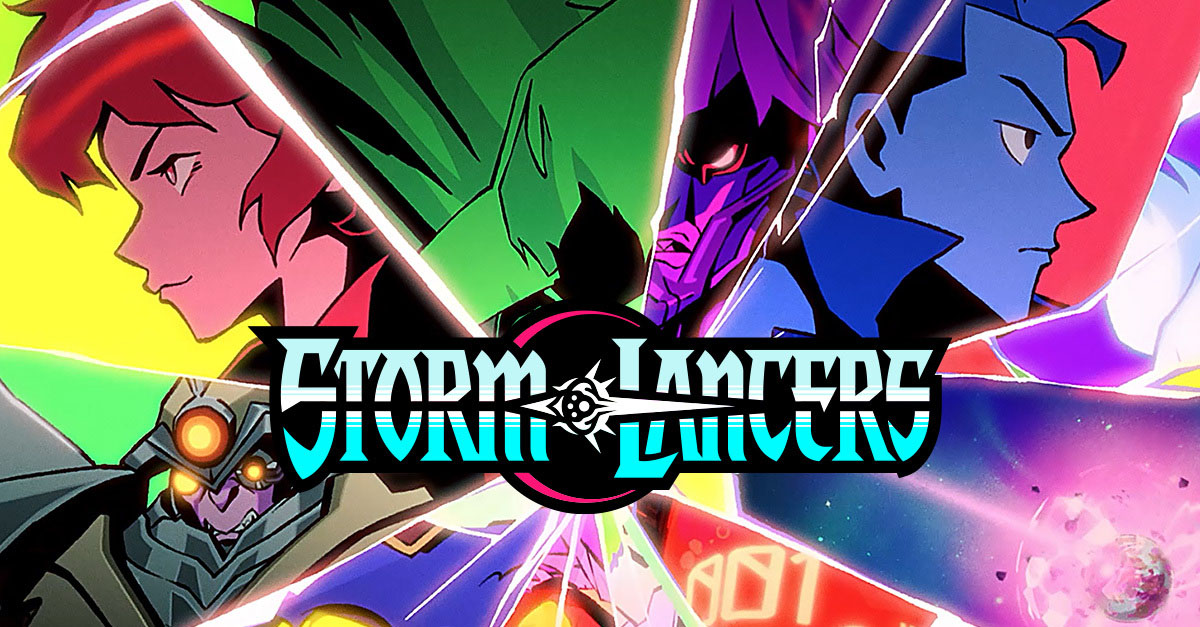
The first visible results arrived in 2025. Ire: A Prologue is a first-person psychological horror game about a teenager searching for her father aboard a lost ship in the Bermuda Triangle. A stalking monster and 13 locked doors turn the ship into a time-loop puzzle box. Storm Lancers is nearly its tonal opposite: a bright, fast two-player roguelite with couch co-op, alien magic and the friendly treachery of stealing a rare drop from your partner. Both launched as $19.99 premium games.
These were not miniature versions of the original AAA promise. They were focused products for specific audiences. Players could buy a complete experience. ProbablyMonsters could publish directly through Nintendo, Steam and Epic. Teams could learn from a live market rather than an internal milestone presentation.
The second act gets bigger
The next two games test whether the portfolio is a repeatable system rather than an emergency maneuver. Crimson Moon, scheduled for September 1, 2026, is a Gothic action-adventure RPG for PC, PlayStation 5 and Xbox Series X|S. Players become a Nephilim, a half-human and half-angel warrior, and fight through the fallen city of Gildenarch alone or in optional two-player co-op. Replayable runs, character progression and souls-inspired melee make it a larger commercial swing than the 2025 debuts.
Nekome: Nazi Hunter, slated for early 2027, narrows the lens again. It is a single-player third-person action game about Vano Nastasu, a young Romani man seeking revenge after Nazi soldiers murder his family. The design emphasizes environmental weapons, traps, stealth and close combat. Jeronimo Barrera, a longtime Rockstar executive now serving as ProbablyMonsters' general manager, brings experience from Grand Theft Auto and Red Dead Redemption to the project.
The catalog now looks deliberately irregular: colorful co-op roguelite, nautical psychological horror, Gothic cooperative RPG, historical revenge thriller. This is not franchise concentration. It is risk distribution by audience, genre, duration and platform. ProbablyMonsters earns money from premium game sales and now owns more of the publishing relationship. The tradeoff is familiar to every independent publisher: more upside, more marketing responsibility and no external partner to absorb a miss.
What another founder can copy
The useful parts are surprisingly portable. Separate creative teams from shared infrastructure. A small studio should not invent payroll, security, build systems and release management every time it begins a game. Give projects distinct audiences instead of demanding universal appeal. Run work on different clocks so the entire company is not waiting five years for one reveal. Most of all, design a pivot path before the original financing plan disappears.
Share the boring parts
Centralize operations that do not make one game creatively unique. The savings come from focus as much as headcount.
Name the audience
A focused $19.99 game can satisfy its market without pretending to be the next universal entertainment platform.
Use three clocks
Balance short releases, mid-term experiments and long research bets. Revenue and learning should not share one deadline.
Preserve exit ramps
If a publisher vanishes, scope must be able to change without turning years of work into an unusable asset.
There are hard conditions. Shared services do not work if the center becomes a slow approval layer. Short cycles do not work when “small” games quietly inherit four years of sunk assets, technical debt or organizational conflict. A broad portfolio does not work without enough publishing skill to position several unrelated games. And a people-first promise does not survive on benefits language alone; cancellations, credits and communication are where employees judge it.
ProbablyMonsters remains a live experiment, not a tidy redemption story. Its 2025 games proved it could ship. Crimson Moon will test whether it can move up in scale without recreating the same dependence that broke the first model. Nekome will test whether a focused narrative game can stand apart in a crowded action market. The company has exchanged one majestic theory for four very concrete products. In games, that may be the healthier kind of ambition: something a player can click, buy and argue about.