Consider the payment terminal beside a restaurant’s cash register. You encounter it for perhaps ten seconds. Tap, wait, collect the receipt. But someone had to decide which device belonged there, prepare it for the right payment environment, put the right things in the box and arrange what happens when it stops working. POS Portal has made a business of that longer, less visible transaction.
- The customer: companies supplying payment technology to merchants.
- The job: get configured devices into service, then support their return or replacement.
- The business lesson: the steps around a product can become a product of their own.
It is an unglamorous place to look for a technology story. That is part of its appeal. While a merchant wants a working checkout, the businesses supplying it must coordinate hardware, software, security and delivery. POS Portal occupies the space where those responsibilities meet. Its usefulness depends on how much of that coordination a partner wants to hand over.
A sticker on the terminal
One early example involved something considerably less sophisticated than an API: a sticker. In 2001, trade publication The Green Sheet described POSBuy, a POS Portal program that let merchants order supplies while their resellers received monthly residual payments. Terminal stickers carried the reseller’s identity and directed merchants to the ordering service. More than 40 independent bankcard resellers joined during the program’s first four weeks.
The clever part was the division of labor. A reseller already had the merchant relationship; POS Portal could handle the order. A recurring, easily overlooked chore became a reason for the two businesses to remain connected. For anyone building a channel business, the example offers a practical question: which routine customer task could you complete on a partner’s behalf?

Founded in 2000, the company paired Kent “Buzz” Stryker with J. Benjamin Smith. A 2011 company profile described Stryker’s background in sales and deployment and Smith’s in software and information technology. That combination helps explain the business’s shape: equipment distribution alongside software for the people selling and managing merchant services. Its P2 ISO Office CRM won the ETA Technology Innovation Award in 2012.
The box has dependencies
Today, POS Portal’s official site addresses acquirers, processors, financial institutions, payment resellers and independent software vendors. Its work includes secure device preparation and distribution, with operations in Sacramento and Louisville. The audience is revealing. These are organizations that already sell something essential to a merchant, but may want someone else to run the physical deployment.
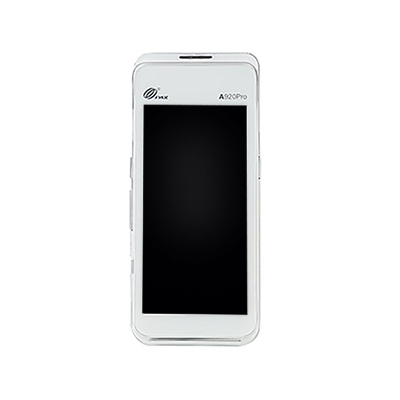
Its services cover configuration, key injection and point-to-point encryption, along with inventory and fulfillment. The return journey includes refurbishment and exchange. Monthly hardware programs add another purchasing option. Read together, these offerings describe a lifecycle: choose the device, prepare it, deliver it and deal with its eventual trouble. A shipping label is only one step.
- 01Choose
hardware - 02Configure
+ secure - 03Ship to
merchant - 04Support
+ replace
Illustrative workflow based on the company’s published services.
The software makes that lifecycle available to other systems. POS Portal’s API supports merchant records, product bundles, configuration options, address validation, shipping quotes, orders and returns. A partner can connect these tasks to its own workflow. The interesting consequence is organizational: fewer reasons to treat the warehouse and the merchant record as separate worlds.
Buying a different front door
ScanSource’s interest becomes easier to understand through customers rather than terminals. In 2017, ScanSource primarily reached enterprise and midmarket merchants through technology resellers and integrators. POS Portal reached smaller merchants through payment channels. The acquisition announcement emphasized how little the two customer bases overlapped. Similar-looking equipment traveled through different commercial relationships.
“We saw a huge opportunity in the payments space.”
Paul Constantine, ScanSource · Digital Transactions, July 2017
There had been an earlier conversation about joining forces that went nowhere, Digital Transactions reported. The companies stayed in contact. By 2017, the migration to EMV chip-card terminals made the payments opportunity more attractive to ScanSource. This is a specific explanation for the deal’s timing, rather than a tidy story about a founder suddenly changing his philosophy.
Cash paid at closing, before adjustments
+ $13.2mEarn-out subsequently paid in full
The acquisition closed on July 31, 2017. ScanSource’s later annual report confirms the initial closing payment and the full earn-out, alongside customary adjustments. Those numbers price an acquisition; they do not tell a merchant what a terminal costs. They do show that this collection of relationships, systems and deployment capabilities had acquired considerable financial weight.
Let software people sell software
A 2020 ScanSource investor presentation illustrated the ISV model with a hypothetical salon software provider. Its focus was subscriptions. POS Portal could help supply a prevalidated hardware, software and support bundle to referred users. The example captures a familiar difficulty: selling a digital service can create physical obligations that the seller has little desire to operate.
The business model offers several ways to allocate those obligations: processor deployment contracts, wholesale distribution to resellers and ISV referrals. Hardware sales sit alongside services and monthly programs. Pricing in the public terminal catalog requires login. For a buyer, the useful comparison is therefore the complete package of equipment and responsibilities, including configuration and replacement terms.

Make the handoff worth buying
This territory has alternatives. POSDATA also markets payment distribution, configuration, key injection and exchange services. POS Portal’s proposition is the combination of payments specialization, multiple routes to merchants, software integration and access to ScanSource’s wider offering. Whether that combination is useful depends on the partner’s devices, processor relationships and operational requirements.
For a company that already operates an efficient deployment facility, outsourcing may add less. For a software vendor trying to avoid building one, the calculation changes. The lesson worth borrowing is to examine every handoff between a sale and a working product. A customer tapping a card sees the final ten seconds. A business can be built around taking care of the rest.