The first thing PivotalPath had to beat was not Bloomberg, a giant consultant or a rival data terminal. It was a spreadsheet. Somewhere inside every allocator's office sat a handcrafted file full of manager returns, meeting notes and institutional memory - a small kingdom whose ruler believed the walls were perfectly sound.
Jonathan Caplis knew otherwise. He had spent a decade inside hedge funds: first at event-driven shop Chesapeake Partners, then as co-founder and operating chief of a systematic fund, and later in portfolio allocation and risk management at Campbell & Co. The view from that sequence was unusually complete. Managers had private information they did not want sprayed across the market. Investors had patchy tools for comparing those managers. Commercial databases could be broad yet miss the large, institutional funds that mattered most.
So Caplis founded PivotalPath in New York in 2013 around a narrow proposition: collect and structure institutional hedge fund information, pair it with practitioner research, and give allocators the context to judge one fund against a real peer group. The company would protect confidential manager information and share its deeper insight with institutional-investor clients, not sell one manager's data to another manager.
“The market agreed the problem was real. Each buyer simply believed it was somebody else's problem.”The early PivotalPath sales paradox
01 / The false yes
A good idea that nobody needed
The first pitch failed in a very specific way. Caplis has said that prospective investors were almost universally positive about the concept and its potential effect on the industry. Then the meeting turned personal. Each institution believed its relationships and expertise were special enough that it already had everything it needed.
This is a nastier objection than “no.” A no invites a better price, product or explanation. A gracious “someone should build this” lets the buyer praise the category while declining to enter it. Meanwhile Caplis was forgoing a paycheck and starting the business in a different state from his wife and newborn son. The financial cost of the product is not posted publicly; the human cost of its first years is easier to see.

What changed minds was evidence. The first clients used the portal and felt the hours disappear. One early user at Verdence Capital Advisors said the service replaced a database he had been building himself and helped with manager research, due diligence, peer rankings and qualitative metrics. Caplis also saw a precedent in commercial real estate, where analysts initially resisted shared data before better tools became routine.
That sequence matters. PivotalPath did not persuade a market with a grand theory of transparency. It persuaded a handful of users by returning time and improving decisions. Once the benefit could be observed inside a workflow, the debate moved from “we already do this” to “why are we still doing this by hand?”
02 / The product
Numbers, notes and the company between them
Today PivotalPath occupies an awkward, useful patch of the market. It is part software company, part specialist consultant, part data provider and part index maker. Its research portal supports the full due-diligence cycle: sourcing managers, reading intelligence, comparing peer groups, examining risk and performance, recording qualitative judgments, monitoring portfolios and building custom views.
That mixture is deliberate. Hedge fund selection cannot be reduced to a return column. A 12 percent gain from a concentrated equity manager means something different from the same gain by a market-neutral fund. Assets, liquidity, leverage, exposures, team changes, drawdowns and the manager's own explanation all affect the judgment. PivotalPath's expertise lies in turning those fragments into a comparable institutional record.
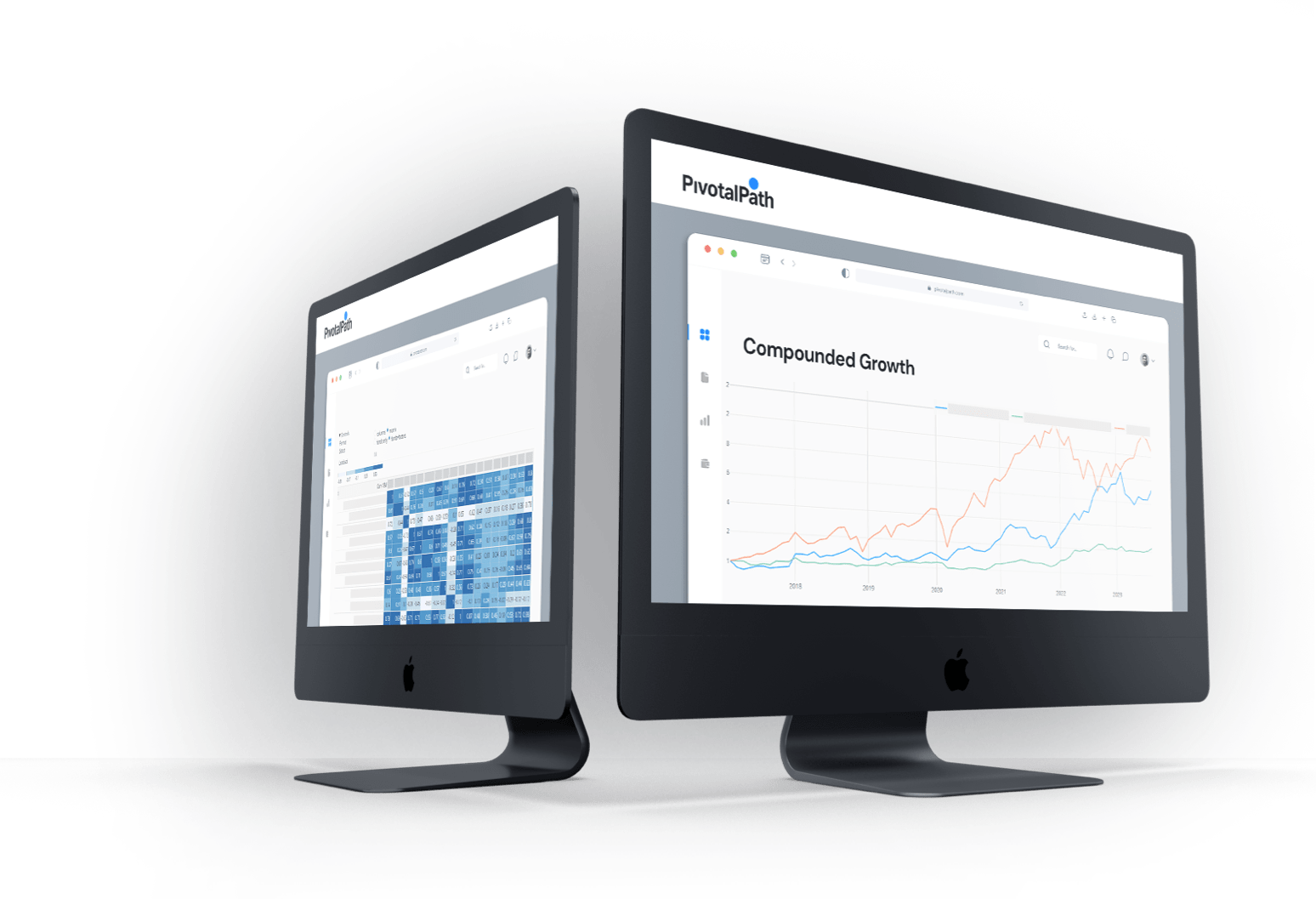
The portal is sold to institutions through subscription and consulting relationships. There is no menu board with a monthly sticker price. The other half of the model is easier to sample: PivotalPath's Index App offers free access to its benchmark indices, while commercial use requires a separate license. Free distribution creates a common language; paid research and workflows provide the depth.
03 / The difference
Not the most names. The right names.
Database marketing often turns into a census contest. Twenty thousand funds sounds better than ten thousand. PivotalPath's counterargument is that the denominator can be junky. Commercial datasets depend heavily on voluntary reporting and may contain thousands of small or incubating funds while omitting established managers that avoid broad distribution.
A research partnership with the Institute for Private Capital at UNC Kenan-Flagler gave that claim a useful stress test. Researchers mapped 96 activist hedge funds using regulatory records. A large commercial database covered 47, while PivotalPath covered 55. The count difference was modest. The asset difference was not: PivotalPath captured more than 90 percent of fund-level gross asset value, compared with 35 percent for the commercial database.
This is the company's real wedge. It does not merely organize returns; it argues that the sample behind those returns determines the story. If stronger institutional funds are missing, estimates of industry size, alpha and risk can all bend in the wrong direction. An immaculate chart can still be a polished answer to a corrupted question.
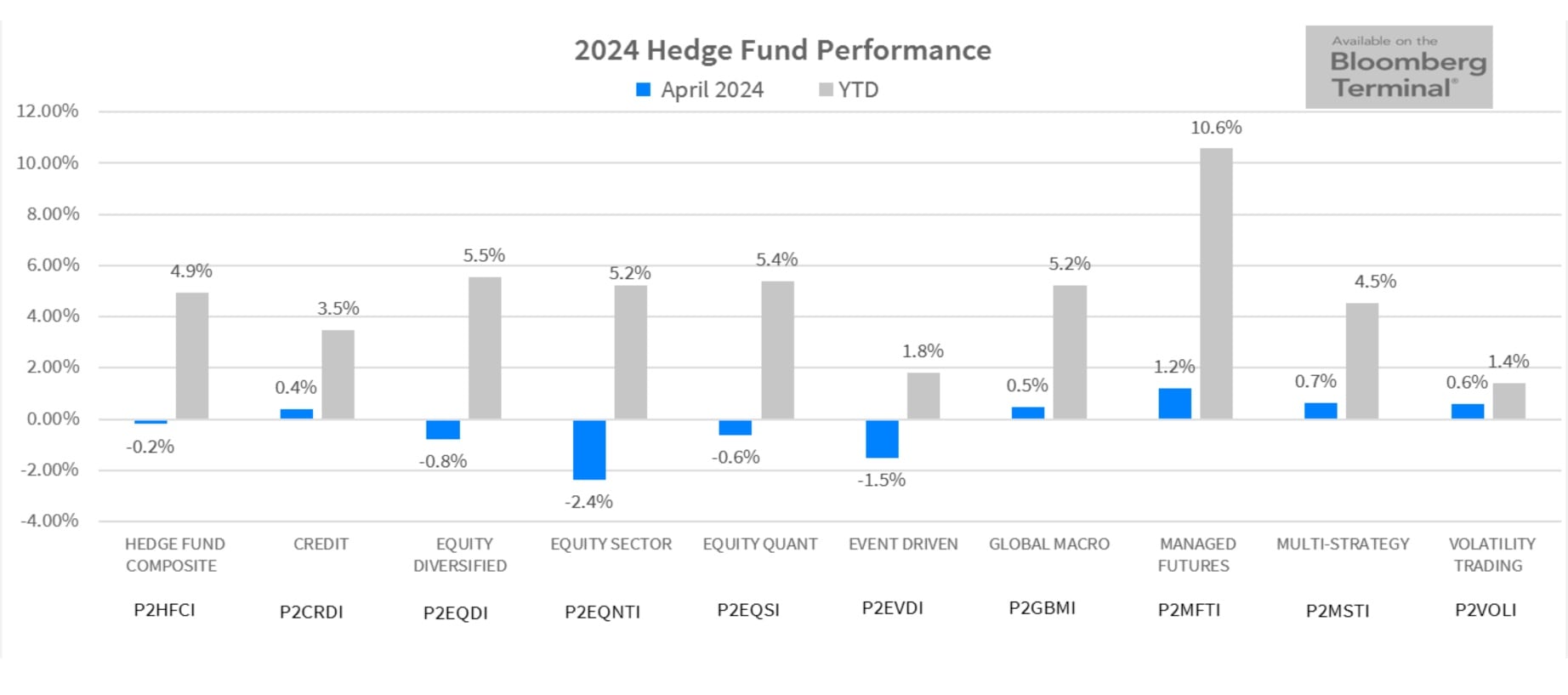
PivotalPath applies the same suspicion to monthly indices. Hedge funds report on different schedules, especially when strategies hold less-liquid assets. Racing to publish a number first can produce a benchmark that shifts as more constituents arrive. The company's research asks investors to consider reporting coverage and stability, not just the latest average.
04 / The trust rule
The constraint that became a moat
Managers face a familiar bargain with commercial databases: contribute information for visibility, while accepting that competitors may buy access to it. PivotalPath designed a different exchange. It builds relationships with managers, protects confidential details and reserves its research service for allocator clients. Managers gain a route to serious institutional consideration without deliberately stocking a rival's terminal.
The policy limits the addressable customer base. It also makes the product more credible to both sides. That is a useful founder move: choose a constraint that makes the service worse for the wrong customer and safer for the right one. A rule is easier to trust when it costs the company possible revenue.
The free Index App complicates the picture in a productive way. Managers can use common performance benchmarks without receiving competitors' confidential research. Allocators can use the same language in meetings and reports. In 2025, the company said more than 600 hedge fund management firms and 250 institutional allocators were using the app. The top of the funnel is broad; the private layer remains narrow.
“A rule is easier to trust when it costs the company possible revenue.”The PivotalPath moat in one sentence
05 / The copyable bits
What another founder can steal
Compete with the workaround
The real incumbent may be a spreadsheet, inbox and senior employee's memory. Calculate the hours trapped there before comparing feature lists.
Make trust operational
“We care about privacy” is copy. Refusing a revenue stream that violates the promise turns it into product architecture.
Give away the language
A free index can standardize the vocabulary of a market. Sell the deeper workflow, judgment and commercial rights around it.
Optimize for relevance
A smaller, representative dataset can beat a vast directory. Measure coverage by economic importance, not row count.
There is another lesson in the early rejection. Buyers who say they have already solved a problem may be describing pride, not process. The productive response is not to insult their system. Find one narrow job where the new product saves visible time, produces a stronger comparison or catches a missed risk. Let the user discover the gap.
PivotalPath also shows when human expertise belongs inside software. Its researchers have worked as hedge fund practitioners, allocators and developers. That background helps them decide which managers belong in a peer set and which changes deserve attention. Automation handles scale; domain judgment decides what the scale means.
06 / The limits
When this path does not travel
The model depends on a delicate loop. Managers must trust PivotalPath with useful information. Allocators must value curated institutional coverage enough to pay for research and workflow tools. The team must stay neutral enough that its benchmarks remain credible. Break any side of that triangle and the portal becomes another database with a nicer interface.
Good fit
Institutions evaluating multiple hedge funds, building peer groups, monitoring portfolios or replacing fragmented internal research.
Wrong fit
Retail investors, teams needing only public prices, or buyers who want the cheapest possible directory and manager-to-manager data access.
Nor does the approach work automatically in every opaque market. It requires repeated private participation, enough institutional demand to fund expensive research and a category where context changes decisions. In a simple, liquid market with complete public reporting, the consultancy layer would be overhead. In hedge funds, opacity is the raw material.
PivotalPath's place in the market is therefore specific. It sits between general investment consultants, commercial data warehouses and allocators' internal systems. Its customers are pensions, endowments, foundations, asset managers, family offices and advisers that need to source, evaluate and monitor funds. Its alternatives include HFR, Preqin, Eurekahedge, BarclayHedge, Bloomberg, a traditional consultant, or the old spreadsheet kingdom.
Thirteen years after launch, the company remains small - about 17 employees in a recent company record - but its clients represent more than $650 billion in combined hedge fund investments. That ratio is the quiet payoff. PivotalPath does not need to manage the money. It wants to make the measuring stick that determines who does.