On Saturdays, Bill Feder sometimes brought his dog to the Fiserv office. George Dalton was often there too, with his own dog. While the people caught up on work, the animals chased each other down the hall. A financial technology company, it seems, can accommodate more than one sort of running account.
Feder remembered those weekends years later. He also remembered approaching Dalton at a company Christmas party, long after the founder had retired, to thank him. Dalton interrupted: “It is you I must thank!” He gave the credit back to the employee. Feder understood that others probably received the same treatment. That did little to diminish its effect.
There is a useful entrance to Dalton’s life in that exchange. Fiserv’s history contains mergers, public offerings and increasingly large numbers. His colleagues’ memories contain something smaller and more personal: a boss who showed up, remembered people and made them feel their work counted. The company’s scale and the hallway dogs belong in the same story.
A computer bill, split two ways
Dalton grew up in Chicago. After Army service in the Panama Canal Zone, he attended Northwestern University in 1947 and 1948, then left for a job in Bell & Howell’s tabulating department. The vocabulary places him in an earlier computing world. His working life began long before a bank account could be checked on a phone.
At Marine Bank in Milwaukee, he led data processing. Later, at Midland, he ran an operation that sold services beyond its parent bank. Processing could earn money as a business in its own right. The distinction mattered: a department that another company must fund has a different future from an operation with customers of its own.
Dalton’s friendship with Leslie Muma grew out of a cost problem. Developing software separately was expensive. They worked together on sharing development costs, an arrangement that supplied the practical foundation for a larger partnership. There is something pleasantly unromantic about the origin. Before there was a national company to build, there was a bill to reduce.
Their industry offered room for such a plan. In 1985, the field included at least 50 processors serving thrifts and qualified credit unions. Fiserv appeared among them. Banking technology had many operators, many data centers and many opportunities for combination. A nationwide enterprise had to be assembled in a market already full of working businesses.
Milwaukee meets Tampa, July 1984
On July 31, 1984, First Data Processing in Milwaukee and Sunshine State Systems in Tampa combined to form Fiserv. Dalton and Muma brought existing regional operations together. Their customers included small banks and thrifts, institutions with processing needs that exceeded the appeal of doing everything themselves. The founders’ starting point was service already being delivered.
Processing
Systems
The business began with $21 million in revenue and 350 employees, at the outset, before acquisitions carried it further. Two years later it went public on Nasdaq as a $70 million data processor. The speed is striking, but so is the continuity: the new public company still had to perform the routine work its customers had hired it to do.
For a bank, routine work is consequential work. Account processing is the machinery behind the balances and records customers expect to be right. Fiserv’s proposition put a specialist between the bank and the technical burden of operating that machinery. The attraction of shared costs came with an obligation to keep serving each institution’s particular needs. Shared processing asks a bank to make a particular kind of commitment. It keeps its relationship with depositors while entrusting part of the work behind that relationship to a service provider. For Dalton and Muma, growth therefore involved persuading institutions to accept that arrangement repeatedly. More computing capacity could help the economics. Each additional customer still needed a reason to trust the service.
Dalton became chairman and CEO; Muma served as president and chief operating officer before succeeding him as CEO in March 1999. Their partnership lasted through the formative expansion. A founder’s biography can make the other founder seem like a supporting character. Here the two regional operations, and the two careers behind them, are essential to the explanation.
The arithmetic gets larger
Expansion changed what the partnership could offer. In 1991, buying Citicorp Information Resources doubled Fiserv’s client count and brought it into commercial bank, international and credit union core account processing markets. In 1995, the acquisition of Information Technology, Inc. widened the account processing business again. Each deal added to the range of institutions the company could serve.
The 1998 revenue milestone was $1 billion. That number belongs beside the founding figure, but it should not erase the years between them. Dalton had spent decades inside processing operations before Fiserv existed. The rapid growth of the company followed a much longer apprenticeship in the work, the customers and the economics.
Dalton observed that Fiserv’s clients faced a financial world both converging and expanding. The phrasing fits the company’s own problem. Serving an industry that changes shape requires more than increasing the number of customers. It requires reconsidering what those customers will need next, while continuing to handle what they need today.
By Fiserv’s 25th anniversary in 2009, revenue stood at $4.7 billion and employment at 20,000. Those figures include the years after Dalton’s departure from management. They show the business continuing under later leaders, carrying the regional combination into a much larger enterprise. A fair account of a founder leaves room for the people who take over.
Retirement needed another business
Dalton stepped down as CEO in 1999 and remained chairman through 2000. His next venture concerned call center services. He became chairman and CEO of CALL-Solutions in August 2000. For someone who had finished a long tenure leading a public company, the interval before another executive job was brief.
The new operation also reunited him with familiar talent. In July 2001, former Fiserv executive Frank Martire joined Call_Solutions in a role spanning strategic planning, business development and administration. Dalton and Martire had stayed in contact, and found their growth plans compatible. Their earlier working relationship supplied a starting point for the new one.
Call_Solutions reported 3,000 employees and $80 million in annual revenue at that point. Dalton planned to expand through acquisitions. The work had moved from financial data processing to call centers, while the method retained a recognizable shape: bring operations together and grow a service business. Retirement had produced a second set of organizational problems to solve.
The business later became NOVO 1. Dalton’s entrepreneurship also took him onto the judging side of the table: he had won an Ernst & Young Entrepreneur Of The Year award in 1988, became a national finalist in 1996, and joined the World Entrepreneur Of The Year judging panel in 2007. Experience acquired in buying and running businesses now informed the assessment of other founders.
A place for people to go next
An acquisition could look different when Dalton walked through the workplace. He watched employees’ reactions to their managers, treating recognition and respect as evidence about the organization. That was a revealing way to inspect a company. A set of accounts could describe its financial performance; the people on the floor could disclose something about its daily life.
“Unless you have a career path for someone you are being unfair.”
George Dalton
His concern extended to what employees could become. He argued that employers owed their people a career path. It is an unusually direct formulation of an employer’s responsibility. The job available today is only part of the bargain. The person doing it should have somewhere to go next.
Dalton applied his attention beyond his own businesses. By 2002, he was chairman of the Milwaukee School of Engineering’s Board of Regents and chairman of the Milwaukee Public Museum. Engineering education and a civic museum occupy different corners of a city, but both depend on people willing to work on institutions that outlast any individual’s term.
His other civic connections included Discovery World, Milwaukee Repertory Theater and the Wisconsin Humane Society. He was a third-generation Irish American with paternal roots in Dublin, and by 2000 had six grown children. These details put a family and a city around a career often represented by company names and revenue figures.
Still interested after the title was gone
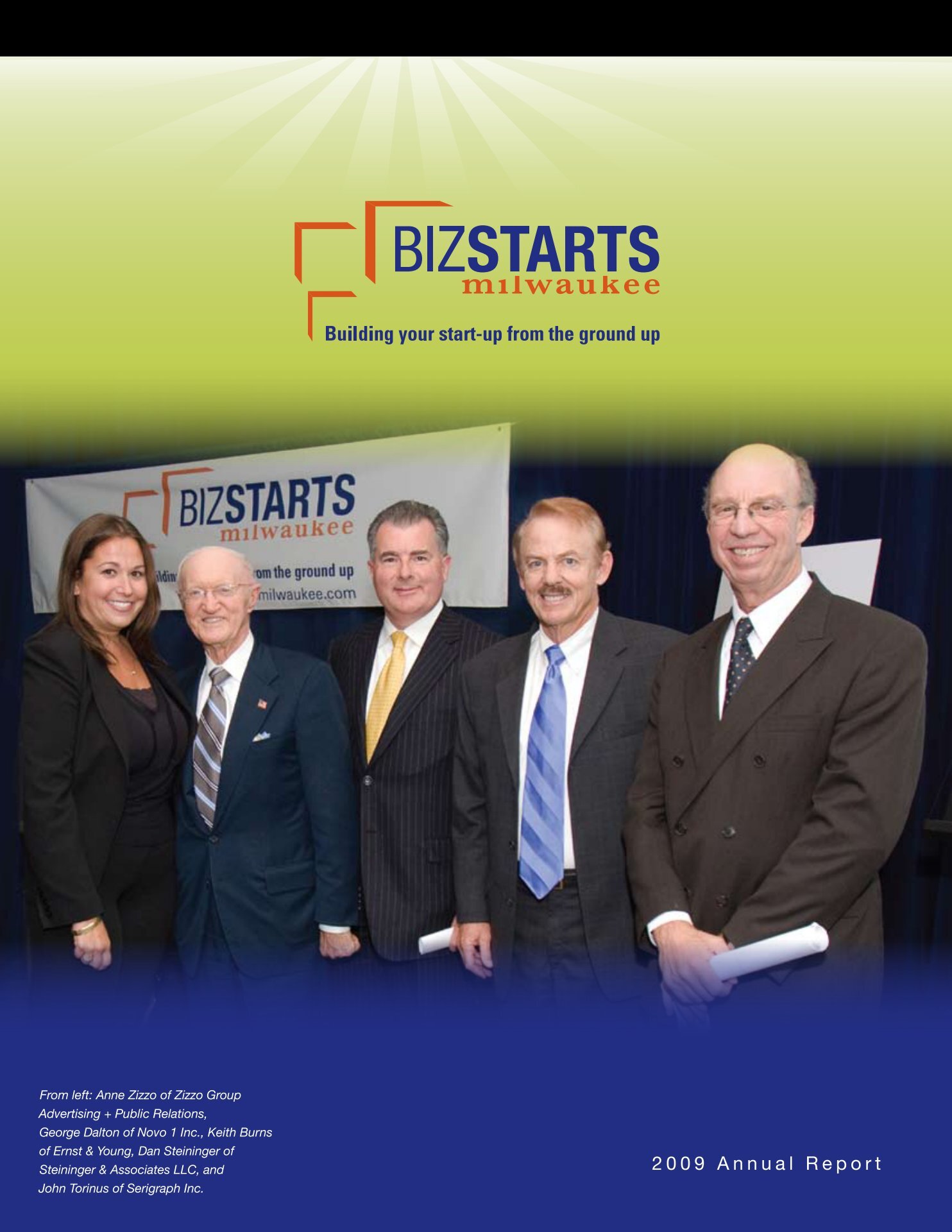
In 2005, Dalton received the Small Business Times’ Bravo! Entrepreneur Lifetime Achievement Award. By 2009, he appeared alongside Anne Zizzo, Keith Burns, Dan Steininger and John Torinus on the cover of BizStarts Milwaukee’s annual report. The photograph places him among people working on the region’s entrepreneurial life, well after his years running Fiserv.
Dalton died on November 17, 2011, aged 83. Memorial gifts went toward his favorite charities through the Dalton Charitable Fund at the Waukesha County Community Foundation. It was a fitting continuation of a life whose organizational commitments reached beyond the company that made his name.
At Fiserv’s annual meeting the following May, chairman Don Dillon recalled that retirement had never ended Dalton’s interest in the business. A phone call might arrive to check how things were going or to offer advice. Dillon described Fiserv as family to him. The formal position had ended; the relationship kept its own hours.
The shared computing bill grew into a national business, then into a company working internationally. Yet the memories that bring Dalton closest are still human in scale: colleagues at work on a Saturday, a founder giving credit back at a party, a call after retirement. And, somewhere down the hallway, two dogs taking advantage of the extra space.