Imagine the investment memo that arrives before lunch. It is orderly, confident, beautifully formatted. Somewhere inside it sits a claim that could change a deal. The analyst’s next question is wonderfully unglamorous: where did that come from? Brightwave built its first business around the paperwork preceding that question. Its newer work concerns the permissions, evidence and infrastructure that make an AI-generated answer usable once it arrives.
- Started in finance: agents for filings, transcripts and investment diligence.
- Built for checking: findings linked to the underlying evidence.
- Now widening the brief: governed agent infrastructure and the open-source Tidebreak client.
The mountain was only the beginning
Financial research offers an awkward bargain. Read more and your understanding improves; read everything and your deadline disappears. Brightwave’s original platform brought public filings, earnings calls, news and private documents into research that investors could question and refine. The intended customers included advisers, hedge funds, asset managers and private-market deal teams. The output was analysis, rather than a trade placed on someone’s behalf.
By June 2024, Brightwave said its customers collectively managed more than $120 billion. That figure measures the portfolios of customer firms, not assets managed by Brightwave. The distinction matters. This was a software company selling help with investment work, and its opportunity lay in the distance between the information available and the information a person could reasonably examine.
Two founders, one unforgiving customer
Mike Conover had established open-source language-model engineering at Databricks and co-created Dolly. Brandon Kotara had been chief technology officer of LedgerX, a federally regulated derivatives exchange and clearinghouse. One background concerned what machine intelligence could do; the other concerned systems where a clever mistake remained a mistake. Together, they founded Brightwave in 2023.
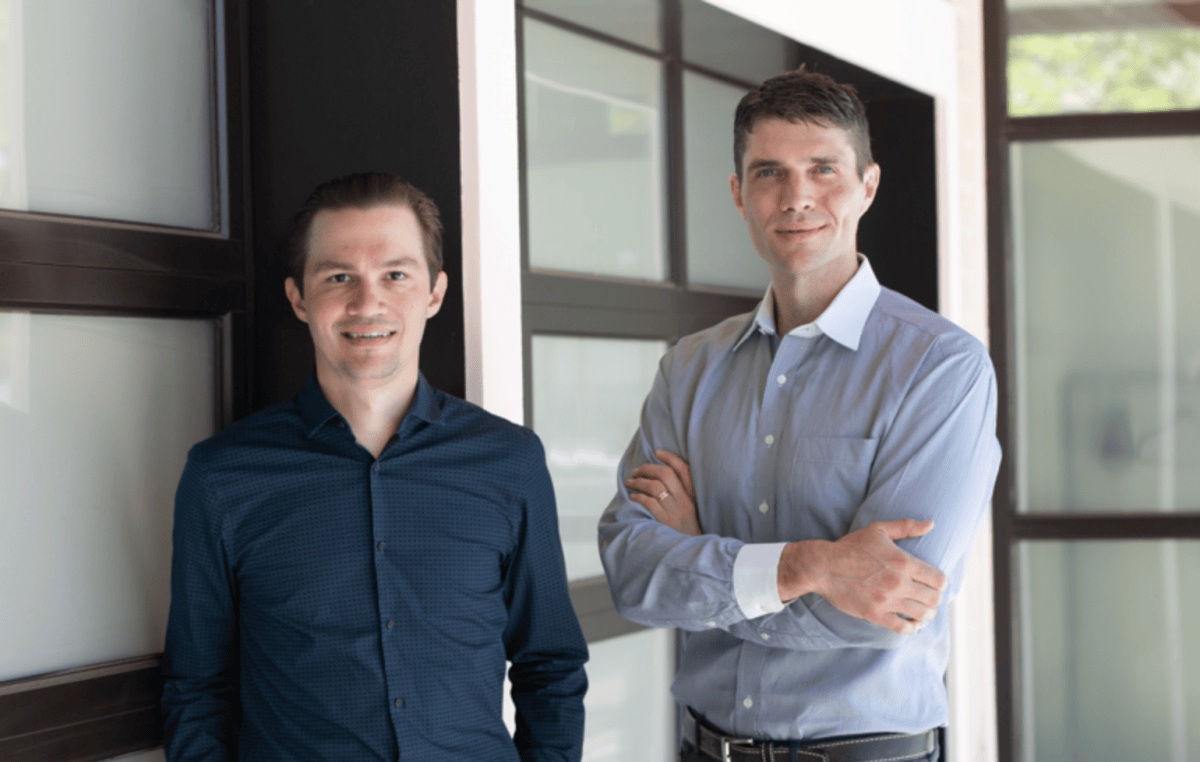
Investors supplied a $6 million seed round in June 2024, led by Decibel Partners with Point72 Ventures and Moonfire Ventures participating. October brought a $15 million Series A led by Decibel, with OMERS Ventures. Brightwave reported fourfold revenue growth since the seed. These were reasons to pay attention, although neither fundraising nor growth establishes that an AI system makes better investment decisions.
Two rounds. $21 million total. Funding is not development expenditure.
The commercial arrangement matched that setting: licensed software for organizations and their authorized users. By August 2025, Brightwave was offering a seven-day trial without an enterprise contract. That gave prospective users a direct way to test a research task before buying into a larger workflow. The current infrastructure pitch asks for design partners, while Tidebreak makes its desktop client free.
The memo changed the product
A research answer can be accurate and still be a nuisance. Investment teams have their own memo structures, recurring questions and institutional habits. In April 2025, Brightwave said hundreds of hours of user research had revealed a demand for flexible outputs resembling an analyst’s work. Report Builder let users organize and refine findings. Blueprints saved those structures for reuse.
The examples were concrete: customer concentration over a particular revenue period, or unusual provisions in bond indentures. A firm could repeat its preferred analysis across deals and share the structure with colleagues. The useful idea is easily copied: decide what a good finished document looks like before asking a machine to produce one. Otherwise, the speed of generation merely delivers the wrong shape sooner.
Access to material expanded too. A February 2025 partnership with Quartr brought information covering more than 12,000 public companies into the platform. Public-company commentary could sit beside proprietary deal documents, adding context to a private investment. In August, Research Agents introduced longer-running tasks that planned work, used tools and checked completed outputs against the original request.
There is a human corollary. In a November 2024 interview, Conover described ownership, humility and craft as company values. Humility makes particular sense in this setting. A memo is useful when a colleague can question it, revise it and keep responsibility for the conclusion. An agent that drafts the report has completed one part of that process.
A footnote with somewhere to go
Brightwave’s March 2026 engineering account identifies a revealing failure: trying to squeeze every citation into one highlighted-text viewer. A spreadsheet needs a sheet and cell range. A PDF needs a page and location. Structured data needs a path to the relevant value. The elegant universal interface turned out to be too universal.
“Generation is cheap. Trust is expensive.”
Thet Naing / Brightwave engineering, March 2026
The team instead preserved location information through document processing and built format-specific ways to reach it. Checks addressed both whether a reference could resolve and whether its evidence supported the claim. The distinction is small enough to sound pedantic until an impressive answer points to a perfectly real paragraph that proves something else. Verification belongs inside the product.
- 01ClaimWhat the agent says
- 02LocationPassage, page or cells
- 03JudgmentDoes the evidence fit?
Then the agent reached for the laptop
By June 2026, the problem had moved beyond reading. Customers wanted agents to use project folders, return finished files and interact with applications. A disposable cloud container offered one sort of safety. A laptop full of working documents demanded another. Brightwave described a separate host broker that checked narrow permissions before carrying out requests.
The agent could ask for access; a person had to grant it. The broker’s job was enforcement, independent of what the model believed. That is a useful rule for anyone building agents: put the boundary in code below the model. A sentence telling an assistant to behave carefully cannot substitute for deciding which folder it may touch.
An open door, with a lock
Brightwave’s current homepage calls it an agent infrastructure company. Its About page now names Kotara as founder and CEO. Tidebreak, the open-source desktop client linked from the homepage, brings the research engine to document work and coding-agent workspaces. It can produce spreadsheets, decks and memos using models the user chooses. The client carries an Apache-2.0 license; chosen providers may still charge.
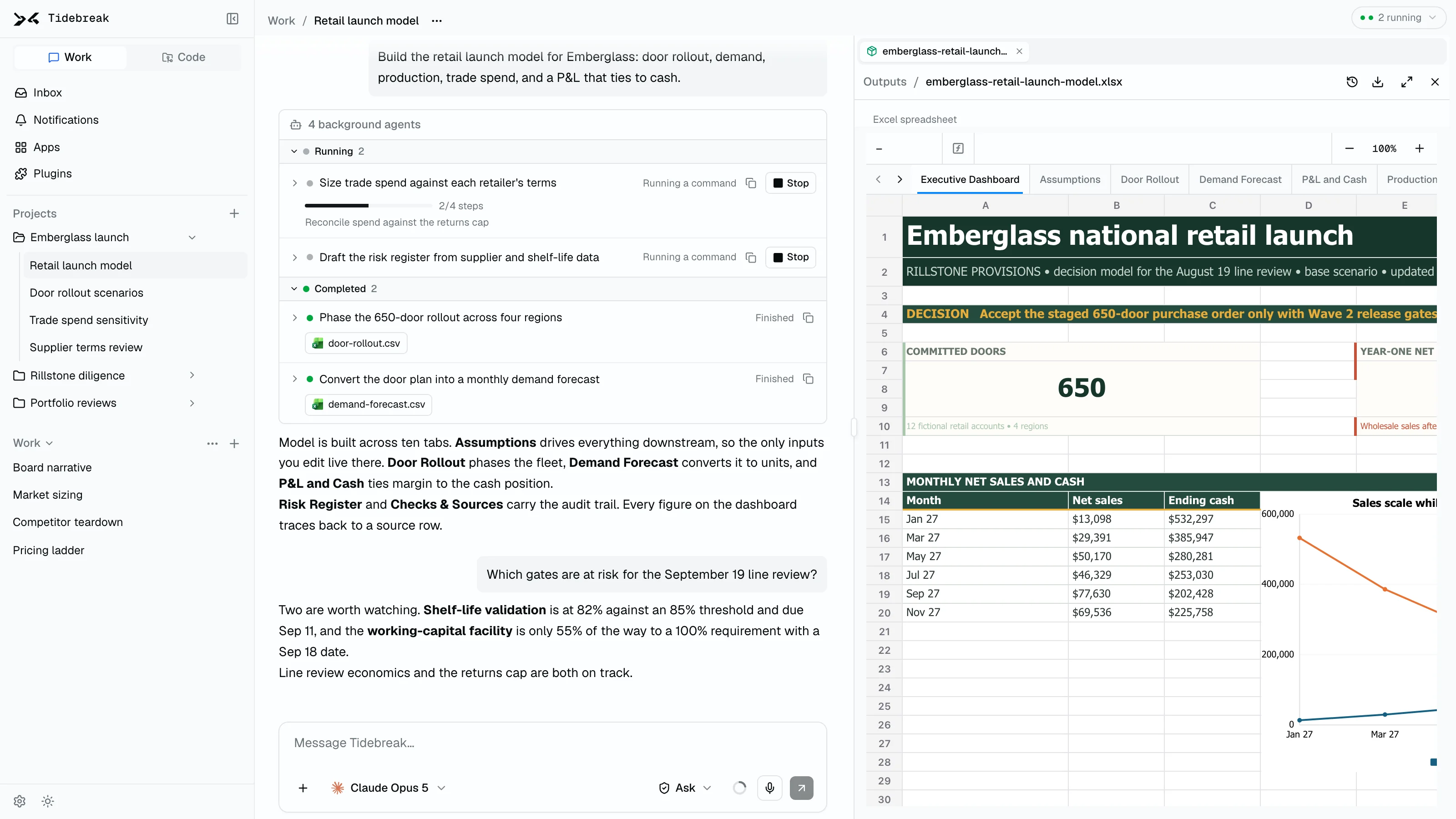
The financial research market already contains alternatives such as Hebbia and AlphaSense. Brightwave’s stated direction reaches toward shared controls for models, applications and infrastructure. Tidebreak calls the client a commodity. My reading of the bet: useful access, and the ability to govern it, may matter more than owning another conversational window.
There are practical conditions attached. Selecting a cloud model sends it the content required for the task; local-first does not automatically mean offline. Missing evidence remains missing evidence, however polished the report. The sensible first experiment is a bounded task with familiar documents and an output you can check. Brightwave’s story rewards that habit: the interesting work begins when someone asks the confident answer to show its workings.