The most revealing unit of Pilot Thomas Logistics is not the gallon. It is the minute. Picture a commercial driver leaving the yard at dawn, stopping at a retail pump and waiting behind two pickups before work can begin. Or a mine haul truck parked because the diesel inventory dropped lower than expected. The fuel has a market price. The waiting has a price too, only it is scattered across wages, missed loads and silent machinery.
Pilot Thomas has built its business around collecting those lost minutes. The Texas-based company distributes fuel, lubricants and chemicals to energy sites, mines, commercial fleets, factories, farms, construction projects and vessels. It also supplies the less conspicuous pieces that make those commodities useful: tanks, pumps, remote inventory monitors, fleet cards, oil analysis, coolant service, technical training and dispatch that answers around the clock.
The result resembles a gas station taken apart and reassembled around the customer. The canopy disappears. The storage tank moves to a yard or job site. A truck fuels the fleet overnight. Software records the gallons, while spending rules constrain the card in a driver's wallet. In marine operations, the station can even float.
A commodity wrapped in a service
Fuel distribution can sound brutally simple: buy in volume, move it safely, sell it for more. Pilot Thomas occupies a richer section of the market. It sits between refiners and lubricant makers on one side and the equipment consuming their products on the other. The farther that equipment is from a convenient pump - and the more costly it is to stop - the more valuable this middle layer becomes.
Its catalog begins with clear and dyed diesel, gasoline, biofuels, propane, LNG and specialized basestocks. Lubricants range from engine and hydraulic oils to products for compressors, gears and natural-gas engines. Chemicals include coolant, diesel exhaust fluid, greases, methanol and glycols. Pilot Thomas distributes major brands and sells SPX, its in-house lubricant line. A blending operation gives it another lever over supply and formulation, while relationships with equipment makers and industry standards bodies support testing and optimization.
But the catalog is only the first layer. A construction customer might combine bulk diesel with a double-wall tank and remote level monitoring. A fleet could use overnight wet hosing, where a PTL driver fuels each vehicle in the yard, then issue cards with limits on product, time or daily spend. A natural-gas compression operator may add used-oil analysis, filtration and scheduled collection runs. The business model earns product margin, then deepens the account with delivery, equipment and technical services.
“One-stop shopping doesn't mean one size fits all.”Pilot Thomas Logistics
That distinction is the company's pitch against both local jobbers and larger national distributors. Scale supplies purchasing power and geographic reach. Customization keeps the service from becoming an anonymous commodity. Customers can buy the pieces they need instead of conforming to a single package.
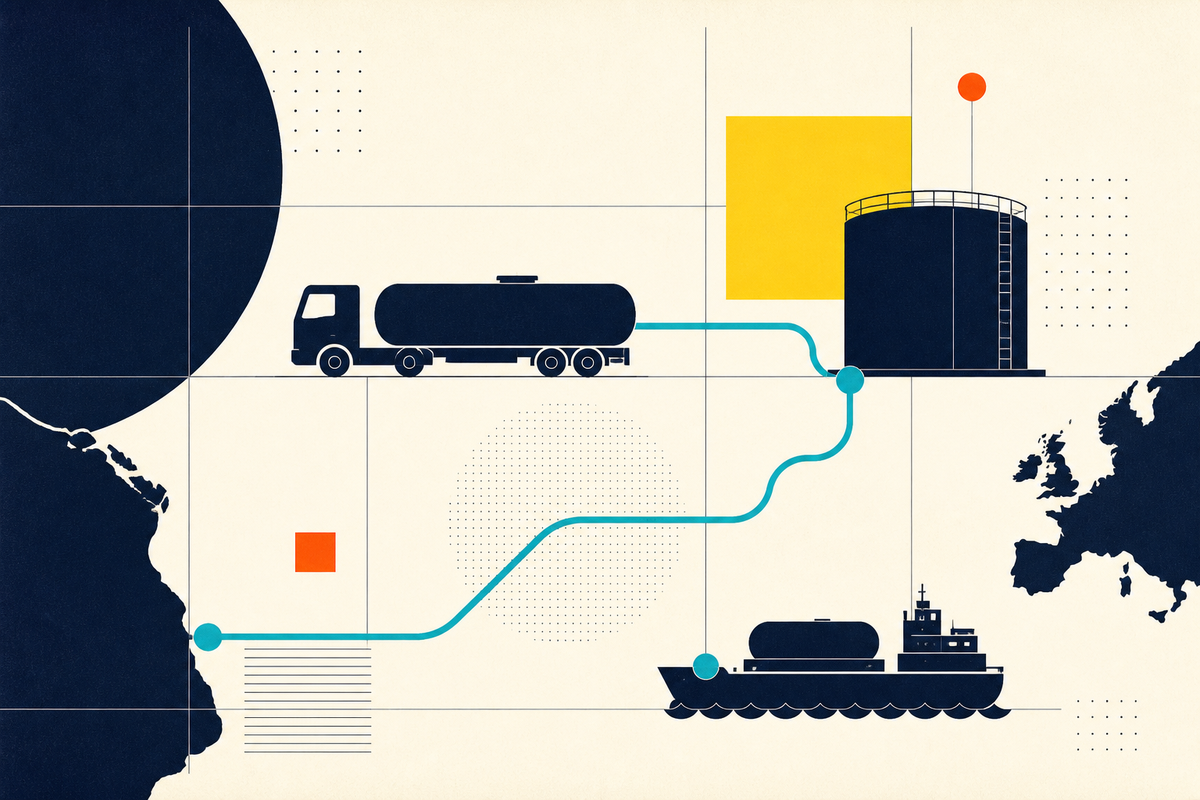
The customers who cannot take a detour
Pilot Thomas serves industries that make ordinary convenience look luxurious. A mine is a choreography of giant assets on long cycles. A drilling or hydraulic-fracturing site consumes fuel in bursts and runs continuously. A towboat may be pushing cargo through a schedule where a visit to shore defeats the point. Commercial fleets face hours-of-service rules that make a driver's time unusually precious.
These buyers are not simply trying to find diesel. They are balancing availability, storage capacity, environmental compliance, safety, labor and proof of where every gallon went. A low tank can halt production. A contaminated lubricant can shorten the life of an expensive engine. An uncontrolled card can quietly leak money one transaction at a time.
From level to delivery
Pilot Thomas answers with redundancy and visibility. On-site storage shortens the distance between machine and supply. Monitors turn inventory from a clipboard exercise into a replenishment signal. Mobile fueling shifts a driver's least productive task into the night. The customer portal allows repeat orders and product review without waiting on a salesperson or terminal dispatcher. None of these tools is exotic alone. Their value comes from arranging them around a physical operation.
The river tells the story best
The marine business makes this logic unusually vivid. A legacy company now inside PTL Marine, Economy Boat Store, dates to 1936. In 1951, founder Dee Colborn's operation pioneered midstream fueling - transferring fuel to a tow while it was stationary or moving on the river. It is the company's proposition reduced to a single memorable scene: the customer keeps working while supply catches up.
Pilot Thomas acquired a 70 percent controlling interest in Economy Boat Store and Radcliff/Economy Marine Services in 2015. Those operations, along with Maxum Petroleum, were ultimately brought together under the PTL Marine name in 2021. Today the unit describes a network spanning the Mississippi River, Gulf Coast and West Coast, with dockside and midstream fuel, lubricant, terminal and vessel-support services.
On Puget Sound, a Maxum operation went so far as to develop a small self-propelled, double-hulled bunkering tanker. Working with Elliott Bay Design Group and Jesse Engineering, the business designed a vessel that could maneuver without a separate tug. It was a specialized answer to a specialized last-mile problem, which is where Pilot Thomas tends to be most legible.
The operating moat is physical
Software companies can add a new market with a settings screen. Fuel logistics expands one terminal, trained driver, compliant tank and customer relationship at a time. In 2022, Pilot Thomas said it had more than 70 terminal locations, over 1,500 vehicles and service in 43 states. Its reported workforce exceeded 1,000 skilled employees. Those numbers change as routes and markets change, but they indicate the shape of the advantage: a difficult-to-reproduce network of people and assets.
four hard jobsService breadth, not market share
The expertise around that network matters as much as the map. Transporting hazardous products brings federal, state and local rules. Fluids must match machines and operating conditions. PTL's Asset Maintenance & Performance services include oil and chemical sampling, independent laboratory analysis, coolant flushes and technical training. The company is not only delivering the thing a machine consumes; it is helping a customer interpret what comes back out.
Safety is therefore both a moral requirement and a commercial credential. Pilot Thomas calls its program Target Zero: zero employee injuries, zero vehicle accidents and zero product spills. Careers material asks prospective drivers whether they are accountable, precise, routine-oriented and factual communicators. Those adjectives would sound dreary in a consumer brand. Around a loaded tanker, they are reassuring.
Growth by combination
The current company was formed in 2014, when Pilot Logistics Services and Thomas Petroleum merged. Thomas Petroleum founder Cliff Thomas became chairman; executives described the combination as a way to improve supply reliability, safety and customer service. The underlying business traced its origin to 1946, and the merger joined two accumulated webs of terminals, trucks, storage and local knowledge.
The pattern continued through marine acquisitions and supplier partnerships. A strategic relationship with Frac Shack paired PTL's distribution network with automated fueling for hydraulic-fracturing sites. In 2022, Petro-Canada Lubricants, an HF Sinclair brand, selected Pilot Thomas to distribute products in Arizona and Nevada. PTL has also been recognized by Chevron with its Eagle Award for overall marketer performance.
This is not venture-style growth, and the privately held company does not publish the neat quarterly metrics of a listed corporation. It is consolidation and operating density: more routes, more products on each route, more services attached to each account. In February 2025, the company announced Brad Jenkins as president and chief executive of Pilot Thomas Logistics and PTL Marine, placing both the land and water operations under one leader.
Where it fits now
Pilot Thomas belongs to the uncelebrated infrastructure of the energy market. Upstream are producers, refiners and lubricant manufacturers. Downstream are assets that turn fuel into motion, heat and output. Between them lies an intricate delivery problem that companies such as Pilot Thomas, Mansfield Energy, RelaDyne, Sun Coast Resources, Diesel Direct and regional distributors compete to solve.
Its breadth is the differentiator. A customer can source fuel, chemicals and lubricants; put tanks on site; monitor inventory; control purchases; test used oil; and call the same organization for marine or field delivery. That does not make the underlying products less exposed to petroleum prices, industrial cycles or the long energy transition. It does make the relationship harder to replace than a simple purchase order.
There is a broader business lesson hiding in the tank yard. Innovation does not always mean inventing a new substance. Sometimes it means noticing every small inconvenience surrounding an old one, then building the trucks, software, expertise and habits that remove it. Pilot Thomas sells gallons. What customers hope to buy is an uninterrupted day.