A software demo has a reliable way of making management look solved. The goals cascade neatly. Progress bars move. A manager opens a review and finds the employee's year already summarized. Nobody forgets an update, misunderstands a priority or spends Friday afternoon reconstructing six months of work from Slack. Then the contract is signed, the implementation ends and ordinary organizational gravity returns.
That is the useful frame for comparing Lattice, 15Five and Betterworks. All three can help a company set objectives, track results and connect goals to performance conversations. Their feature lists increasingly overlap. Their origins do not. Each product began with a different diagnosis of why work goes off course, and those starting points still shape the habits the software makes easiest.
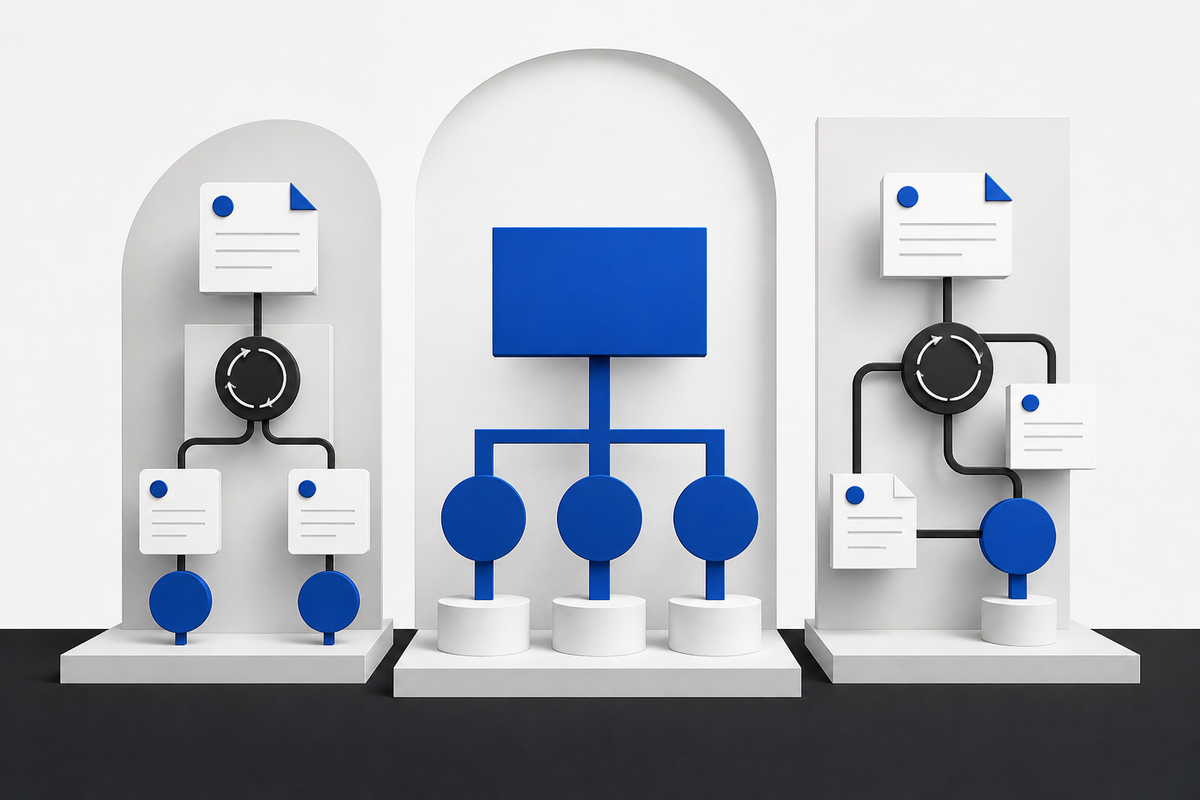
Betterworks began with the goal system. Lattice built a broader home for the relationship between a company and its people. 15Five began with a lightweight recurring report between employee and manager. Seen this way, the buying decision becomes less about finding a universal winner and more about selecting a management motion.
The lineage matters, with an asterisk
Objectives and Key Results did not originate at Google. Andy Grove developed the underlying method at Intel. John Doerr learned it there and introduced it to Google's founders in 1999. Google helped make the framework famous by using transparent objectives and measurable key results to communicate priorities. Its own management research still describes OKRs as a way to set and communicate short- and long-term goals.
Betterworks has the closest historical connection among these three. The company says it launched in 2013 with a SaaS goal-setting product for large organizations. Doerr, who carried the method into Google, became an early investor and remains a board figure. Betterworks' public materials still put “Goals & OKRs” first and describe performance conversations, feedback and employee insights as layers around aligned goals.
It is tempting to compress that history into a claim that Betterworks inherited Google's internal system. That goes too far. OKRs are a public management framework, not a proprietary Google codebase handed from one company to another. The defensible point is more interesting: Betterworks was designed around the same OKR logic that Doerr taught Google, and it made that logic the original architecture of the product.
Three products, three default motions
Betterworks is most legible as a strategy-to-execution system. An executive objective can connect to departmental and individual work; measurable results can show whether the strategy is moving; conversations can happen against that shared context. This is useful when the primary failure is not a lack of reviews but a gap between what leaders announce and what teams actually prioritize.
Lattice approaches the problem from the people stack. It markets goals and OKRs alongside performance reviews, one-on-ones, feedback, engagement, compensation and development. Its 2022 announcement described Goals & OKRs as a standalone product, while arguing that the product becomes more powerful inside the wider Lattice platform. That is a sensible proposition for a People team trying to replace disconnected HR tools or give managers one place to prepare for employee conversations.
15Five's center of gravity is the manager-employee loop. Its name reflects the original promise of a report that takes an employee roughly fifteen minutes to write and a manager five minutes to read. Today its product range is much broader, including reviews, feedback, talent processes and OKRs. But the recurring check-in remains a helpful clue. A goal appears in the flow of weekly work, where a manager can notice an obstacle and respond before the quarter ends.
Betterworks
Translate strategy into visible objectives, measurable results and aligned work.
Best signal: priorities change decisionsLattice
Connect goals to the broader record of feedback, growth and performance.
Best signal: fewer broken workflows15Five
Bring goals into recurring check-ins so managers can clear obstacles early.
Best signal: better weekly follow-throughThese are not exclusive boxes. Lattice can run sophisticated OKRs. 15Five can align company, department and individual objectives. Betterworks supports performance conversations and feedback. A customer should test current capabilities rather than buy an origin story. Still, origins reveal defaults, and defaults matter because most organizations use software along its easiest path.
Start with the failure you can name
If leadership has a strategy but teams cannot explain how their projects contribute to it, begin with Betterworks. Ask a vendor to model one real corporate objective, the key results that would prove it, and the work owned by different functions. Then change a result halfway through the cycle. The test is whether the system helps people make a new tradeoff, not whether it preserves a pretty tree.
If goals are already present but employee information is scattered across review forms, one-on-one documents and engagement tools, Lattice may offer the cleaner answer. Demonstrate the whole employee journey: set a goal, discuss it in a one-on-one, request feedback, conduct a review and make a development decision. Count duplicate fields and exports. Integration value is often the absence of administrative archaeology.
If objectives disappear between quarterly meetings and managers learn about blocked work too late, examine 15Five. Have an employee update a goal during a check-in, flag an obstacle and carry the issue into a one-on-one. Watch how much effort the manager needs to find the signal. The product should improve a real conversation, not manufacture another inbox.
A demo script worth stealing
- Use one live objective, not vendor sample data.
- Connect three measurable results owned by different teams.
- Update progress from the tools where the work occurs.
- Surface a miss in a manager and executive conversation.
- Change a priority and show what every owner sees next.
The goal-compensation trap
One design question deserves special attention: how goals interact with evaluation and pay. Traditional OKRs are supposed to allow ambitious, uncertain work. If every miss automatically reduces a rating or bonus, employees learn to sandbag. Betterworks' own account of Doerr's advice emphasizes separating stretch OKRs from compensation. Yet performance platforms naturally put goals and reviews close together.
Proximity can improve evidence. A reviewer should know what an employee tried to accomplish, what changed and what results followed. But a percentage-complete field is not a complete judgment of performance. Some goals become irrelevant for good reasons. Some teams inherit harder constraints. Some employees do essential work that prevents a disaster without producing a glamorous metric.
The same caution applies to transparency. Visible goals can reduce duplicate work and help employees understand the company. They can also become theater if leaders publish vague aspirations while measuring everyone else precisely. Whichever platform wins, executives need to model the behavior: show their objectives, update them honestly and explain what they learned from a miss.
Software records the bet; leaders place it
A successful rollout is less a database migration than a new meeting rhythm. Define who writes company objectives, who challenges the key results, when teams update progress and what happens when evidence changes. Integrate with project and sales systems where possible. Remove reports that the new process replaces. If the organization adds OKRs without subtracting an old status ritual, employees will correctly experience the program as paperwork.
Run a pilot through one complete business cycle. Measure whether people update goals without chasing, whether managers use the information and whether a visible result changes a resource decision. Interview employees about clarity, not enthusiasm. Adoption data can tell you that a field was filled; it cannot tell you whether the company made a better choice.
The final selection is therefore opinionated but conditional. Choose Betterworks when strategy alignment through goals is the central job. Choose Lattice when goals need to live inside a consolidated people system. Choose 15Five when the missing mechanism is a dependable manager conversation around progress. If none of those habits has an owner, postpone the procurement. A spreadsheet with a serious operating cadence will beat an elegant platform nobody trusts.
Questions buyers ask
Which platform is the most OKR-first?
Betterworks has the clearest OKR-first origin. It launched in 2013 as enterprise goal-setting software inspired by the framework, then expanded into broader performance management.
Did Betterworks inherit Google's OKR system?
Not literally. Betterworks was inspired by the same public framework John Doerr introduced to Google. Doerr became an early investor and remains associated with the company.
When is Lattice the stronger fit?
Consider Lattice when the priority is connecting goals with reviews, feedback, one-on-ones, engagement and other people workflows in one platform.
When is 15Five the stronger fit?
Consider 15Five when recurring check-ins and manager follow-through are the main mechanism for keeping goals visible and clearing obstacles.
What should a pilot measure?
Track participation, update effort, manager use, clarity of ownership and whether new information changes an actual decision. Completion rates alone are weak evidence.