The tempting place to begin a story about blindness is with an eye that is failing. Perceive Biotherapeutics begins with a more awkward question: what about the eyes that do not? Some people carry genetic variations associated with protection against age-related macular degeneration. For a drug developer, that is an invitation to investigate what nature has already managed to keep working.
- The bet: turn protective retinal biology into an ophthalmic gene therapy.
- The candidate: VOY-101, an experimental treatment for geographic atrophy, an advanced form of dry AMD.
- The checkpoint: JOURNEY is in Phase 1/2a, with enrollment closed and follow-up continuing.
- The distinction: Perceive Pharma’s small molecules belong to a separate spinout.
It is a pleasing reversal of the usual detective story. Instead of examining only the scene of the damage, examine the place where damage was resisted. But a genetic clue does not arrive with a prescription attached. Perceive’s business is the expensive, exacting work between an observation and a medicine: choosing a target, designing a treatment, then asking patients’ eyes whether the idea survives contact with human biology.
The advantage hiding in healthy eyes
The company’s focus is protective biology in retinal degeneration. Its lead clinical candidate, VOY-101, targets geographic atrophy secondary to non-neovascular age-related macular degeneration. The ambition is preservation: protect tissue that remains and slow its loss. Readers should keep that verb in view. Preserving vision and rebuilding an already damaged retina are different scientific assignments.
The relevant machinery is the complement system, part of the body’s innate immune defense. Perceive’s approach draws on protective complement factor H biology. The attraction is a regulator that could help restrain harmful activity around retinal cells. Gene delivery is meant to let the eye produce the protective protein locally, rather than depend entirely on another dose arriving from outside.
“That work led to the discovery of protective CFH haplotypes.”
Charles C. Wykoff, discussing the genetic rationale at ARVO 2026
That is the company’s distinctive starting point. The target has a human genetic rationale, and the delivery method is intended to make its effect durable. Neither feature settles the outcome. A sensible mechanism must still produce enough useful activity, in the right tissue, for long enough, without causing unacceptable harm. Biology has an excellent habit of charging separately for each of those conditions.
One injection is a hypothesis with a calendar
Perceive operates in a market that already has approved treatments for geographic atrophy. Syfovre, pegcetacoplan, and Izervay, avacincaptad pegol, address complement biology through repeated intravitreal dosing. Their existence matters: an experimental company must earn its place beside actual medicines, with actual evidence and an actual treatment routine.
The US prescribing information recommends Syfovre every 25 to 60 days and Izervay approximately monthly. VOY-101 is being studied as a single injection. That gives Perceive a clear question to answer: can local production deliver useful protection over time? If it can, reducing repeat treatment could matter to patients and the clinics caring for them. It remains a proposed advantage, with no established head-to-head superiority.
A comparison of dosing approaches, not treatment effectiveness.
The catch is that “one injection” does not mean “one appointment.” Follow-up becomes especially important when the intended effect persists. In June 2026, Perceive registered OASIS, an observational extension for people previously treated in its VOY-101 studies. It lists an estimated 88 participants and a three-year adverse-event outcome. A short procedure can carry a long scientific obligation.
What the two eyes can tell us
JOURNEY makes the argument measurable. Its registered design evaluates a single injection into one eye of patients with geographic atrophy. Phase 1 escalated doses to assess tolerability and select a dose for Phase 2. The later component compares changes in the treated eye with the untreated fellow eye, with a masked central reading center assessing outcomes.
There is something wonderfully literal about this design: the comparison is looking back from the same face. It can reduce some differences between people, although two eyes are not identical experimental objects. That is why the protocol, the choice of measurements and the length of observation matter more than the elegance of the anecdote.
The registry lists sites in the United States, Australia and Israel. Participants must be at least 60 and meet ocular and genetic criteria. The Phase 2 primary outcome measures change in geographic atrophy lesion size over 15 months. Visual acuity, photoreceptor changes and safety are also tracked. This is a defined patient population, rather than a general-purpose treatment for everyone with declining sight.
At ARVO 2026, the early clinical update covered 24 treated patients. Investigators reported no dose-limiting toxicities or treatment-related serious adverse events; mild transient inflammatory cells and steroid-related pressure elevations were observed. These findings supported continued development. They do not establish that VOY-101 slows geographic atrophy. That is the larger question the next stage must answer.
The August 17, 2026 registry update lists JOURNEY as active, not recruiting, with estimated primary completion in October 2027. Those dates are a timetable for collecting evidence. They are not a launch calendar.
The money buys experiments
In January 2023, Perceive announced a $78 million Series B led by Johnson & Johnson Innovation’s JJDC. Deerfield Management, an existing Series A investor, participated alongside Braidwell, the Retinal Degeneration Fund and Catalio Capital Management. The financing supplied resources to advance the pipeline. It is a funding amount, rather than the cost of developing VOY-101 or the future price of treatment.
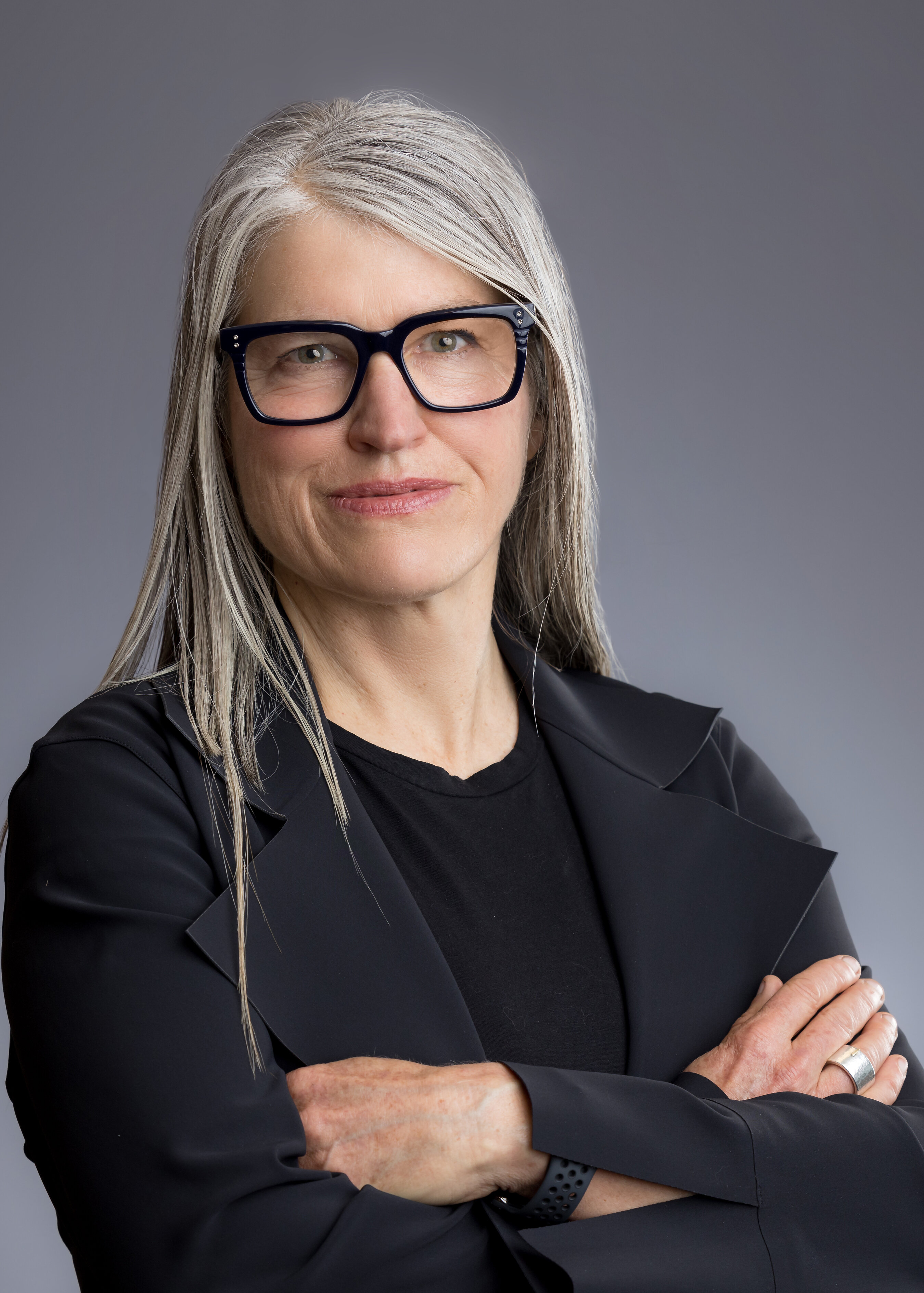 K. Angela Macfarlane · CEO
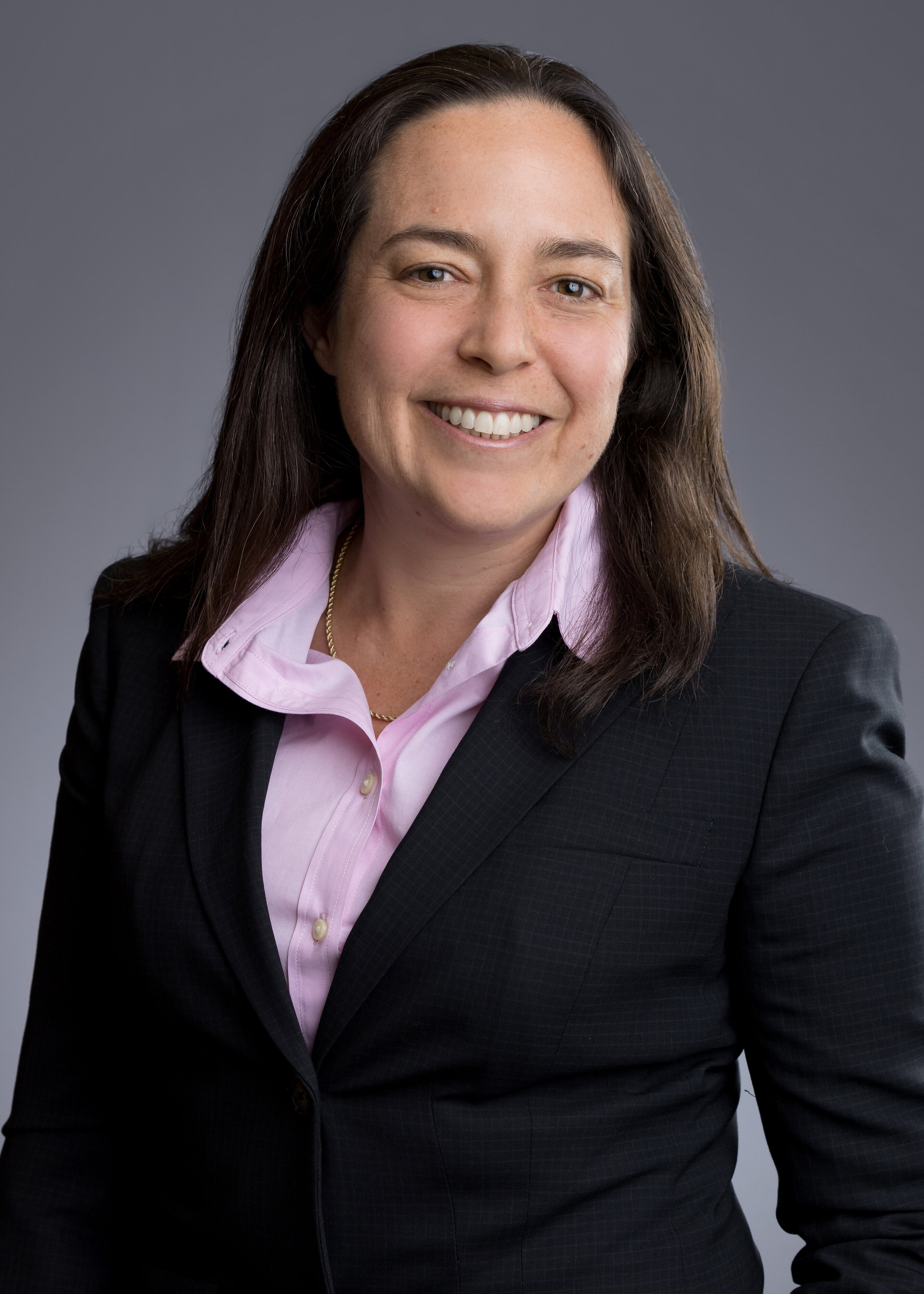 Anne Rubin · President
The team combines retinal science with experience in developing ophthalmic businesses. CEO K. Angela Macfarlane previously led ForSight companies that were acquired by Roche and Allergan. Perceive’s leadership also includes president Anne Rubin, chief medical officer Anne Fung and chief science officer Gregory Hageman. The mix fits the work: translating research requires commercial judgment as well as laboratory skill.
The company described a JLABS residency in San Diego, offering shared laboratory resources. University of Utah disclosures document intellectual property and clinical research connections. Its current economic position is that of a financed therapeutic developer. Patients are the intended beneficiaries; retina specialists are the eventual clinical interface. Before any commercial medicine, its immediate work runs through research sites and trial participants.
Two companies, two routes to protection
In February 2025, Perceive Pharma announced a separate $15 million Series A. The spinout was created to accelerate small molecule neuroprotective therapeutics, including the lead candidate PBI-671. Perceive Biotherapeutics continued advancing gene therapies. Adding the spinout’s financing to Bio’s round would make a tidy number and a muddled account.
The small molecule work draws on retinal-cell screening associated with researchers Don Zack and Derek Welsbie. Its glaucoma ambition is to protect neural cells, an approach distinct from lowering intraocular pressure. The important company decision was to give that development route its own vehicle. Small molecules and gene therapies may share a protective idea while requiring different experiments, manufacturing and clinical plans.
For someone building a research company, there is a useful lesson here: a common scientific origin need not force every product into the same development structure. That is an interpretation of the public decision, rather than a claim about a private argument in a boardroom.
The evidence has to earn the ending
The surrounding market supplies a sobering precedent. Novartis discontinued GT005, another geographic atrophy gene therapy program, in September 2023 after an independent monitoring committee concluded that futility criteria had been met. No new safety signal was identified. GT005 was a different treatment, targeting factor I; its failure does not decide VOY-101’s fate. It does show why tolerability and effectiveness deserve separate questions.
Perceive’s most copyable habit is the sequence: find a protective biological clue, make an intervention, then choose an outcome that could disprove its usefulness. The sequence loses its force if local protein production fails to preserve tissue, if adverse effects outweigh benefit, or if results in selected patients do not extend to a broader population. A persuasive origin story cannot repair those problems.
For patients, the practical use today is understanding a clinical research option and following its evidence. JOURNEY’s current record says enrollment is closed. For clinicians and potential partners, the company offers a program to watch for lesion-growth, functional and long-term safety results. The attraction is clear enough: borrow an advantage that some eyes possess naturally. Whether that borrowed advantage becomes medicine is now a question for the eyes in the study.